Every “where is my order” ticket costs you money, whether a human answers it or a bot does. A human costs real payroll dollars per ticket and goes home at 6 PM. An AI agent for eCommerce support answers in seconds, around the clock, and increasingly, it can fix the problem instead of just describing it.
I tested leading AI agents for eCommerce support in live store environments to see which actually take action rather than just answering questions.
Here is what I found, ranked by how well each ecommerce chatbot performs the job a support team actually needs done.
What is an AI Agent for E-commerce Support?
An e-commerce AI customer service agent pulls from your catalog, orders, and help content to act, not just answer. Whether you run a general store or one built on Shopify, an AI support agent for online stores earns its budget by closing repetitive requests around the clock, and AI agents for Shopify support tap order data directly instead of guessing.
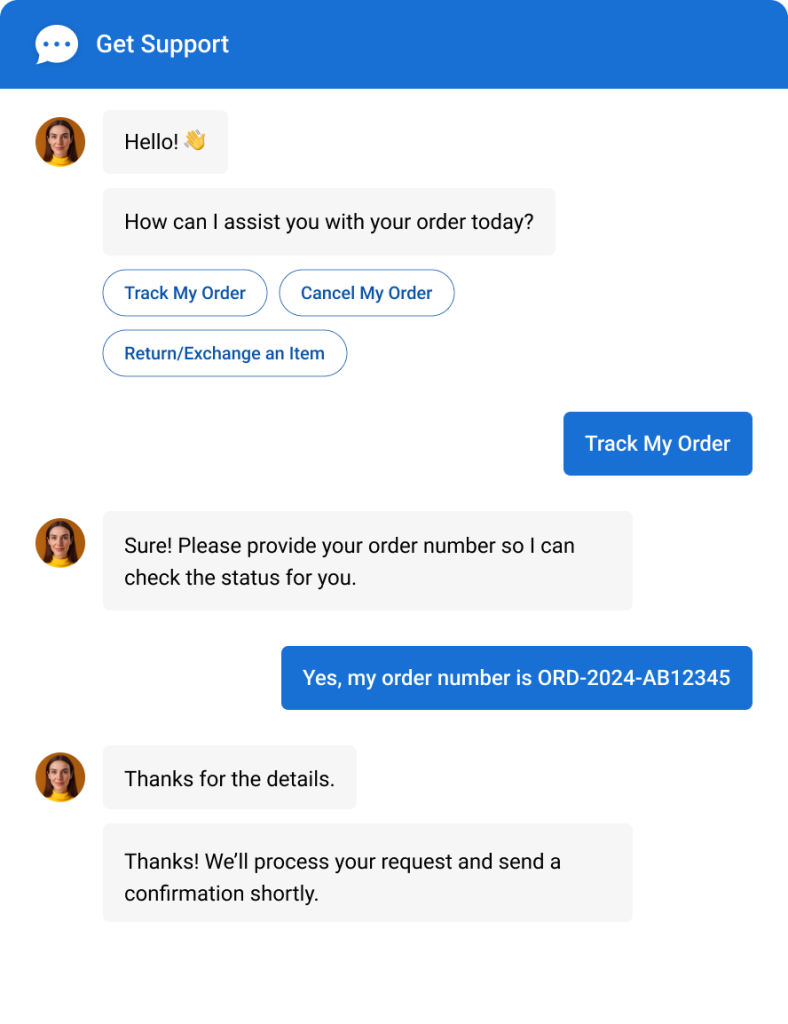
The best AI customer support for ecommerce brands treats this as ongoing ecommerce support automation, improving with every ticket and escalating to a human only when judgment is genuinely needed.
Top 10 AI Agents for eCommerce Support
I evaluated these platforms through hands-on testing, pricing-page audits, and verified reviews on G2 and Capterra. Here is the at-a-glance summary:
| AI Agent | Best For | Pricing | User Rating |
| ProProfs Chat | Easy Live Chat & AI Customer Service Agent for Instant, Automated Support | Free plan available. Paid from $19.99/operator/month | 4.8/5 (Capterra) |
| Intercom Fin | Mid-market stores with deep help content | Starts at $29/month | 4.5/5 (G2) |
| Salesforce Agentforce | Brands already running Salesforce Commerce | Free plan available. Paid from $2/conversation | 4.1/5 (G2) |
| Zendesk AI Agents | Teams already on Zendesk Suite | Starts at $55/month | 4.3/5 (G2) |
| Gorgias AI Agent | Shopify-native brands | Starts at $10/month | 4.4/5 (Capterra) |
| Freshworks Freddy AI | Freshdesk teams wanting session-based AI | Starts at $19/month | 4.3/5 (G2) |
| Tidio (Lyro) | Small Shopify and WooCommerce stores | Free trial available. Paid from $29/month | 4.6/5 (Capterra) |
| Ada | Enterprise brands at high conversation volume | Custom pricing on request. Typically starts around $30,000/year | 4.5/5 (G2) |
| Kustomer | CRM-heavy support operations | Starts at $0.60/conversation | 4.3/5 (G2) |
| Yellow.ai | Global enterprises needing 100+ languages | Custom pricing on request | 4.5/5 (Capterra) |
1. ProProfs Chat – Easiest Live Chat & AI Customer Service Agent for Instant, Automated Support
I put ProProfs Chat at the top because it is the only tool on this list that gets a real AI agent live the same day, without a sales call or a services quote. You train it by pointing it at your website URL, your help center, or a document upload, and it starts answering product questions and qualifying leads within hours.
The agent connects to your order and CRM systems, so it can look up shipping status, flag high-value carts, and push qualified leads straight into Salesforce, HubSpot, or Shopify. When it hits a request it cannot handle, it hands off to a live operator with the full conversation attached, and can auto-create a ProProfs Help Desk ticket if nobody is online.
The reporting is where it earns its keep long-term. Sentiment analysis and risk prediction flag frustrated customers in real time, and the unresolved query log tells you exactly what to train next.
Pros:
- Trains on your website, help center, or uploaded files with no coding required
- Sentiment analysis and risk prediction catch at-risk conversations before they escalate
- Auto-creates Help Desk tickets when no operator is available to take a handoff
- Bot performance analytics show unresolved queries so training improves every week
- Customer Delight Suite bundles live chat, help desk, knowledge base, and survey tools in one platform
Cons:
- No offline or self-hosted deployment option
- Deeper CRM automation requires the paid Team plan
User Rating: 4.8/5 (Capterra)
Pricing: Free plan available. Paid plan starts at $19.99/operator/month.
2. Intercom Fin – Best for Mid-Market Stores With Deep Help Content
Fin is built on Intercom’s own AI engine, and when I tested it, it held up genuinely well at multi-turn conversations, return eligibility, subscription questions, warranty claims, anything that needs context across several messages rather than a single lookup.
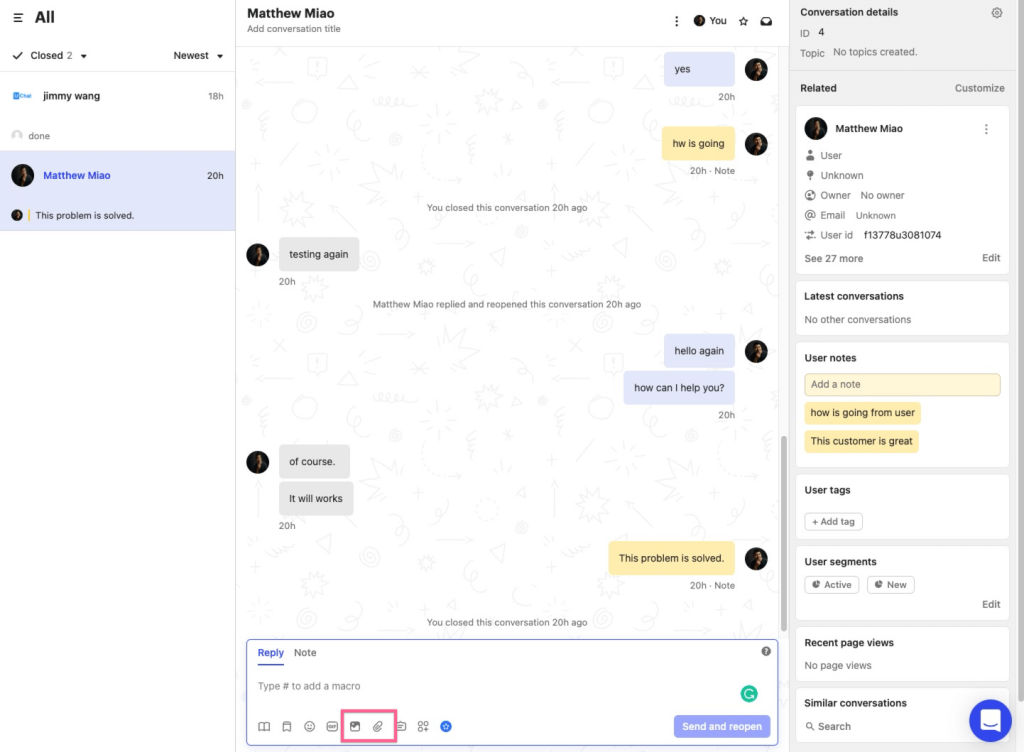
The billing model is the part I’d flag before you sign. Fin charges per resolved conversation on top of a seat price, and for a store doing a few thousand resolutions a month, that stacks up fast with no cap built in by default.
I also liked that Fin works with your existing helpdesk, so you are not forced to migrate off a system you already like.
Pros:
- Handles multi-step conversations accurately from your existing help center content
- Integrates as a standalone agent with most major helpdesks, not just Intercom’s own inbox
- Real-time resolution reporting shows exactly what the agent is closing
- Deploys in under an hour when paired with an existing knowledge base
- Proactive messaging can engage high-intent shoppers before they abandon a cart
Cons:
- Per-resolution billing means costs rise directly with how well the agent performs
- Total monthly cost is difficult to predict before you have live usage data
User Rating: 4.5/5 (G2)
Pricing: Starts at $29/month.
3. Salesforce Agentforce – Best for Brands Already Running Salesforce Commerce Cloud
Agentforce makes the most sense for stores that already live inside the Salesforce ecosystem. I found the free tier useful for getting hands-on with Agent Builder and a starter credit pool, and paid usage runs on a flat per-conversation rate or a metered credit system, depending on which model you pick at signup.
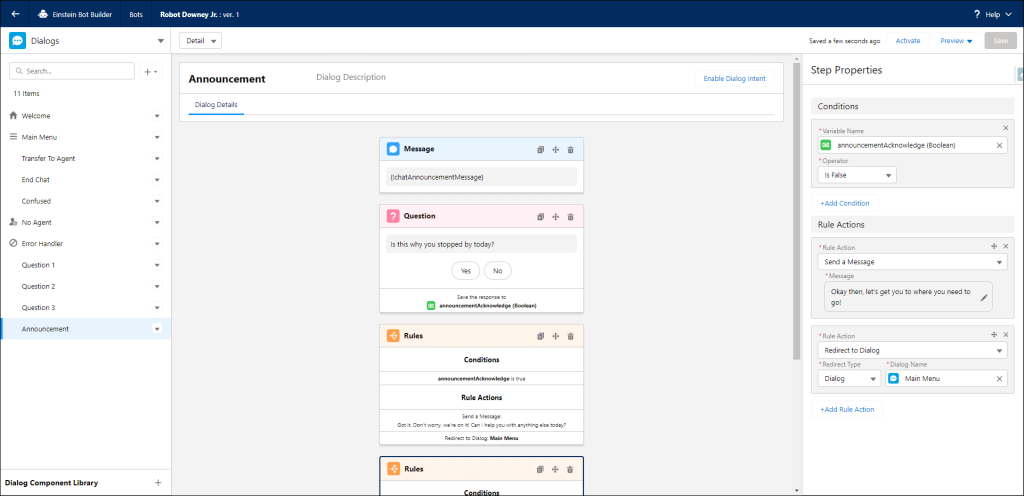
The catch, in my testing, is what sits underneath it. Agentforce runs on Data Cloud, and most stores need a properly structured product catalog and order history before the agent gives useful answers. That setup work is real, and it is the reason Agentforce fits established Salesforce shops better than a store just getting started with AI support.
Pros:
- Deep native integration with Salesforce Commerce Cloud order and customer data
- Metered credits let you tie cost to the specific action an agent performs
- Reasoning engine handles multi-step workflows instead of following a fixed script
- Voice extension carries the same agent over to phone support
- Free tier lets you pilot the platform before committing budget
Cons:
- Requires Data Cloud and a structured knowledge base to perform reliably
- Multiple pricing models exist at once, which makes budgeting genuinely confusing
User Rating: 4.1/5 (G2)
Pricing: Free plan available. Paid plans start at $2/conversation.
4. Zendesk AI Agents – Best for Teams Already Running Zendesk Suite
Zendesk folded its AI agent capability into every Suite and Support plan in 2026, so if you are already paying for Zendesk, a baseline agent is included at no extra platform fee. The catch I ran into is the free allotment: most plans only include a handful of automated resolutions per agent each month before per-resolution billing kicks in.
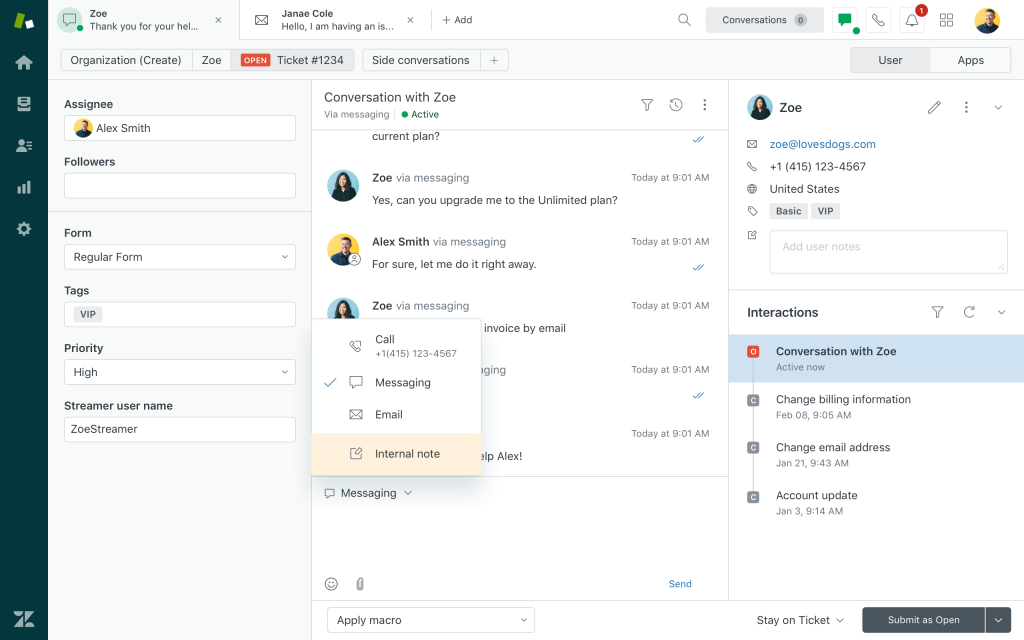
Past that allotment, every additional resolution is billed on top of your seat price, and I noticed Zendesk now auto-bills overages without requiring you to opt in first. For a busy eCommerce queue, that meter adds up quickly.
Pros:
- Included in every Suite plan with no separate AI add-on fee
- Tight native integration with your existing tickets and customer history
- Visual dialogue builder lets you customize branching conversation flows
- Native fluency across 80+ languages out of the box
- Works across chat, email, and messaging from one connected knowledge base
Cons:
- Free resolution allotment is small and overages auto-bill without a warning
- Real-world automation rates run well below Zendesk’s advertised figures for most teams
User Rating: 4.3/5 (G2)
Pricing: Starts at $55/month.
5. Gorgias AI Agent – Best for Shopify-Native Brands
Gorgias is the default helpdesk for a huge share of the Shopify ecosystem, and when I tested its AI Agent, it handled real ecommerce actions well: canceling orders, processing returns, and answering shipping questions using live Shopify data.
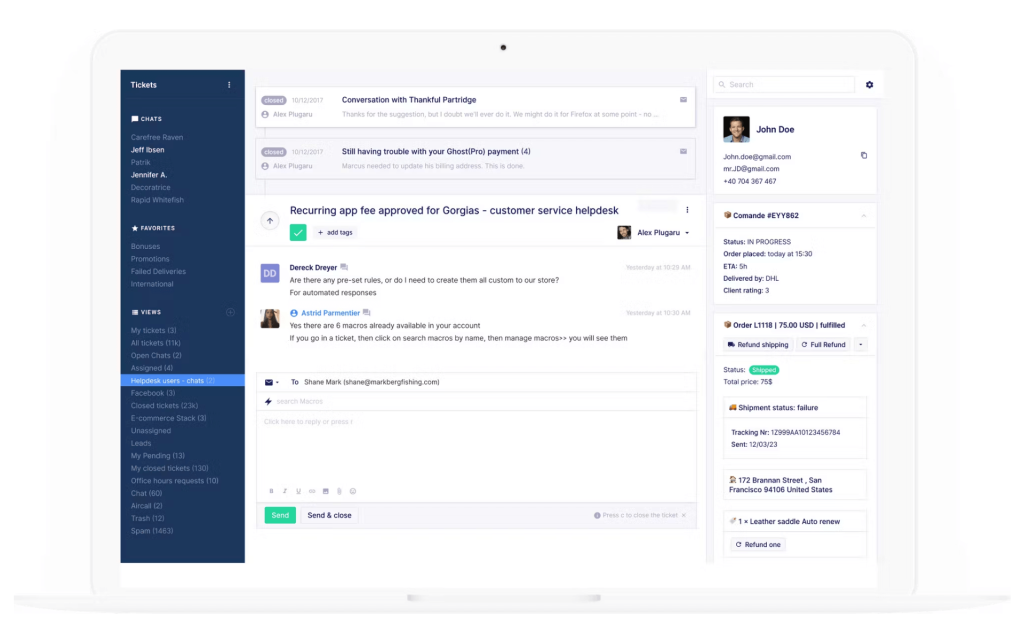
The pricing needs a careful read before you sign. I found that Gorgias bills per ticket, not per seat, so adding support staff costs nothing extra. But AI-resolved tickets get billed twice, once as a helpdesk ticket and again as an AI resolution, and that combination can triple a normal month’s invoice during a seasonal spike like Black Friday.
Pros:
- Deep native Shopify integration for real order actions, not just lookups
- Unlimited agent seats regardless of plan tier
- Shopping Assistant mode can recommend products during a support conversation
- Tone-of-voice customization keeps AI replies on brand
- Vision support reads images customers send in for returns or damage claims
Cons:
- AI-resolved tickets are billed as both a helpdesk ticket and an AI resolution
- Limited to Shopify, so multi-platform stores will hit integration gaps
User Rating: 4.4/5 (Capterra)
Pricing: Starts at $10/month.
6. Freshworks Freddy AI – Best for Freshdesk Teams Wanting Session-Based AI
Freddy AI Agent bolts onto Freshdesk and bills by session rather than by resolution or conversation, where a session is any interaction a single customer has with the bot inside a rolling window. I liked that this model rewards stores with tightly scoped questions, since one customer asking five follow-ups in the same window still counts as a single session.
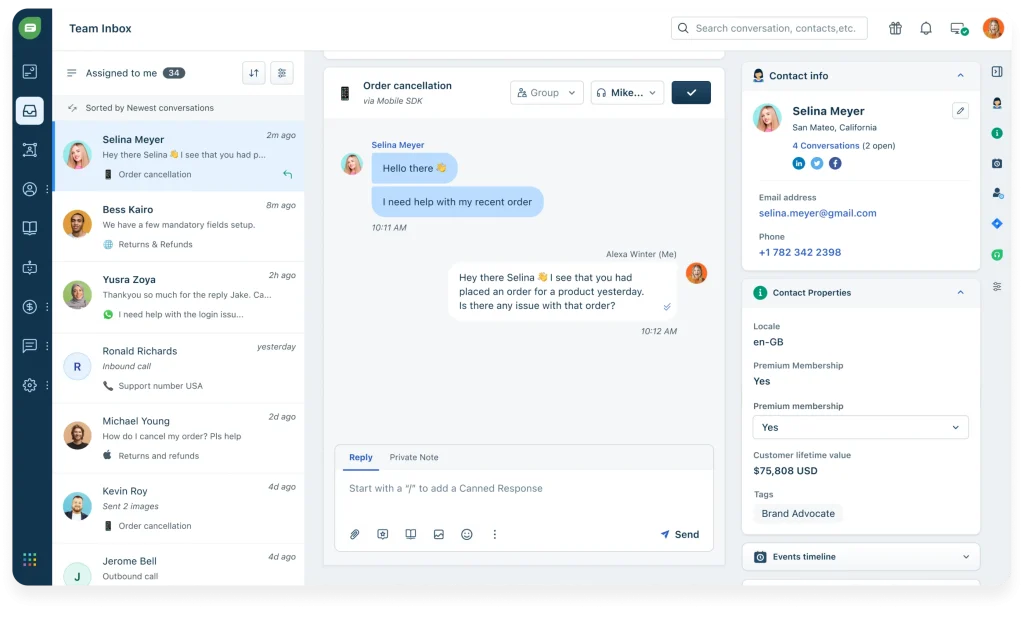
Freshworks includes a batch of trial sessions once per account, then charges for additional session packs on top of your base plan. One thing I’d flag: Freddy AI Copilot, the agent-assist layer for your human team, is a separate paid add-on.
Pros:
- Session-based pricing rewards long, multi-question conversations from the same shopper
- Pulls from your existing Freshdesk knowledge base with no separate training tool
- Freddy AI Copilot drafts replies and summaries for your human agents
- Native Shopify, WooCommerce, and Magento connectors for order data
- Insights module surfaces which topics the agent is failing to resolve
Cons:
- Email and chat agents are priced completely differently, which complicates budgeting
- Copilot and Insights are separate paid add-ons on top of the base agent
User Rating: 4.3/5 (G2)
Pricing: Starts at $19/month.
7. Tidio (Lyro) – Best for Small Shopify and WooCommerce Stores
Lyro is Tidio’s AI agent, and in my testing, it was genuinely easy for a small team to stand up. Point it at your help center or a CSV of FAQs, and it starts resolving a real share of tickets within a day. Tidio’s published case studies put resolution rates between 67% and 89%, depending on how well-organized the store’s content is going in.
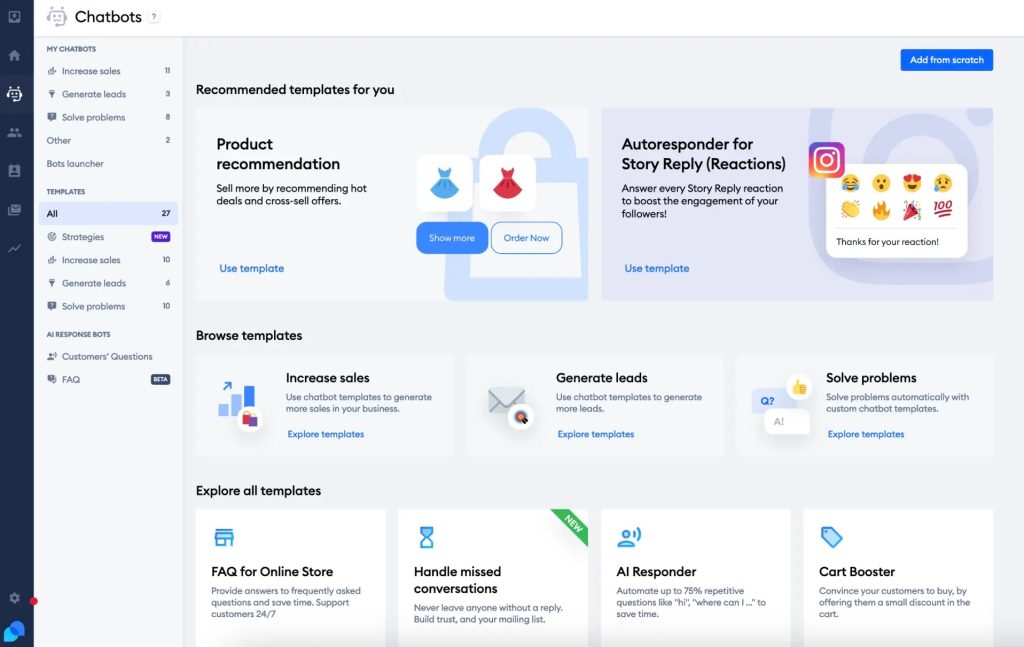
The pricing structure is where I’d slow down before committing. Every account gets a batch of free Lyro conversations, but that is a one-time allotment, not monthly. After that, Lyro is billed as a separate add-on stacked on top of your base Tidio plan.
Pros:
- Fast to train directly from a help center, website, or uploaded document
- Native Shopify, WooCommerce, and Magento integrations built for e-commerce
- Multilingual replies out of the box with no extra configuration
- Escalates cleanly to a live agent with context when it cannot answer
- Free conversation trial requires no credit card to test
Cons:
- Lyro is a separate paid add-on, not included in the base plan price
- The free conversation allotment is one-time, not renewed monthly
User Rating: 4.6/5 (Capterra)
Pricing: Free trial available. Paid plans start at $29/month.
8. Ada – Best for Enterprise Brands at High Conversion Volume
Ada is built for a scale most eCommerce brands never reach: its own published fit threshold is 300,000 annual conversations. Where I saw it fit, Ada’s reasoning engine handled genuinely complex, multi-step requests across chat, email, and voice, and its integration list covers most major helpdesks for human handoff.
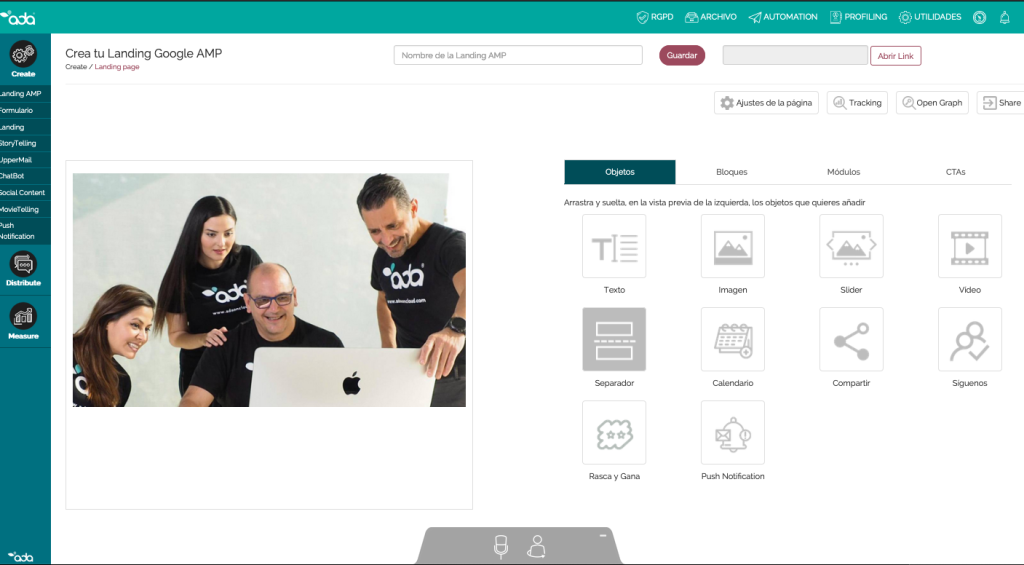
Ada does not publish pricing anywhere, and in my research, every deployment starts with a sales conversation and a lengthy implementation process.
Pros:
- Reasoning engine handles structured, multi-step workflows, not just FAQ lookups
- Integrates with 13+ helpdesk and contact center platforms for handoff
- Omnichannel deployment across chat, email, voice, and social messaging
- Strong track record with large-scale enterprise deployments
- SOC 2 Type 2 compliant, which matters for regulated or high-trust brands
Cons:
- No public pricing, and implementation typically takes two to four months
- Overkill and cost-prohibitive for stores under enterprise-level ticket volume
User Rating: 4.5/5 (G2)
Pricing: Custom pricing on request. Typically starts around $30,000/year.
9. Kustomer – Best for CRM-Heavy Support Operations
Kustomer combines a CRM with its AI agent, so every conversation the agent handles is automatically tied to a complete customer timeline, order history, past tickets, and lifetime value in one view. I found that context makes it a solid fit for brands that already think of support as a retention function, not just a cost center.
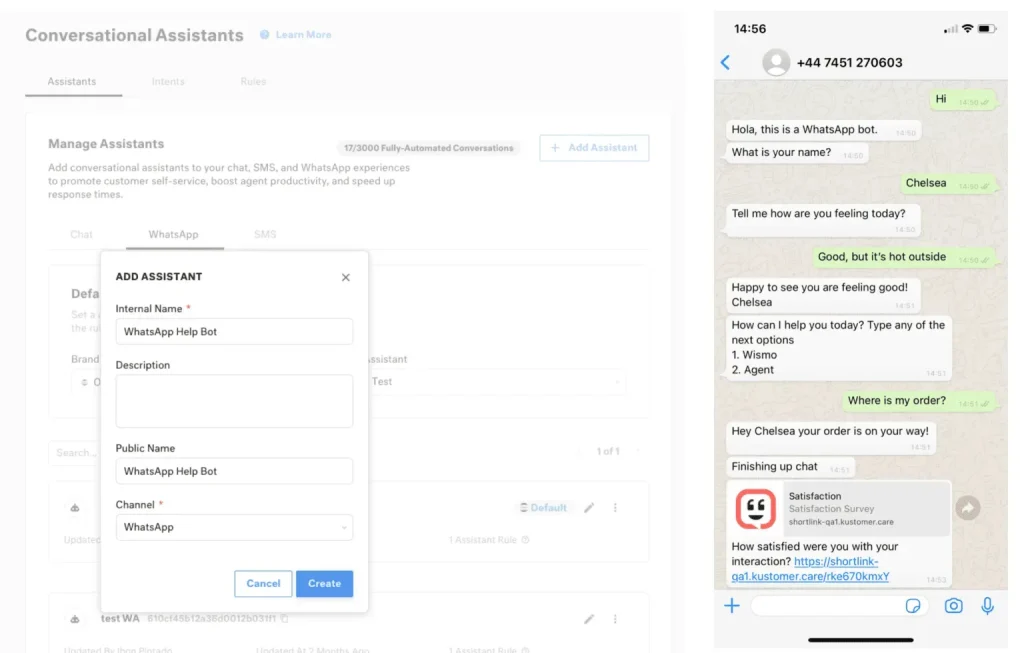
Pricing runs per engaged conversation with a seat minimum on the platform itself, which is worth flagging early since I’ve seen very small teams end up paying for capacity they don’t need.
Pros:
- Full CRM timeline attached to every AI conversation automatically
- Transparent, published per-conversation pricing, unlike several competitors
- Strong automation for repetitive order and shipping questions
- Unified view across email, chat, and social channels
- Built-in customer sentiment and satisfaction tracking
Cons:
- Seat minimum makes it a poor fit for very small teams
- Less ecommerce-specific out of the box compared to Shopify-native tools
User Rating: 4.3/5 (G2)
Pricing: Starts at $0.60/conversation.
10. Yellow.ai – Best for Global Enterprises Needing 100+ Languages
Yellow.ai’s biggest differentiator is reach: 135+ languages and deployments across 85+ countries, with a multi-LLM architecture that lets you swap the underlying model as new ones become available.
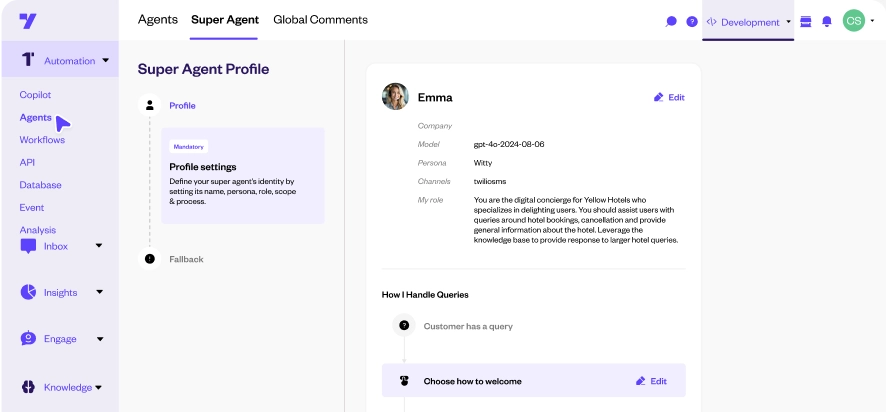
I came across case studies across logistics, retail, and BPO customers reporting automation rates above 70% once the agent is properly trained.
Everything about Yellow.ai is quote-based and sales-led in my experience. There is no self-serve signup and no published starting price.
Pros:
- 135+ language support out of the box for global storefronts
- Multi-LLM architecture avoids lock-in to a single AI model provider
- No-code agent builder with drag-and-drop flow design
- 150+ integrations across CRM, ERP, and messaging platforms
- Proven track record with high-volume enterprise and BPO deployments
Cons:
- No public pricing, and the buying process is entirely sales-led
- Better suited to enterprise procurement than a fast SMB rollout
User Rating: 4.5/5 (Capterra)
Pricing: Custom pricing on request.
How I Evaluated These AI Agents for eCommerce Support
Choosing the wrong AI agent costs time and customer trust. This category is crowded with everything from a basic AI chatbot for e-commerce support to a full e-commerce AI customer service agent platform, so I needed a consistent bar to judge all of them against.
Here is exactly how I approached the evaluation:
- User Reviews and Ratings: I pulled verified feedback from G2 and Capterra, filtering for recurring complaints and what real users valued after six or more months of use. Recency mattered because older reviews often miss product changes.
- Core Features and Functionality: I specifically tested ecommerce-relevant capabilities: order actions, refund and return processing, cart recovery flows, human handoff quality, and CRM integration depth, and whether the tool held up as a genuine AI support agent for online stores rather than a rebranded FAQ bot.
- Ease of Deployment: The benchmark was simple: can a non-technical team member get the agent running and trained without a developer or a call with sales?
- Integration Quality: I looked at whether native integrations with Shopify, WooCommerce, Salesforce, HubSpot, and help desk tools worked reliably in practice, not just in the feature list. Since several of these are billed specifically as AI agents for Shopify support, I verified the same depth held up for WooCommerce and Magento stores too.
- Customer Support Quality: I paid attention to how vendors responded during setup issues and whether ongoing support operated as a real partnership or a ticket queue.
- Value for Money: I compared pricing against actual feature depth, and whether the investment holds up as AI customer support for ecommerce brands running lean teams, not just enterprise budgets. A tool that covers three things well is not a bargain at enterprise pricing.
- Personal Experience: I used each platform directly and cross-checked my findings with peers who manage live eCommerce support operations, judging each one as a genuine layer of ecommerce support automation rather than a chat widget with a new label.
My Top 3 Picks for AI Agents for eCommerce Support
Still deciding? Here is where I would point most eCommerce teams.
1. ProProfs Chat
For stores that want an AI agent running today, not after a sales call and an implementation project, ProProfs Chat covers order lookups, lead qualification, and CRM handoff out of the free plan. It behaves like a genuine agent among AI agents for ecommerce customer support, not just a scripted widget, and the sentiment analysis and unresolved query log mean training improves every week without guesswork.
2. Gorgias AI Agent
If your store is Shopify-native and support is core to the business, Gorgias’s deep order-level integration is hard to match, and it remains one of the strongest AI agents for Shopify support available today. Just budget carefully around the double-billing on AI-resolved tickets before you commit to a plan.
3. Intercom Fin
For a store with a mature help center and complex, multi-turn support questions, Fin’s resolution quality is genuinely strong, and it holds up as a serious ecommerce support automation investment once your content is in shape. The per-resolution pricing rewards a well-trained agent, so it pays to get your knowledge base in order before you turn it on.
FREE. All Features. FOREVER!
Try our Forever FREE account with all premium features!
Stop Paying a Human to Answer “Where’s My Order”
The best AI agents for eCommerce support do not just chat. They look up the order, make the change, and close the ticket, all without a human clicking a single button. That is the difference between a bot that deflects tickets and an agent that actually resolves them.
Before you commit to one, map your five most common support requests and confirm the agent can complete the action, not just answer the question, using your own product and order data. Run a 30-day pilot and track resolution rate against your real ticket volume before you scale it across every channel.
If you want an agent that trains in a day, ties into your CRM and help desk, and starts on a free plan with no credit card required, ProProfs Chat is worth starting with.
Frequently Asked Questions
How much support volume justifies using an AI agent for eCommerce?
Most stores see a positive return once they are handling a few hundred support conversations a month, since that is where the time saved outweighs setup effort. Below that volume, a well-organized FAQ page may solve the same problem for free.
What counts as a good resolution rate for an eCommerce AI agent?
A resolution rate above 50% is a solid benchmark for a new deployment. Well-trained agents with a clean, comprehensive knowledge base typically climb toward 70% or higher within the first three months as unresolved queries get reviewed and fixed.
Do these AI agents work on mobile apps, not just desktop websites?
Yes. Every platform on this list includes a mobile-responsive widget that loads correctly on phones, and several offer a dedicated mobile SDK for stores with their own iOS and Android apps.
How do I know if my store's content is ready for AI agent training?
Check whether your product pages, shipping policy, return policy, and top FAQs are current and written in plain language. If an agent is going to quote your policy back to a customer, that policy needs to be accurate today, not from two pricing changes ago.
Can one AI agent support multiple storefronts or brands from one account?
Some platforms support this natively through multi-domain or multi-brand configuration, while others require a separate account per storefront. Confirm this before you buy if you run more than one brand.
How many languages can an AI agent realistically support out of the box?
This varies widely by vendor, from a handful of languages to over a hundred. If you sell internationally, test the agent in your actual target languages rather than trusting a language count on a features page.
Is there a genuinely free way to start using an AI agent for eCommerce support?
Tools like ProProfs Chat offers a free forever plan for a single operator, including a trainable AI agent, with no credit card required and no time limit on the trial.
FREE. All Features. FOREVER!
Try our Forever FREE account with all premium features!

 We'd love your feedback!
What did you like & how can we make it even better?

 Thanks for your feedback!
 Ask Your Question
Have a question? Get expert help to make your decision easier.