
What happens when a customer needs help at 2 a.m. and no one is there to answer? For many businesses, that moment can mean a frustrated visitor, an abandoned purchase, or a support request waiting until morning.
That is where an AI chatbot for customer service starts earning its place. It can answer routine questions instantly, pull responses from your own content, qualify leads, and bring in a human when the conversation needs more judgment.
According to the Capgemini Research Institute’s 2025 customer service study, 71% of consumers said chatbots had improved in quality over the previous one to two years, while 65% said they had become more reliable and accurate.
In this guide, I’ll explain what AI customer service chatbots are, compare 10 leading tools and my top three picks, show how I evaluated them, compare AI chatbots with traditional live chat, explain setup, and cover the trends shaping what comes next.
What Is an AI Customer Service Chatbot?
Where they deliver measurable value:
- Deflects tier-1 tickets without human involvement (24/7)
- Reduces first-response time to near-zero for common queries
- Captures and qualifies leads outside business hours
- Centralizes omnichannel conversations, web, WhatsApp, and social in one dashboard
- Frees agents to focus on escalations, complex issues, and high-value customers
10 Best AI Chatbots for Customer Service
I’ve explored and evaluated many of the tools on this list and reviewed insights from industry experts and leading review platforms. Here’s a quick overview before the details.
| AI Customer Service Chatbot Software | Best For | Pricing | User Rating |
| ProProfs Chat | Easy Live Chat & AI Customer Service Agent for Instant Automated Support | Free plan available, paid plan starts at $19.99 per user per month | 4.8/5 Capterra |
| HubSpot | Growing Sales and Engaging Customers With Live Chat | Starts at $20 per seat per month | 4.4/5 Capterra |
| Kommunicate | Omnichannel Integrations | Starts at $40 per month | 4.6/5 Capterra |
| Tidio | Live Chat With Ticketing Functionality | Starts at $29 per month | 4.7/5 Capterra |
| Intercom | Omnichannel Platform With Messenger and App | Starts at $19 per month | 4.5/5 Capterra |
| Freshchat | Freshworks Suite Users | Starts at $19 per agent per month | 4.2/5 Capterra |
| Botsify | Conversational Forms | Starts at $49 per month | 4.6/5 Capterra |
| Zendesk | Zendesk Users | Starts at $19 per agent per month | 4.4/5 Capterra |
| Ada | Multilingual Support | Custom Quote | 4.7/5 Capterra |
| Comm100 AI Agent | Regulated Industries | Starts at $31 per agent per month | 4.7/5 Capterra |
1. ProProfs Chat – Easiest Live Chat & AI Customer Service Agent for Instant, Automated Support
I have been using ProProfs Chat for close to two years now, and one of the features I’ve been most impressed with is its AI chatbot for customer service. I deployed it on our website to provide real-time assistance, answer routine customer questions, and significantly reduce ticket volume.
One thing I especially liked was how quickly I could get started. By simply entering my website URL, I had an AI customer support agent ready to answer questions using my existing website content.
Advanced AI agent training trains the chatbot on your website, help center, and FAQs, so AI-generated answers always pull from your actual data with the source cited. Once live, AI customer service agents can complete tasks like updating orders and scheduling meetings directly from chat.
Sentiment analysis detects emotions in real time and feeds into risk prediction, which assigns churn scores so your team knows who needs attention. Resolution overviews and AI agent performance reports are then continuously tracked for satisfaction.
Another advantage is how well it fits into the rest of the ProProfs ecosystem. It integrates seamlessly with ProProfs Knowledge Base and ProProfs Help Desk, making it easy to combine AI support, self-service, and human assistance in a single workflow.
Pros:
- Action-based AI agents that update orders, schedule meetings, and trigger notifications
- AI customer support agent can be launched in minutes from your website and further trained using your help center, FAQs, and uploaded files
- Sentiment analysis and risk prediction to flag frustrated or at-risk customers early
- Resolution overviews and AI performance reports to track and improve chatbot quality continuously
- Real-time visitor tracking to monitor customer behavior and preferences
Cons:
- Cloud-only, no offline access
- No dark theme
User Rating: 4.8/5 (Capterra)
Pricing: A free plan is available for growing teams. Paid plan starts at $19.99/user/month.
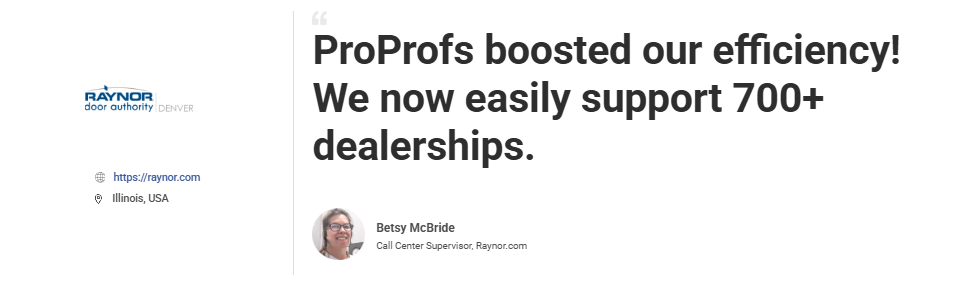
ProProfs Chat helped Raynor Garage Doors support 700+ dealerships more efficiently with quicker chat responses, easy file sharing, accessible transcripts, and clearer reporting. This improved team accountability, simplified communication, and created a smoother support experience for dealers and agents alike.
2. HubSpot – Best for Growing Sales and Engaging Customers with Live Chat
HubSpot’s chatbot builder gets me from zero to a working bot in under an hour, using drag-and-drop blocks with no code required. I run it directly off our CRM, so every reply pulls from actual contact records instead of a generic script. Setting up qualifying questions took a single afternoon, and leads land straight in the pipeline instead of sitting in a separate inbox somewhere.
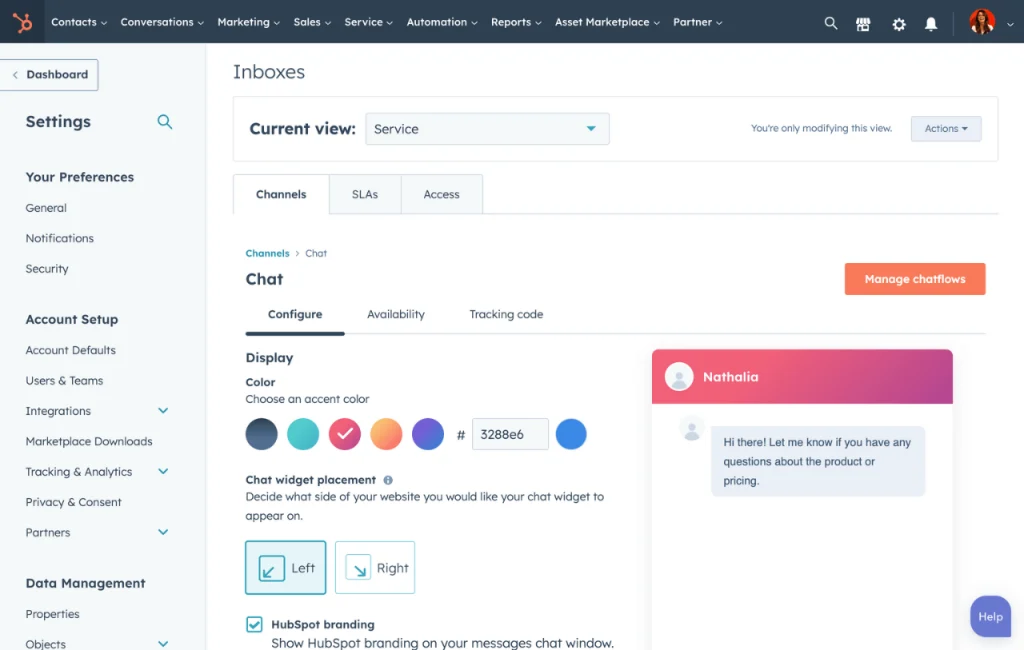
The templates cover common jobs like meeting booking and FAQ answers, which saved me from building flows from scratch. Multilingual support handles straightforward replies decently, though nuanced phrasing sometimes trips it up.
What stands out most is how tightly everything ties back into HubSpot’s broader marketing and sales tools, so a chatbot conversation feeds directly into lifecycle stages and follow-up sequences. If your team already lives inside HubSpot, adding this chatbot layer feels less like a new tool and more like flipping a switch.
Pros:
- Digital engagement to reach customers on web, in-app, SMS, and WhatsApp
- Einstein Bots to automate personalized, intelligent service with AI
- Multilingual bots to deploy conversational AI across languages and channels
- Workflows to embed business processes and help customers self-serve
Cons:
- Branding remains visible on the free live chat widget
- Advanced bot logic takes real setup time to configure properly
User Rating: 4.4/5 (Capterra)
Pricing: Starts at $20/seat/month
3. Kommunicate – Best for Omnichannel Integrations
A friend of mine runs a small e-commerce shop and switched to Kommunicate after outgrowing a basic widget that barely handled five questions. What impressed her most was launching across Instagram, Facebook Messenger, and her website without touching a single line of code.
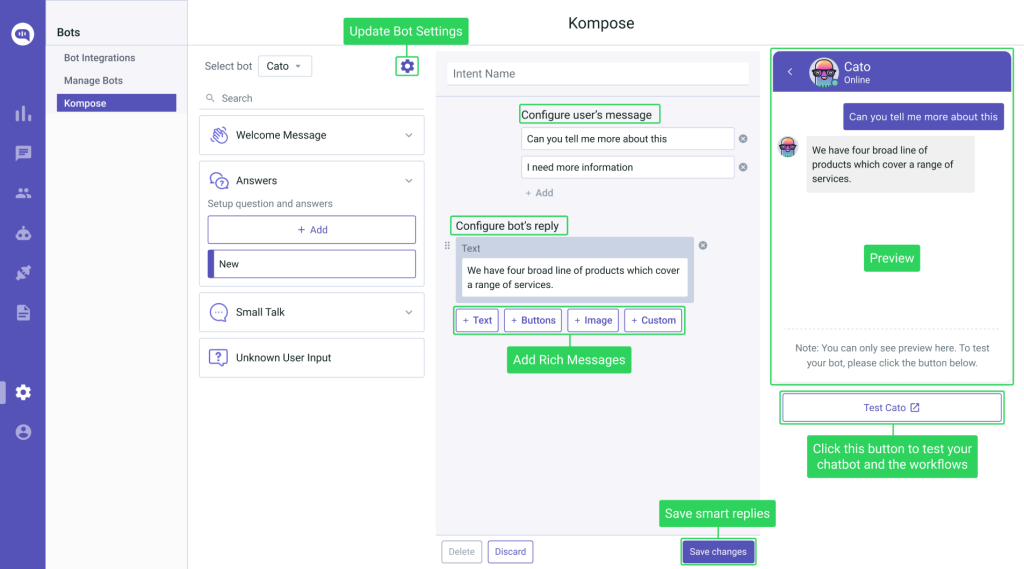
The no-code builder, Kompose, let her map out flows visually, and bot-to-human handover kicked in automatically once a question got too specific for the bot to answer. She mentioned the context memory stood out too; customers could ask a follow-up minutes later and the bot still remembered the earlier conversation.
That cut down on the repeat-yourself complaints she used to deal with before switching over. The live dashboard gives her one view across every channel, so she isn’t logging into three separate apps to track conversations. For a shop juggling multiple channels with a small team, she says it closed a gap her old setup never could.
Pros:
- Live dashboard tracking every conversation across channels in one place
- No-code chatbot builder, Kompose, for building flows without developers
- Chatbot training directly from website content and uploaded documents
- No-code integrations across all major messaging channels
Cons:
- Performance can lag occasionally during high traffic periods
- Learning the full flow-builder logic takes a bit of trial and error
User Rating: 4.6/5 (Capterra)
Pricing: Starts at $40/month.
4. Tidio – Best for Live Chat With Ticketing Functionality
Tidio handles the exact mix I need for an online store: live chat, ticketing, and a chatbot layer that doesn’t feel bolted on as an afterthought. I set up templates for greeting visitors, capturing leads, and answering FAQs in one sitting, and real-time visitor tracking lets me see what someone is browsing before I say hello.
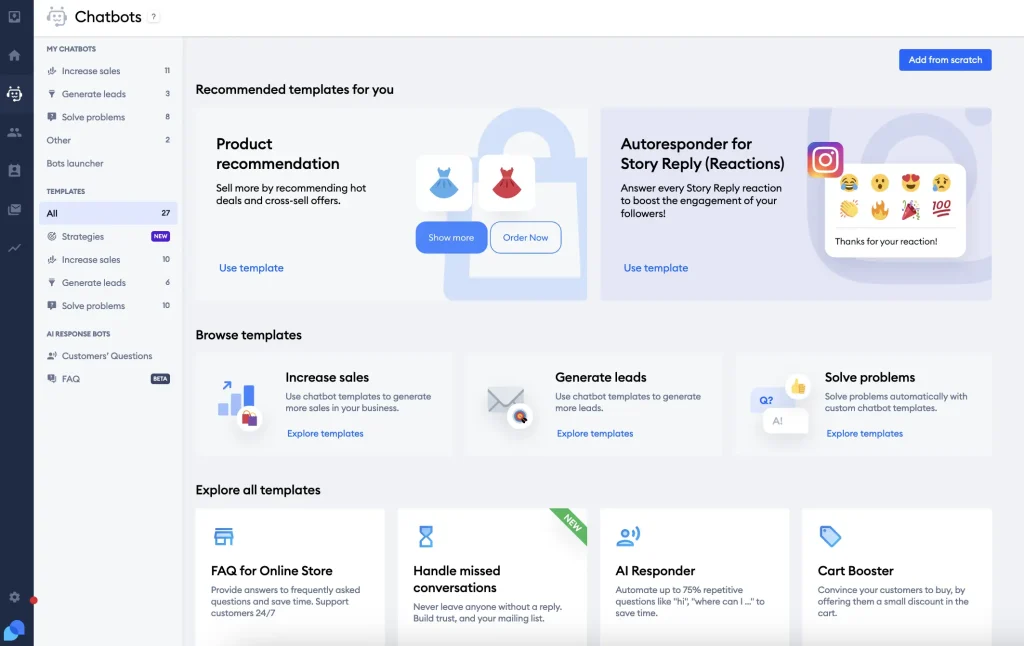
The multi-channel setup pulls chat, email, and Facebook Messenger into a single dashboard, so I’m not toggling between apps to catch every conversation. When a question gets too complex for the bot, it converts straight into a ticket, which keeps follow-up from slipping through the cracks.
What I appreciate most is how little babysitting the bot needs once it’s trained properly. I’m not rewriting flows every week just to keep answers accurate. For a small team trying to punch above its weight on support, Tidio delivers enough automation to feel like a bigger operation.
Pros:
- Offline messages that trigger email alerts outside business hours
- Native integrations with Shopify, WordPress, and Mailchimp
- Live typing preview to see messages before they’re sent
- Visitor list with filters for active, idle, and new visitors
Cons:
- Notification sync occasionally lags on mobile
- Heavier customization requires digging through nested settings
User Rating: 4.7/5 (Capterra)
Pricing: Starts at $29/month
5. Intercom – Best for Omnichannel Platform With Messenger and App
Intercom’s AI layer genuinely understands context, not just keywords, which is the real difference between a bot that helps and one that frustrates. I ran it for six months handling shipping questions, refund policies, and product details, and it rarely needed me to step in for routine matters.
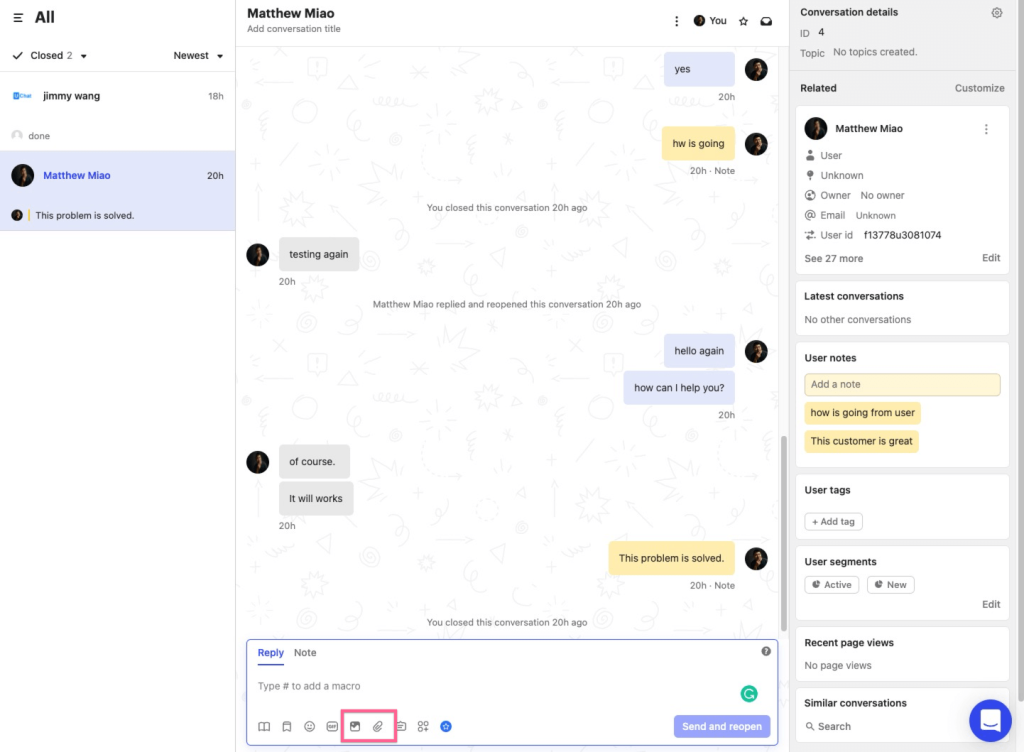
The messenger and app integrations meant customers could reach us through WhatsApp, Instagram, or email and land in the same inbox, so nothing got lost between channels. It also learned from our help center articles on its own, so I wasn’t manually training flows for every question.
Where it earns its keep is by handling an unusual phrasing of a common question instead of defaulting to confusion right away. Segmenting customers for targeted messages added a layer I didn’t expect to use this much. For a team that wants AI handling real customer language, not scripted trees, Intercom delivers comprehension that copycats promise but rarely match.
Pros:
- Task Bot to automate repetitive tasks like booking meetings and collecting feedback
- Resolution Bot to resolve common customer queries instantly and accurately
- Custom Bot to qualify and route leads to the right sales reps
- Customer segmentation for targeted communication
Cons:
- Multilingual support is limited on entry-level tiers
- There can be delays in getting assistance from customer support
User Rating: 4.5/5 (Capterra)
Pricing: Starts at $19/month.
6. Freshchat – Best for Freshworks Suite Users
A former colleague of mine leads support for a mid-sized SaaS company and swapped over to Freshchat when their old tool couldn’t keep pace with growing ticket volume. She says the unified agent workspace changed her team’s daily rhythm the most. Agents see a customer’s full history, past purchases, open issues, everything, without switching tabs mid-conversation.
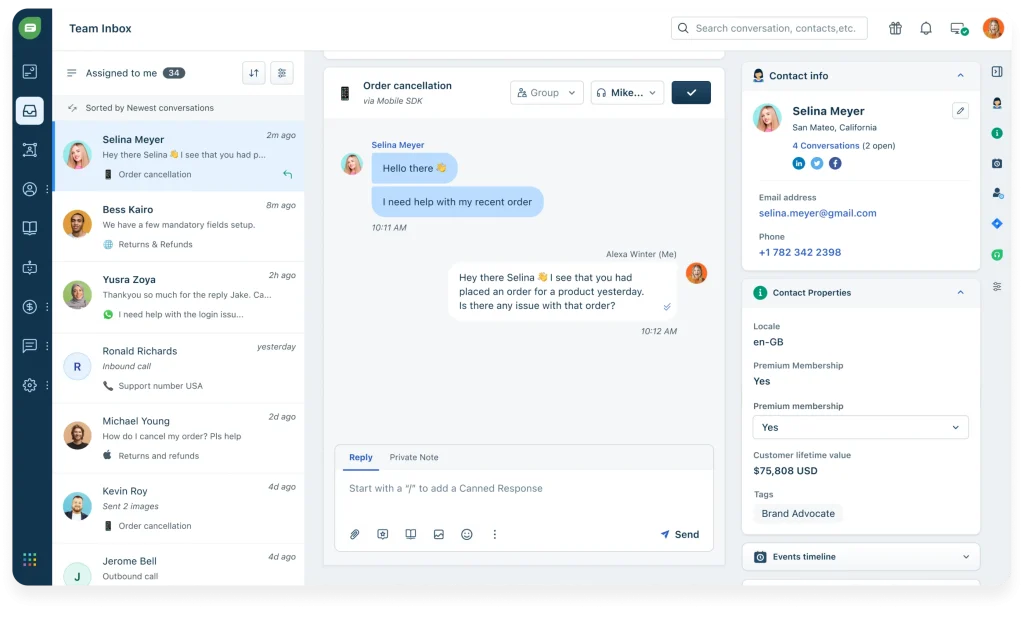
Freddy AI, their bot engine, handles the repetitive first-layer questions across website, app, and messaging channels, and she’s found the natural language handling solid even when customers phrase things awkwardly.
SmartPlugs let the bot pull live data from their CRM directly into a chat, so an order status question gets a real answer instead of a canned one. Because her whole team runs on Freshworks, the chatbot plugged straight into what they already had running instead of adding another disconnected system. She did mention the platform hides plenty of functionality that took weeks to uncover.
Pros:
- Freddy AI to build and train chatbots with natural language processing
- SmartPlugs to fetch and display information from external sources like CRM
- Co-browsing to collaborate with customers and guide them through complex issues
- Campaigns to send targeted and personalized messages based on customer behavior
Cons:
- Long learning curve due to extensive and hidden features
- Heavy reliance on the Freshworks ecosystem reduces flexibility
User Rating: 4.2/5 (Capterra)
Pricing: Starts at $19/agent/month
7. Botsify – Best for Conversational Forms
Botsify got me a working chatbot for customer inquiries without writing a line of code, exactly what I needed without a developer on hand. I built flows using their templates, hooked them into my Shopify store and Facebook page, and had them answering questions across both within a single day.
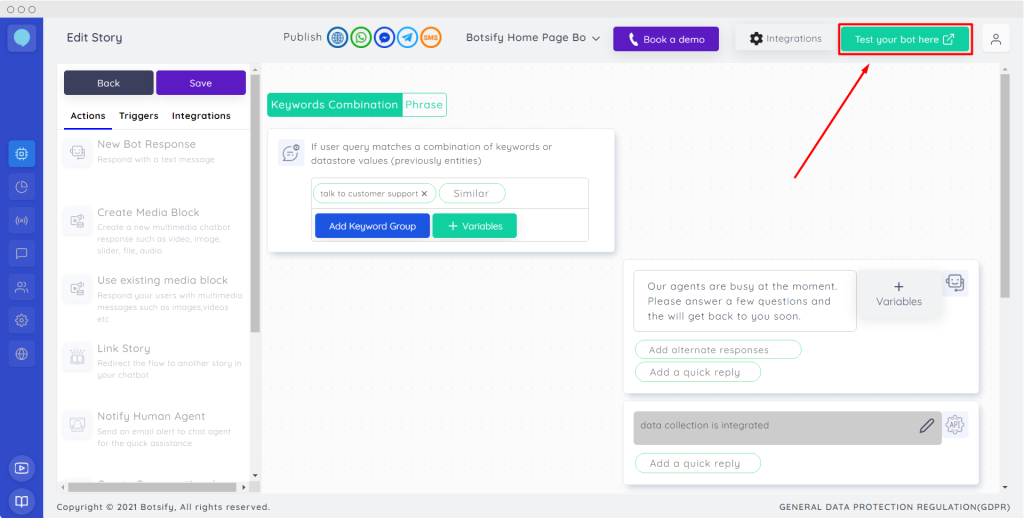
The conversational form feature stood out most; instead of a static contact form, customers walk through an interactive flow with buttons and choices that noticeably raised completion rates. It also handles abandoned cart follow-ups automatically through email, something I didn’t expect a chatbot tool to cover.
The story tree builder makes branching logic visual, so I could map different customer paths without getting lost in nested conditions. Human takeover is smooth too, the bot hands off cleanly the moment a question needs a real person. For anyone wanting a straightforward, code-free way to automate the basics, Botsify covers them well.
Pros:
- Ready-made chatbot templates for various industries
- Story Tree to create and visualize chatbot flows with branching logic
- Sentiment analysis to detect user emotions and respond accordingly
- Human takeover to switch from chatbot to live agent seamlessly
Cons:
- Limited integrations outside core channels
- Support quality varies and can be slow
User Rating: 4.6/5 (Capterra)
Pricing: Starts at $49/month.
8. Zendesk – Best for Zendesk Users
Zendesk’s AI chatbot plugs directly into the data we already have in the system, so it started answering real customer questions almost immediately instead of needing weeks of training. The Flow Builder gave me control over exactly how conversations branch for different intents, so I wasn’t stuck with one generic, one-size-fits-all script.
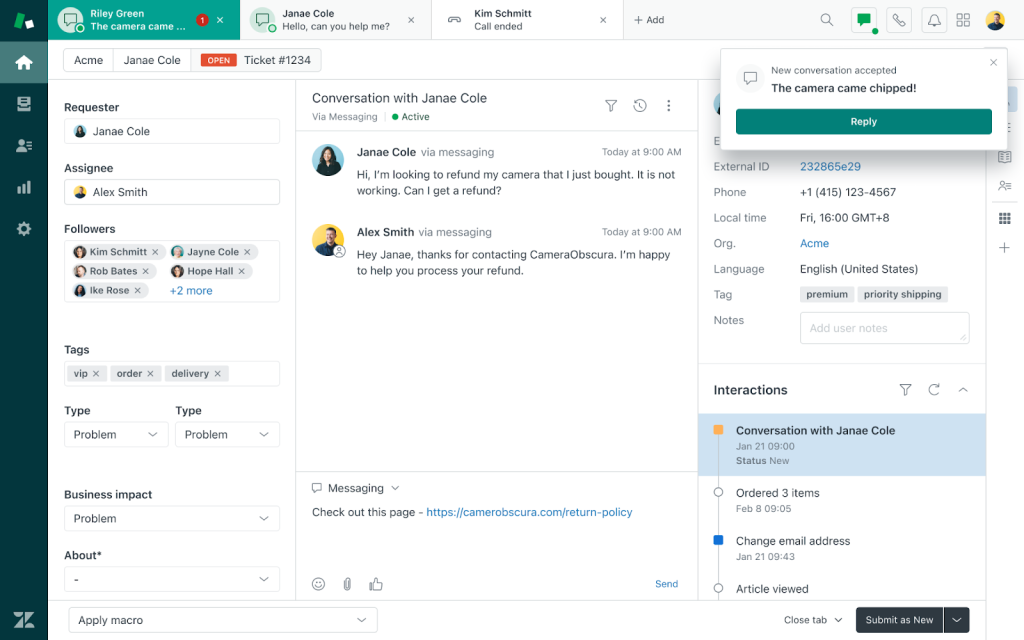
What I noticed over time is that the bot actually gets sharper the more it processes, pulling from resolved tickets and customer feedback to refine its own answers. Since our support stack already ran on Zendesk, the chatbot didn’t require bolting on a separate system; it simply extended what we already had running smoothly.
Social messaging support across Facebook, Twitter, and WhatsApp meant one bot covered channels that used to require entirely separate tools. Sunshine Conversations adds a layer of interactivity I didn’t expect from a support chatbot, closer to a guided experience than a plain Q&A box.
Pros:
- AI tool to detect customer intent for better service
- Answer Bot to provide instant answers from the knowledge base
- Social messaging to connect popular platforms like Facebook, Twitter, and WhatsApp
- Sunshine Conversations to build rich and interactive chatbot experiences across channels
Cons:
- Occasional steep learning curve for Flow Builder tools
- Advanced multilingual features are gated behind more complex setup
User Rating: 4.4/5 (Capterra)
Pricing: Starts at $19/agent/month.
9. Ada – Best for Multilingual Support
A support ops lead I know runs a global customer base across a dozen languages and picked Ada to stop juggling separate tools for every region. She says Ada Glass, the handoff feature, carries full context to a live agent, so customers never repeat their issue once a human joins in.
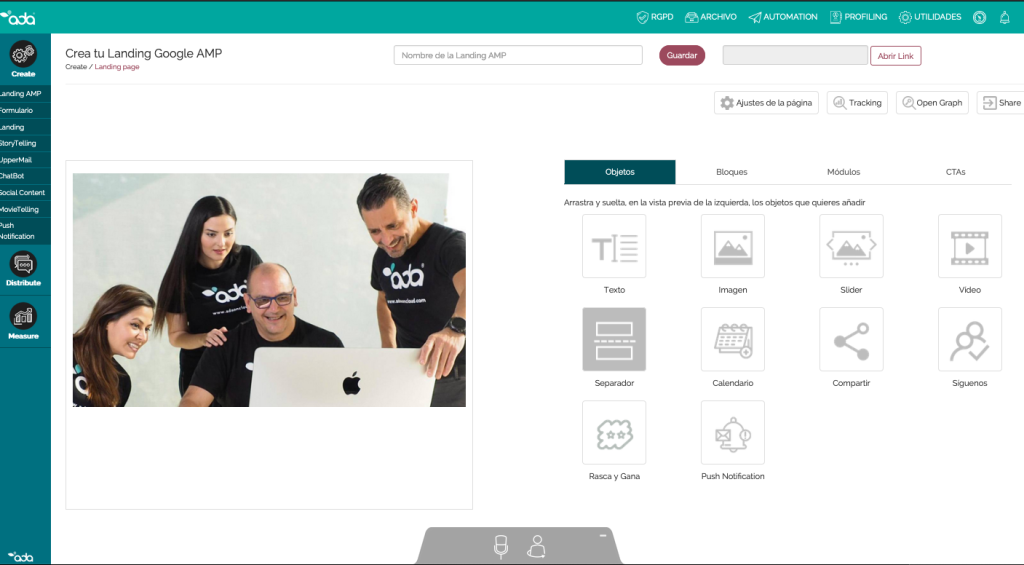
The bot handles order status, refunds, and product detail questions on its own, and Ada Translate means the same bot serves customers in their own language without a separate script. What she values most is the personalization; responses adjust based on what the bot knows about a customer instead of reading like a form letter.
The Engage feature lets her proactively reach out based on behavior, instead of waiting for a conversation to start. The dashboard shows exactly where the bot underperforms, so she isn’t guessing which flows need rework. For a genuinely global operation, the multilingual depth is hard to match.
Pros:
- Ada Glass to hand off conversations from chatbot to live agent with full context
- Automation to streamline workflows and processes with chatbot actions
- Ada Translate to support customers in multiple languages
- Engage feature to proactively reach out to customers with personalized messages
Cons:
- Mixed accuracy on nuanced or edge-case queries
- Some integration challenges and ongoing maintenance needs
User Rating: 4.7/5 (Capterra)
Pricing: Custom Quote
10. Comm100 AI Agent – Best for Regulated Industries
A friend who manages support for a regulated fintech company picked Comm100 because compliance could never be an afterthought in her line of work. She says the built-in SOC 2, PCI DSS, and HIPAA certifications meant her legal team signed off faster than with any other tool she reviewed.
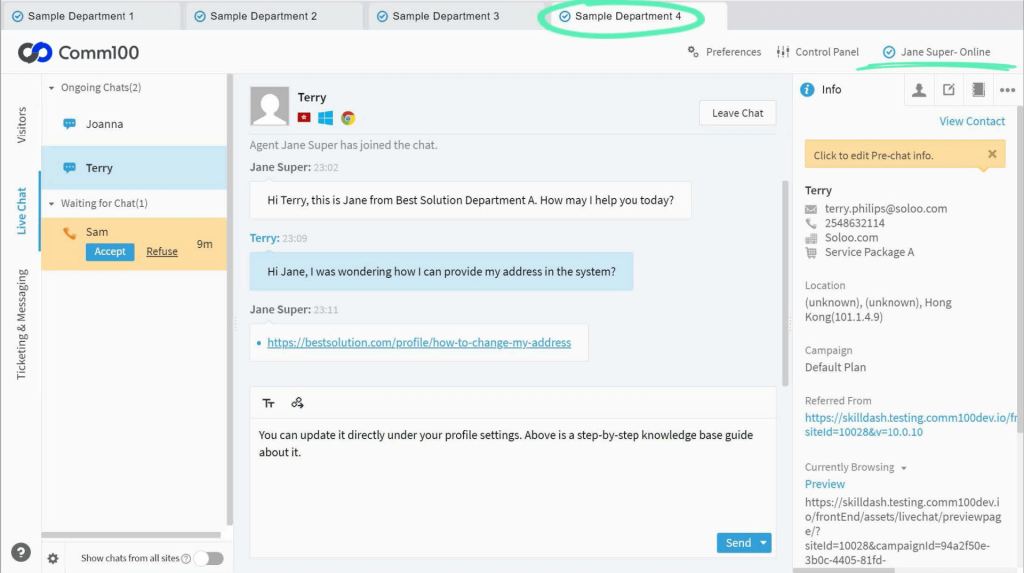
The AI trains directly from their website, knowledge base, and uploaded files, so going live didn’t mean building a knowledge base from scratch. What surprised her most was how the visual workflow builder handled bookings, order lookups, and ticket creation using plain-language commands, no logic trees required.
Beyond the chatbot itself, she runs live chat, ticketing, and an AI Copilot for her agents from one dashboard, cutting down on daily tool-switching. The AI Insights reporting gives her a clear read on resolution rates and satisfaction trends without manual pulling. For any team under strict compliance rules, Comm100 removes the back-and-forth with legal that other tools created.
Pros:
- Omnichannel AI deployment across live chat, email, SMS, and messaging apps
- Enterprise-grade security certifications built directly into the platform
- Visual workflow builder with natural-language commands to automate bookings, lookups, and ticket creation
- Built-in analytics to track CSAT, resolution rates, and lead conversions
Cons:
- Limited customization options in the dashboard
- Not suitable for smaller support operations
User Rating: 4.7/5 (Capterra)
Pricing: Starts at $31/agent/month
How I Chose These AI Chatbots for Customer Service
When I evaluate AI chatbot software for this list, I don’t just rely on feature lists or marketing claims. I look at how these tools actually perform in real-world scenarios. Here’s the framework I used to make sure every recommendation is practical, reliable, and worth considering.
- User Reviews / Ratings: I start by looking at real user feedback from platforms like Capterra. This gives me a clear picture of how support teams actually experience the tool day to day, what they love, and where it falls short.
- Core Features & Functionality: I focus on what truly matters in an automated customer service chatbot. This includes training accuracy, escalation handling, channel coverage, reporting, and integrations. If a tool cannot handle these well, it does not make the cut.
- Ease of Use: I pay close attention to how intuitive the platform feels. A tool might be powerful, but if agents struggle to adopt it, it defeats the purpose. Clean interface, simple navigation, and quick onboarding are non-negotiable for me.
- Customer Support: From my experience, implementation is where many tools fail. I evaluate how responsive and helpful the vendor’s support team is, especially during setup and ongoing use. Fast, reliable support makes a big difference in adoption.
- Value for Money: I compare pricing with what the tool actually delivers. This is not about picking the cheapest option, but about whether the features, flexibility, and performance justify the cost.
- Personal Experience / Expert Insights: Wherever possible, I rely on my own hands-on experience with these tools. I also consider insights from support leads, operations teams, and product managers who use these systems in real environments. This helps me go beyond surface-level reviews and highlight what actually works.
Top 3 AI Chatbots for Customer Service
Still unsure which one to pick? Here are my top three recommendations to make your decision easier.
1. ProProfs Chat
ProProfs Chat can be a strong choice for businesses seeking a comprehensive chatbot solution with easy customization, chatbot training, and ready-made chatbot templates. You can create multiple AI-powered chatbots for your website and help center pages, and automate your entire support process.
2. Intercom
If natural conversation quality matters more than anything else to you, Intercom is worth a hard look. It understands unusual phrasing instead of falling back on scripted trees, which makes it a strong fit for teams handling nuanced, real-world customer language.
3. Ada
Ada is an easy-to-use chatbot solution that can help you cater to global audiences with its multilingual support functionality. This is a reliable customer service chatbot when it comes to automating routine inquiries with round-the-clock support.
FREE. All Features. FOREVER!
Try our Forever FREE account with all premium features!
AI Customer Service Chatbot vs Traditional Live Chat: What’s the Difference?
Both aim to improve customer support, but the way they handle conversations, scale operations, and reduce workload differs significantly. Understanding this gap is the first step to picking an AI chatbot for customer support that actually fits how your team works today.
| Feature | AI Customer Service Chatbot | Traditional Live Chat |
| Availability | Operates 24/7 without breaks | Available only during agent working hours |
| Scalability | Handles multiple conversations simultaneously | Limited by the number of available agents |
| Automation | Automates FAQs, lead qualification, and routing | Fully manual responses |
| Human Support | Transfers complex issues to live agents with context | Already human-led, no automation layer |
| Cost Efficiency | Reduces ticket volume and staffing pressure | Requires hiring more agents to scale |
| Integrations | Connects with CRM, help desk, ecommerce, and social channels | Limited automation and integration capabilities |
| Response Speed | Instant replies for common queries | Depends on agent workload and queue size |
| Failure Mode | Poor training leads to wrong answers at scale | Poor staffing leads to long wait times |
What Customer Service Chatbot Trends Will Shape the Future?
Customer expectations are evolving faster than ever. Businesses are no longer looking for simple auto-responders. They want intelligent, integrated systems that improve customer experience and operational efficiency at the same time.
| Trend | What It Means | What to Check in Your Shortlist |
| Generative AI Responses | Dynamic answers instead of scripted replies | Does the vendor use an LLM, or a rule-engine with NLP labeling? |
| AI + Human Hybrid | Seamless bot-to-agent handoff | Test the handoff in the demo, not just the bot |
| Omnichannel Integration | Unified inbox across all channels | Count how many channels are native vs. third-party add-ons |
| CRM & Help Desk Sync | Real-time data sharing with your stack | Ask if sync is bidirectional or read-only |
| Proactive Engagement | Bot initiates based on behavior triggers | Check trigger logic: page-based, time-based, or intent-based? |
| Voice-Enabled Chatbots | Voice and text in the same platform | Most tools are still months away from production-ready voice |
| Multilingual Support | Real-time translation in conversation | Verify whether it’s real-time AI translation or pre-built variants |
| Analytics & Sentiment | Sentiment scoring plus trend analysis | Ask for a sample analytics dashboard before signing |
Future-Proof Your Support With a Reliable AI Chatbot
AI customer service chatbots are becoming the backbone of modern support, and customers now expect instant answers no matter the hour. Start by training yours on your most common questions, make sure the handoff to a live agent feels seamless, and connect it to your CRM and help desk before going live.
Pilot with one team, then refine using real chat insights over time. ProProfs Chat makes this easiest to pull off: it trains directly on your website and help center in minutes, deflects a large share of routine tickets on its own, and hands off to a live agent without losing context the moment a query gets complex.
Ready to elevate your support experience? It starts with the right chatbot.
Frequently Asked Questions
Does an AI chatbot ever fully replace human agents?
No. The consensus among support teams is that AI handles tier-1, repetitive queries well but still struggles with complex troubleshooting. The best setups pair AI with a fast, seamless handoff to a human, not a full replacement.
What happens when the AI gives a wrong answer?
This is called hallucination, where a bot confidently states something untrue, like a discount that doesn't exist. Reduce this by training the bot only on verified content and reviewing its answer accuracy regularly through analytics.
Can an AI chatbot handle more than just FAQs?
Yes, modern chatbots can schedule appointments, send invoices, update orders, and qualify leads, not just answer questions. Confirm this capability during your demo instead of assuming every chatbot can trigger actions.
Is it safe to feed customer data into an AI chatbot?
It depends on the vendor's security setup. Look for certifications like SOC 2 or HIPAA if you handle regulated data, and ask directly how the platform guards against prompt injection attacks.
How long does it take to see results from an AI chatbot?
Most businesses notice a drop in repetitive tickets within the first few weeks of a well-trained bot going live. Full ROI, including lead capture and reduced staffing pressure, usually becomes clear within one to two quarters.
Do I need a different chatbot for every messaging channel?
No. A good AI chatbot for customer service should centralize website, WhatsApp, Instagram, and other channels into a single dashboard, so your team isn't managing separate tools for each one.
Will customers know they are talking to a bot?
They should. Transparency about bot interactions builds trust, while bots that pretend to be human create backlash the moment they fail to resolve something. Always disclose that customers are chatting with AI.
Is an AI chatbot worth it for a small team?
Yes, if scoped correctly. Small teams benefit most from a bot handling one clear job well, like FAQs or lead capture, rather than trying to automate everything at once from day one.
FREE. All Features. FOREVER!
Try our Forever FREE account with all premium features!

 We'd love your feedback!
What did you like & how can we make it even better?

 Thanks for your feedback!
 Ask Your Question
Have a question? Get expert help to make your decision easier.