As someone who has worked closely with enterprise support and CX teams, I’ve seen firsthand how enterprise chatbots have evolved from simple FAQ tools into strategic business assets.
Today’s enterprise chatbots do far more than answer basic questions—they understand intent, train on your data, integrate deeply with CRMs and help desks, automate complex workflows, and deliver consistent experiences across channels and geographies.
In this guide, I’ll walk through what enterprise chatbots actually are, the key features you should care about, the use cases delivering real results today, and more. So, stay tuned!
What Is an Enterprise Chatbot?
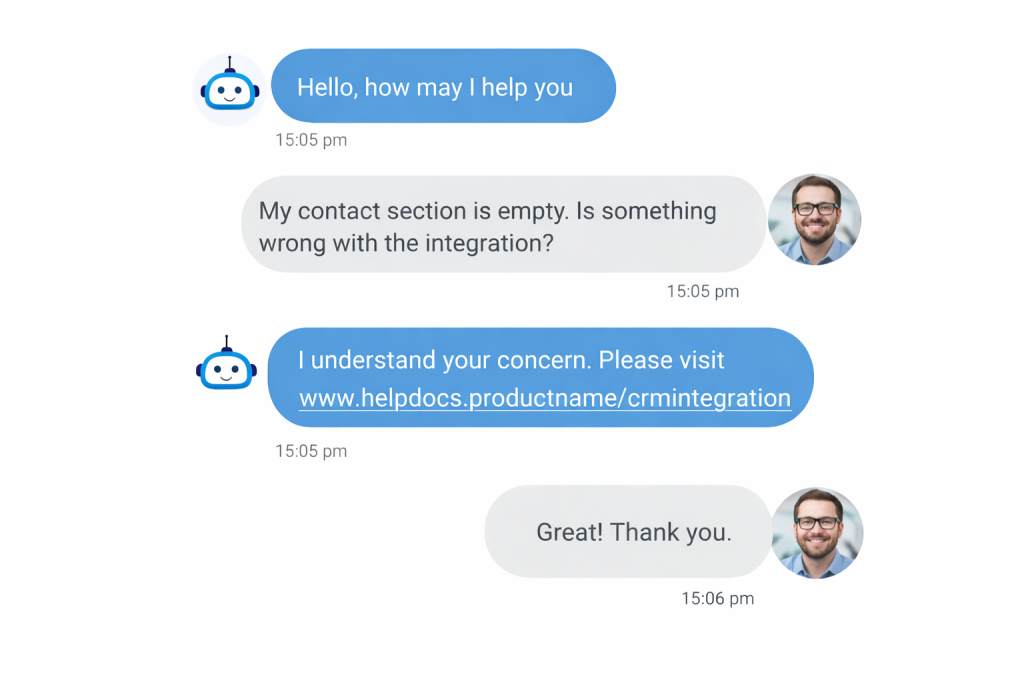
An enterprise chatbot is designed to operate at scale, not just answer a handful of website questions. Unlike basic chat widgets, enterprise chatbots manage high volumes of conversations across departments, systems, and regions.
They help manage tickets, book appointments, and route requests while pulling information from multiple data sources. These AI chatbots also follow security and compliance requirements and escalate conversations to humans when needed. This balance of automation, control, and reliability is what makes them suitable for enterprise environments.
Here’s what clearly defines a chatbot for enterprises:
- Handles large conversation volumes without performance issues
- Integrates with CRMs, LMSs, help desks, and internal systems
- Can be trained on documents, knowledge bases, and internal data
- Supports seamless handoff to human agents with full context
- Handles multilingual interactions across regions
Why Top Businesses Are Obsessed with Enterprise Chatbots (And You Should Be Too)
Top businesses are not adopting enterprise chatbot solutions because they are trendy. They are adopting them because quick scaling exposes gaps in speed, consistency, and availability that teams alone cannot handle. As conversations expand across channels, chatbots deliver clear benefits without requiring additional headcount.
In this section, you’ll see the key benefits enterprise chatbots deliver and why they have become essential for modern businesses.
1. 24/7 Availability Without Burnout
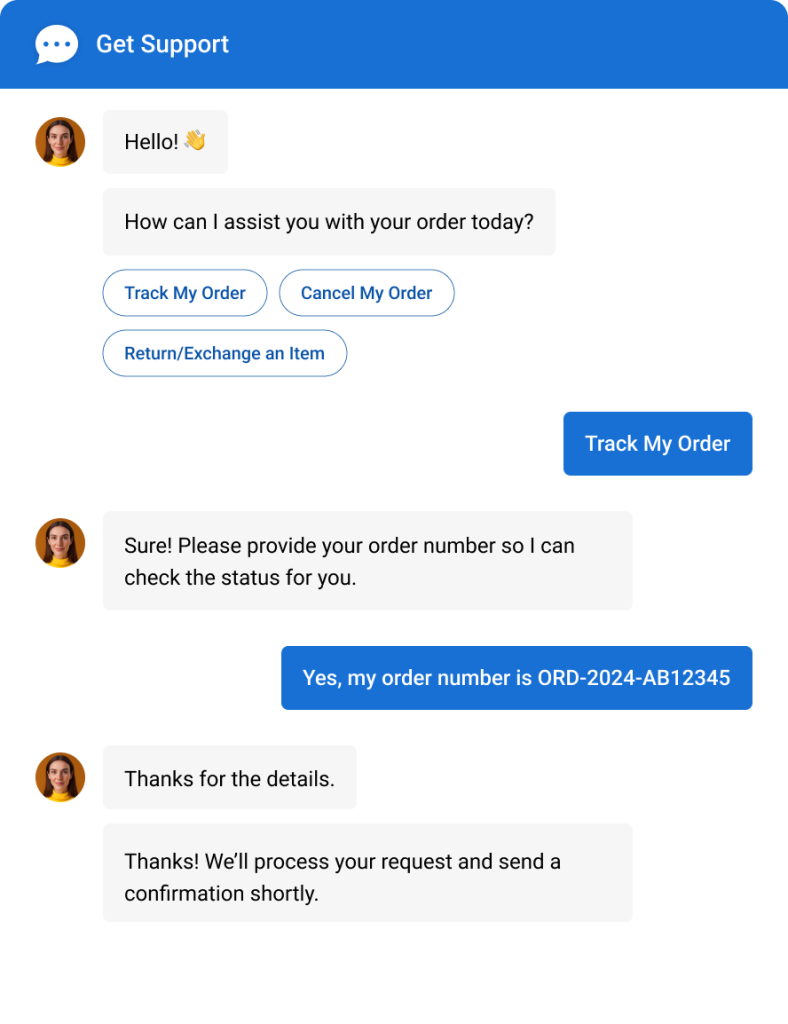
Imagine your customers getting instant help at 3 a.m. on a holiday, with no waiting and no frustration. Enterprise chatbots make this possible by offering true 24/7 availability without breaks or downtime. In a global, always-connected world, this matches modern expectations for speed and convenience.
Customers get answers when they need them, businesses see higher satisfaction and lower churn, and your brand stays responsive long after traditional support hours end.
2. Self-Service that Actually Works
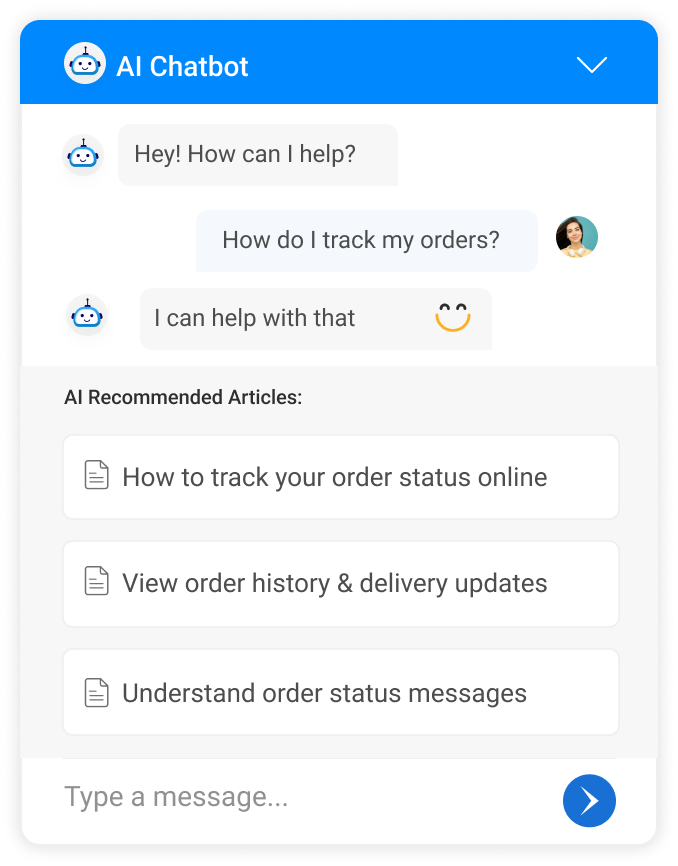
Most self-service fails because it is hard to navigate or poorly maintained. Enterprise chatbots improve this by delivering answers in context and integrating directly with your knowledge base. They guide users step by step, pull the most relevant articles or documents automatically, and reduce unnecessary back and forth.
When users can resolve issues on their own without frustration, support teams see fewer repetitive tickets, faster resolution times, and customers feel more confident and in control.
3. Turn Conversations Into Qualified Leads

Top businesses don’t just use enterprise chatbots to answer questions. They use them to qualify and convert leads. Built-in lead generation features allow chatbots to ask smart multiple-choice and open-ended questions, capture visitor details, and understand intent in real time.
This helps filter serious prospects from casual visitors and route high-quality leads to the right teams faster. The result is better conversations, stronger conversions, and a smoother buying experience without relying on static forms.
4. Smoother Access to Human Agents
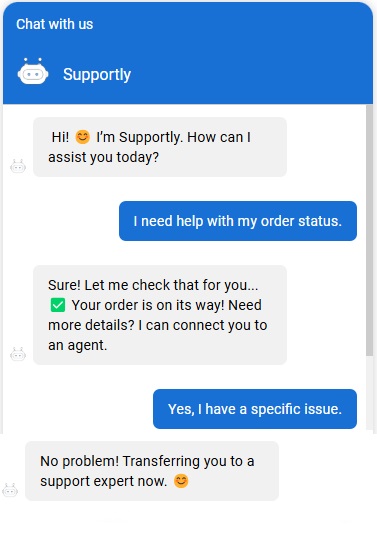
Enterprise chatbots are not meant to block human support. They are meant to improve it. By collecting context upfront and routing conversations effectively, chatbots help customers reach the right agent more quickly.
Agents start conversations with a full background instead of asking basic questions again. This makes interactions feel more personal and reduces the frustration that often comes with escalations.
If you want to see this in action, check out this short video:
5. Real-time Customer Insights that Matter
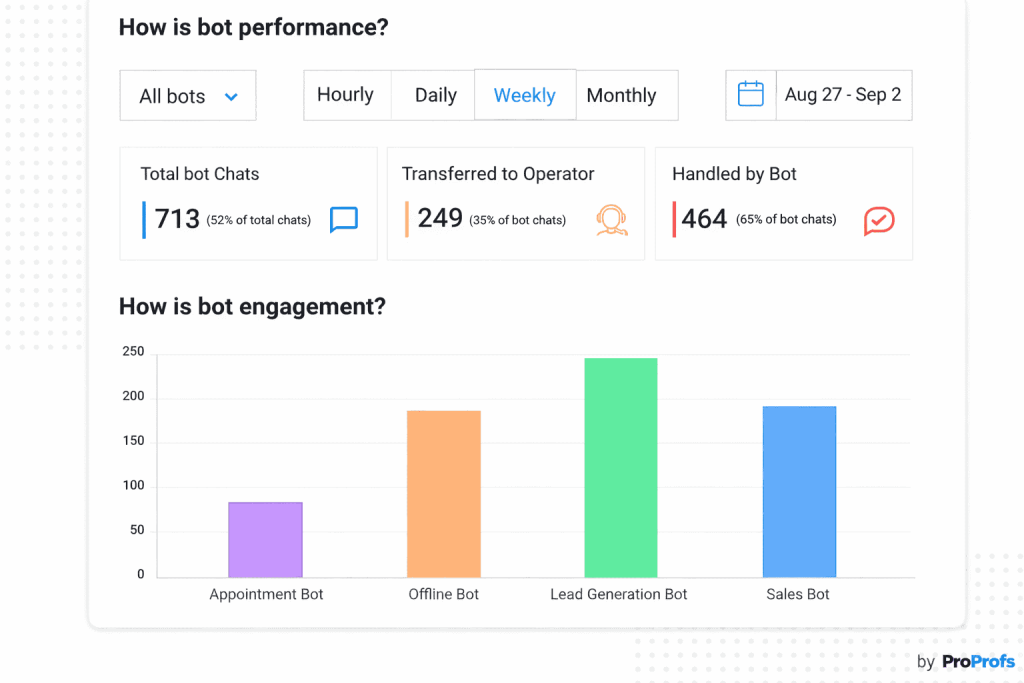
Every chat tells a story about what customers actually need. Enterprise chatbot platforms offer real-time reports and analytics that capture the questions users ask, the points where they hesitate, and how each issue gets resolved. They also track key metrics, such as the number of chats handled by the bot and the number transferred to agents.
Because this data updates in real time, teams can spot trends early, improve workflows, refine content, and make smarter decisions based on real customer behavior rather than assumptions.
Enterprise Chatbot Checklist: 5 Features You Can’t Afford to Skip
Choosing an enterprise chatbot is less about flashy demos and more about whether it fits how your business actually operates. The right features determine whether the chatbot becomes a long-term asset or just another tool your team works around.
Below are five must-have features that separate enterprise-ready chatbots from basic solutions.
1. Extensive Customization that Fits Your Brand
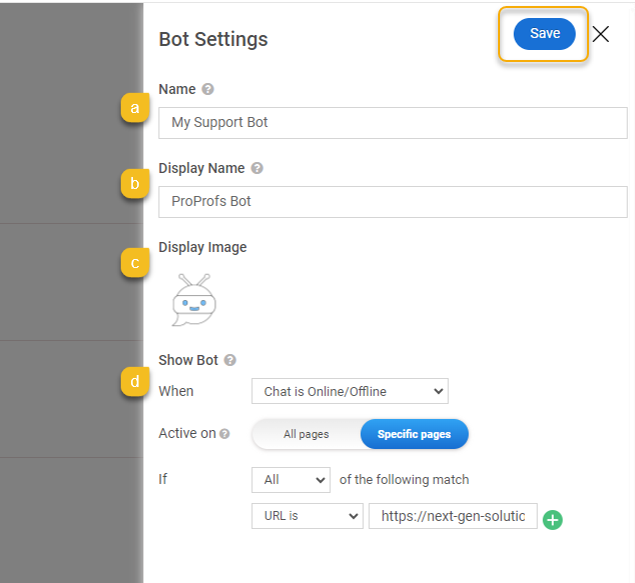
An enterprise chatbot should feel like a natural extension of your business, not a generic widget dropped onto your site. Customization goes beyond colors and logos. It includes chat flows, greetings, form fields, business hours, and routing rules. It lets you give your chatbot a name, a face, and a brand-focused tone that reflects how your business communicates.
When teams tailor these elements to match branding and workflows, conversations feel consistent, intentional, and familiar across every customer touchpoint.
2. AI Chatbot Training for Reliable Answers
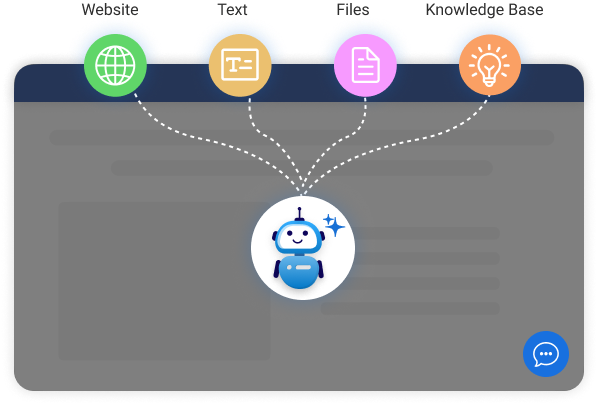
A chatbot is only as good as the information it understands. Enterprise chatbots must support training using knowledge bases, documents, FAQs, and internal content. AI chatbot training allows the bot to deliver accurate answers and adapt as information changes.
Over time, better training reduces incorrect responses, improves self-service success, and ensures the chatbot stays aligned with real business knowledge.
3. Seamless Integrations Across Systems
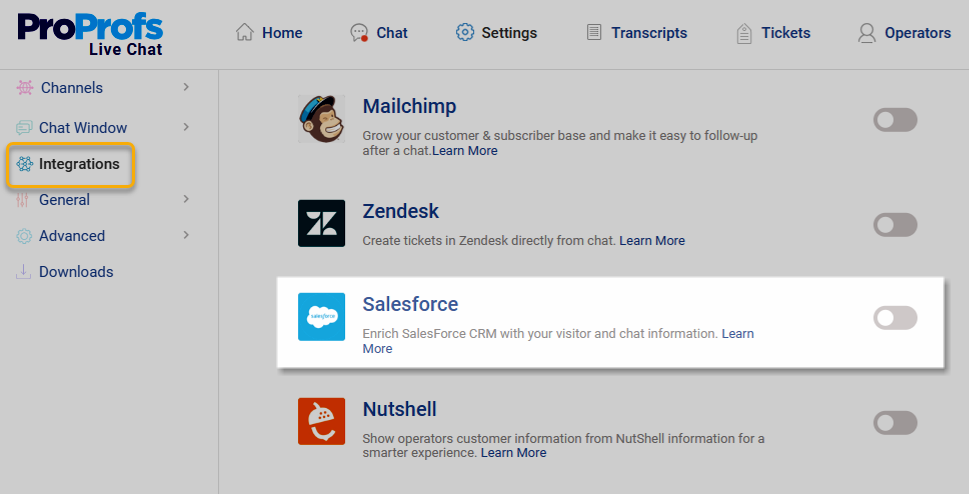
Enterprise chatbots are designed to seamlessly integrate with the systems businesses already rely on. They connect with CRMs, help desks, LMS platforms, calendars, and internal tools to keep workflows uninterrupted. With these integrations in place, chat conversations can automatically trigger tickets, book appointments, update records, and sync data across systems.
This removes manual effort, keeps teams aligned, and turns everyday conversations into meaningful, actionable outcomes instead of dead ends.
4. Seamless Support Across Multiple Languages
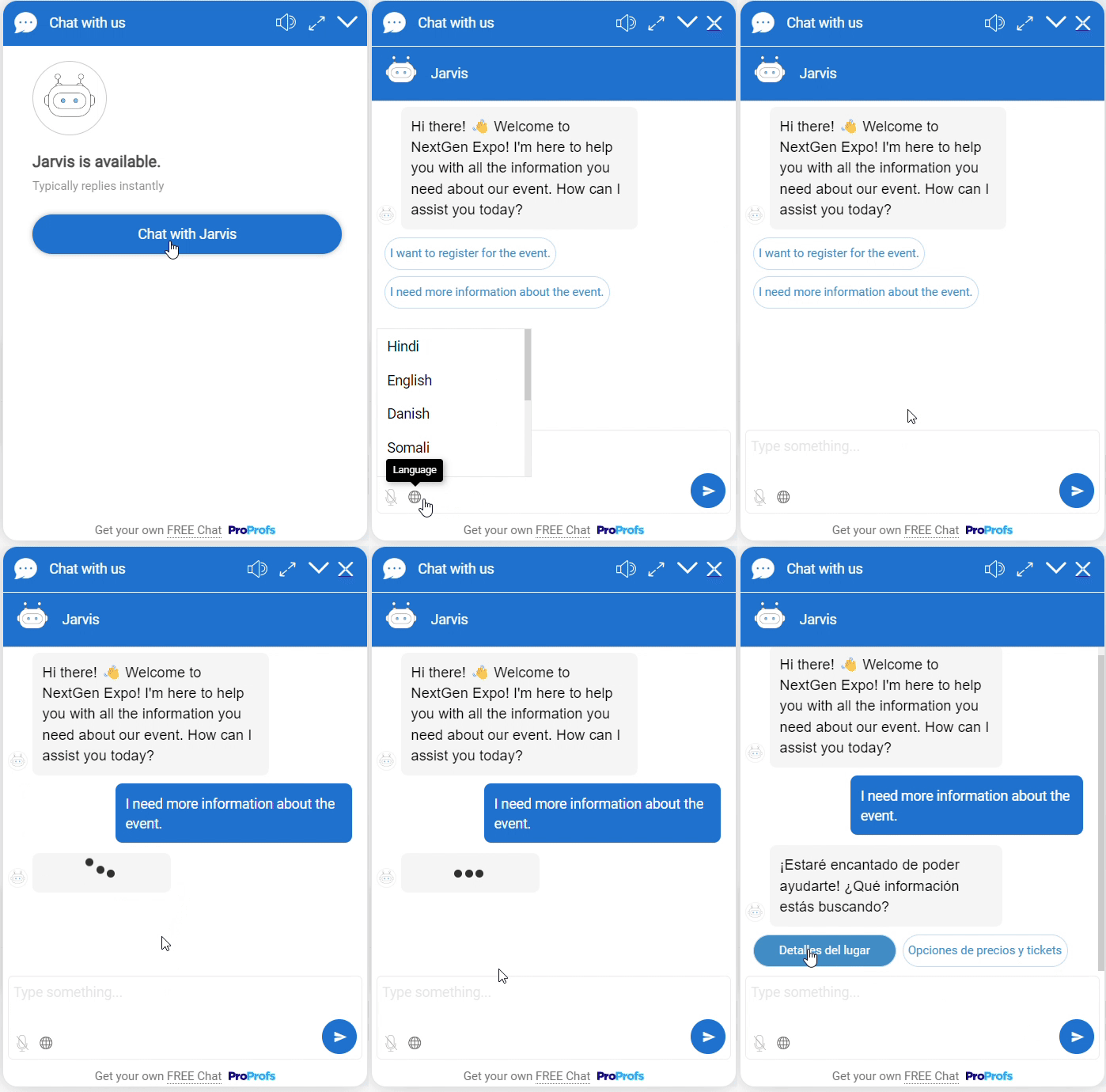
For enterprises serving global audiences, language support is not optional. Enterprise chatbots address this with built-in, real-time translation, making it easy to deploy a multilingual chatbot that lets users interact in their preferred language without friction. The chatbot understands and responds accurately across languages while maintaining consistent answers across regions and time zones.
This capability makes global support scalable and dependable, helping businesses deliver the same service quality worldwide without relying on region-specific teams or manual translation processes.
5. Omnichannel Presence without Complexity
Customers move across channels, and enterprise chatbots need to follow. Whether conversations start on a website, mobile app, or social platform, the experience should remain consistent. Omnichannel capability ensures that users receive the same high-quality responses regardless of where they engage.
For businesses, this creates a centralized way to manage conversations, maintain context, and avoid juggling multiple tools, resulting in smoother and more efficient customer communication.
Top 5 Enterprise Chatbots for Modern Enterprises
Choosing the right enterprise chatbot can make a real difference in how teams manage conversations at scale. I’ve compiled this list based on tools that strike a balance between strong features, ease of use, analytics, and flexibility across various enterprise use cases.
For each one, I’ve shared a clear overview, key strengths, a few limitations, and pricing context to help you quickly understand what fits your needs best.
1. ProProfs Chat
I like tools that don’t overcomplicate things, especially when conversations start coming in from everywhere. ProProfs Chat feels practical in that sense. It helps me automate repetitive questions, stay available around the clock, and maintain consistent conversations even as chat volume increases. As an enterprise chatbot, it focuses on doing the basics really well without adding unnecessary friction.
What makes it easy to adopt is the set of ready-to-use chatbot templates for lead generation, customer support, appointment booking, and feedback. I can also train the AI chatbot using website or help center content, which helps the chatbot give accurate, contextual responses without constant tuning.
For day-to-day operations, ProProfs Chat covers what matters. Multilingual support helps me serve global users, the voice assistant adds flexibility, real-time visitor tracking enables timely engagement, and smart routing ensures conversations reach the right agents smoothly.
Pros:
- AI chatbot training using website or help center data for accurate responses
- Real-time visitor tracking for timely outreach
- Proactive chat invitations to drive engagement and conversions
- Customer Delight Suite to offer 360-degree support.
Cons:
- Cloud-only – no offline access
- No dark theme
Pricing: A free plan is available for growing teams. Paid plan starts at [automate-price].
2. Drift
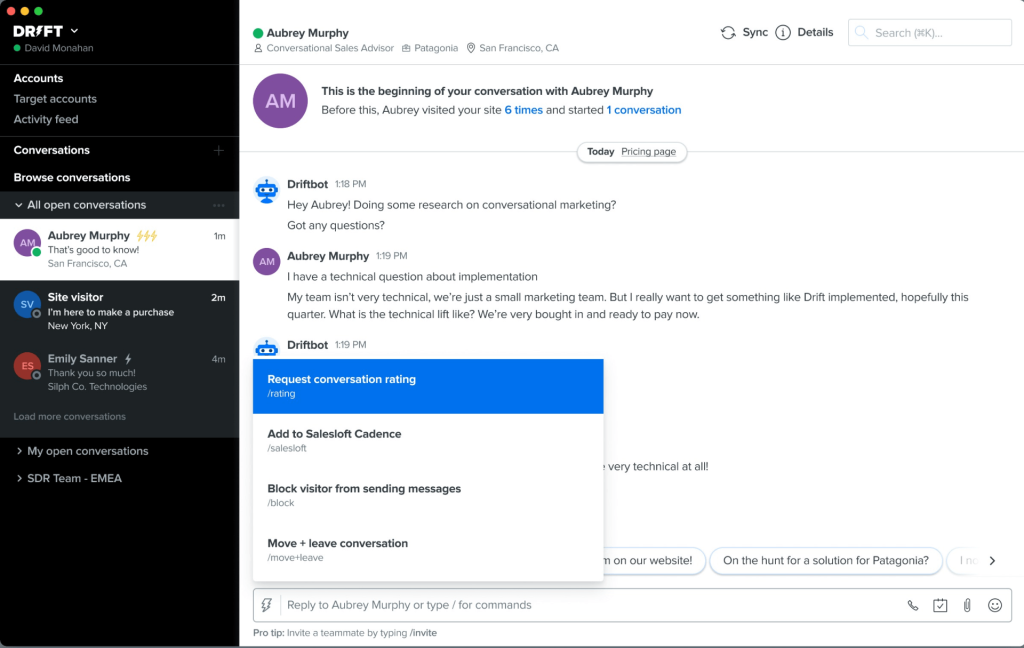
Drift is built for enterprises that treat chat as a revenue channel, not just a support tool. It focuses heavily on real-time conversations that help qualify leads and connect buyers with the right sales reps faster. From what I’ve seen, Drift works best when speed and intent matter more than long support workflows.
The AI agents are designed to ask smart questions early, so conversations don’t stall. Instead of generic replies, Drift pushes chats toward meetings, demos, or sales handoffs. This makes it especially useful for high-traffic enterprise websites.
Drift also fits well into complex sales stacks. With strong CRM integrations and account-based routing, it gives teams clear visibility into how conversations influence pipeline and revenue.
Pros:
- AI lead qualification and routing to connect high-intent visitors with sales instantly.
- Proactive chat playbooks to engage users based on behavior or account data.
- Custom chatbot flows to match enterprise sales processes.
- Revenue-focused analytics to track impact on pipeline and conversions.
Cons:
- Setup may require sales ops or technical support.
- Less suited for non-sales-heavy chatbot use cases.
Pricing: Contact the sales team.
3. Freshchat
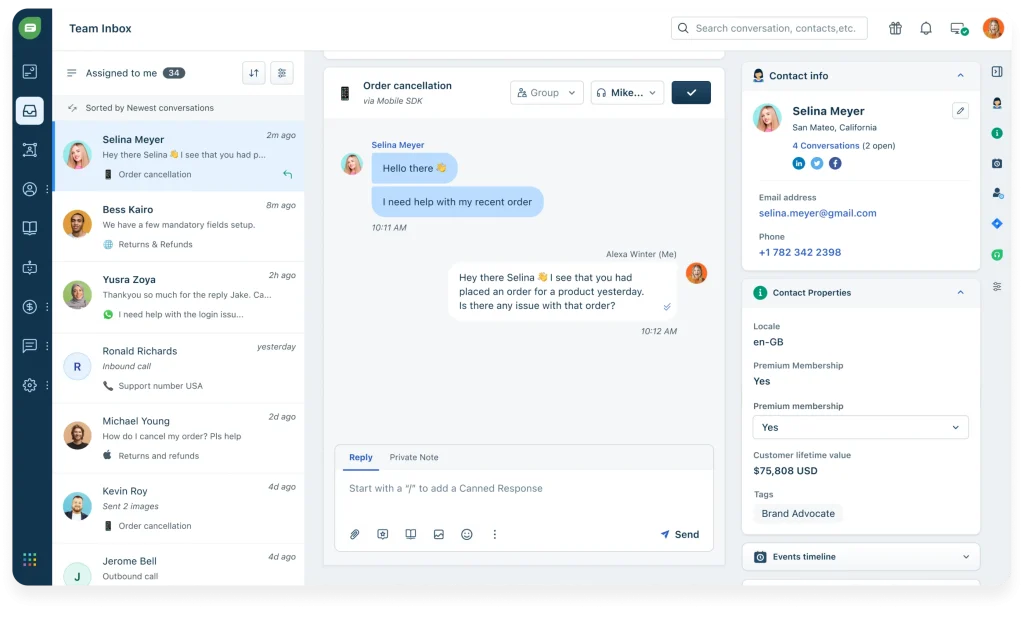
Freshchat is a strong pick for enterprises that want chatbot automation tightly connected to customer support and sales. It feels practical rather than flashy, which works well when teams are dealing with high chat volumes and real customers every day. The platform handles scale comfortably and fits well into structured enterprise workflows.
What I like about Freshchat is how it strikes a balance between automation and human support. AI bots handle common questions, while agents can step in easily with full context when needed. This keeps conversations moving without making the experience feel robotic or disconnected.
Freshchat also works well inside larger enterprise setups. With solid integrations, omnichannel support, and role-based controls, it feels more like a conversation layer built for growing teams than a standalone chatbot.
Pros:
- Proactive chat triggers to start conversations automatically
- Smart chat routing to connect users with the right team
- Omnichannel messaging across web, mobile, and social channels
- Automation playbooks to standardize responses at scale
Cons:
- AI chatbot training is limited compared to AI-first tools
- Advanced analytics require higher-tier plans
Pricing: Starts at $19/user/month.
4. Ada
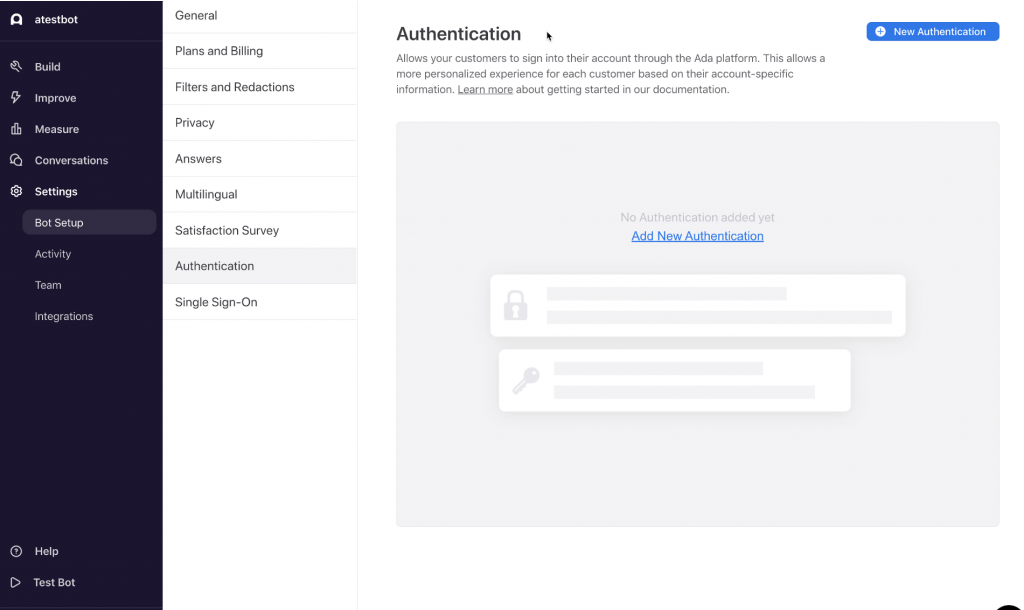
Ada is an enterprise-focused AI chatbot platform built for organizations that want to automate customer conversations at scale without losing accuracy. I see it working best for enterprises handling high volumes of support inquiries and seeking to reduce their reliance on live agents while maintaining consistent, reliable responses.
What I like about Ada is how approachable it feels for business teams. I can train and update the chatbot without heavy engineering involvement, which makes it easier to keep answers aligned with changing policies and customer needs. Over time, the bot improves by learning from real conversations.
Ada also fits well into enterprise environments. I can deploy it across multiple channels, support global audiences with multilingual capabilities, and use built-in analytics to track performance and outcomes across customer touchpoints.
Pros:
- AI-driven automation for handling high-volume customer queries
- No-code chatbot training to update responses quickly
- Omnichannel deployment across web, apps, and messaging platforms
- Built-in analytics to track chatbot performance
Cons:
- Complex workflows may require setup time
- Custom integrations may need technical support
Pricing: Contact the sales team.
5. Intercom
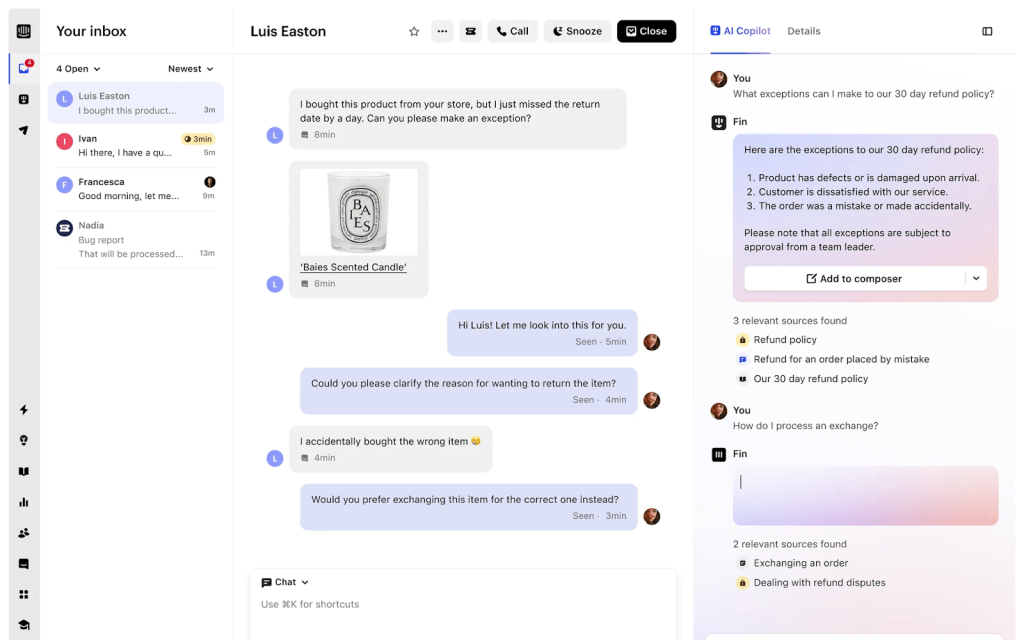
Intercom is a well-known enterprise chatbot and messaging platform built for teams that want structured, personalized conversations at scale. It works especially well for companies that prioritize customer engagement across the website, product, and support journeys. The platform handles high chat volumes while maintaining conversations that are contextual and aligned with the brand’s voice.
What I like about Intercom is the level of control it offers. I can customize bot flows, messages, and qualification logic to match our desired user engagement approach. Automated routing and seamless handoffs ensure that customers reach the right team without having to repeat themselves.
Intercom also integrates cleanly with CRMs and analytics tools. I can track performance, understand intent, and optimize conversations based on real data, which makes it a strong fit for enterprise teams focused on growth and efficiency.
Pros:
- Customizable bots and workflows to match brand voice
- Real-time lead qualification to capture intent quickly
- Smooth bot-to-agent handoff with full context
- Detailed analytics and reporting for optimization
Cons:
- Advanced features require higher-tier plans
- Setup can be complex for deeply customized flows
Pricing: Starts at $29/month.
Step-by-Step Guide: Install Your Enterprise Chatbot Without the Headaches
Setting up an enterprise chatbot often sounds more complex than it really is. When I explored ProProfs Chat for enterprise chatbot development, I was surprised by how quick and easy the setup felt, even without deep technical work. The process is designed to get a chatbot live with minimal friction, especially if you are doing this for the first time.
Here’s a simple walkthrough to show how easily an AI-powered chatbot can be set up and trained.
Step 1: Create a New AI Chatbot
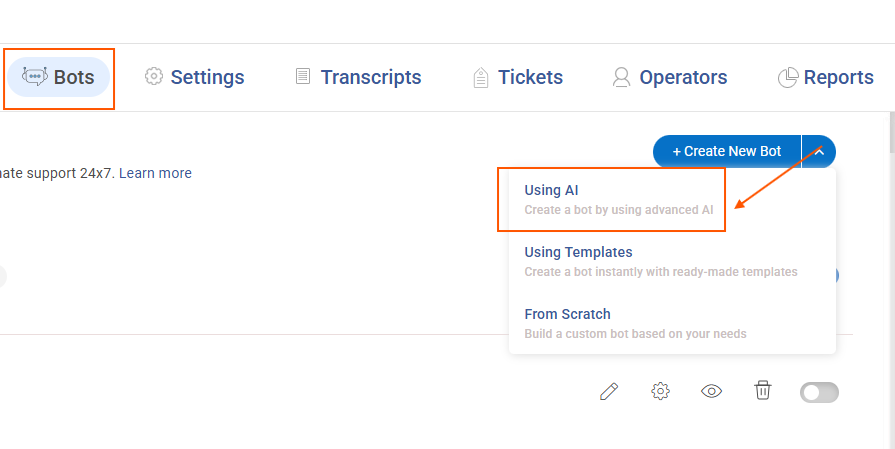
After logging in, go to the Bots section and click Create New Bot. From the available options, select Using AI. This allows the chatbot to learn from your content instead of relying only on fixed scripts.
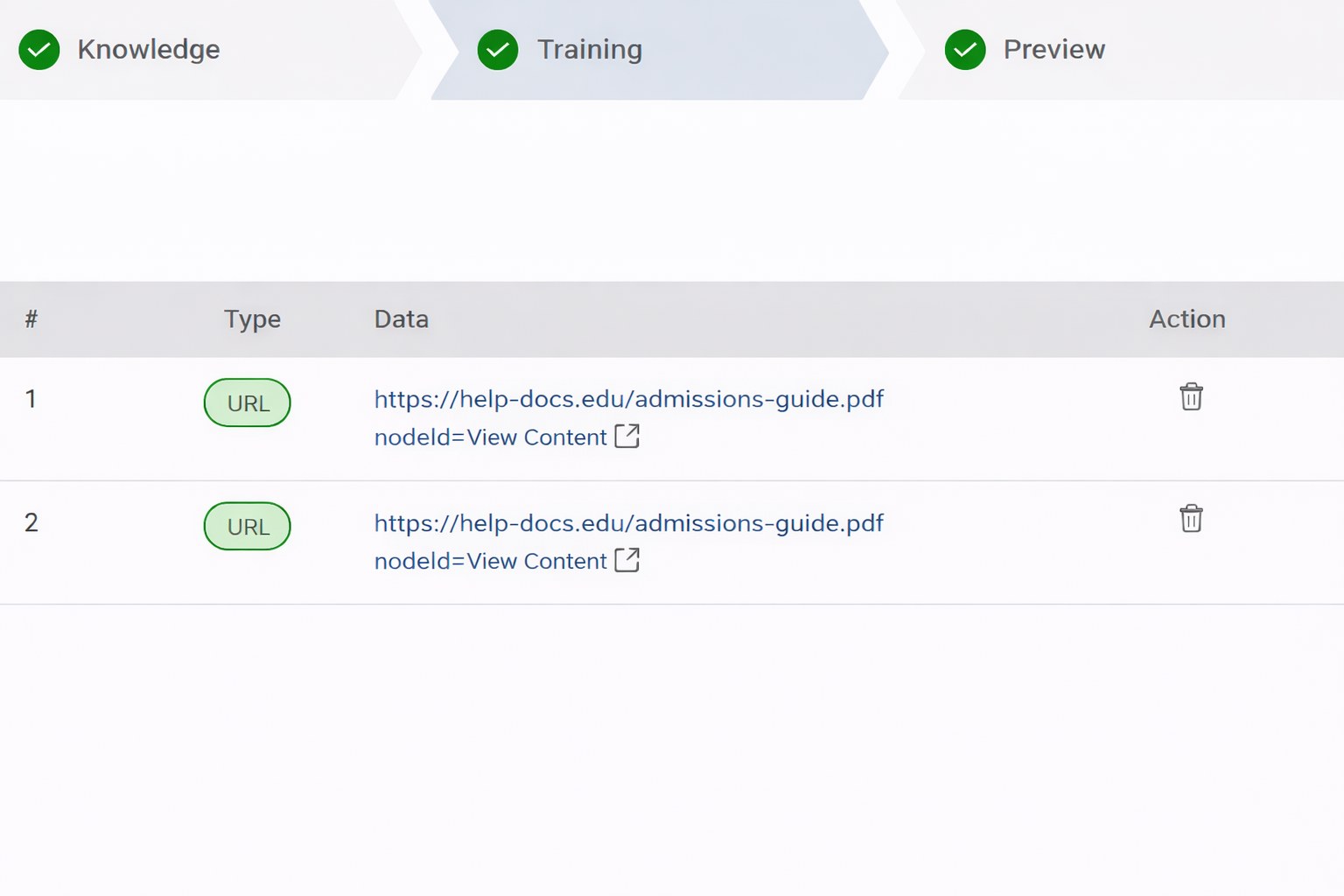
Step 2: Add Your Data Source
Upload the content you want the chatbot to learn from. This can be a website URL, documents, plain text, or a connected knowledge base.
Once added, click Process Data so the system can prepare the content for training.
Step 3: Preview and Test the Chatbot
When processing is complete, use the Preview option to test how the chatbot responds.
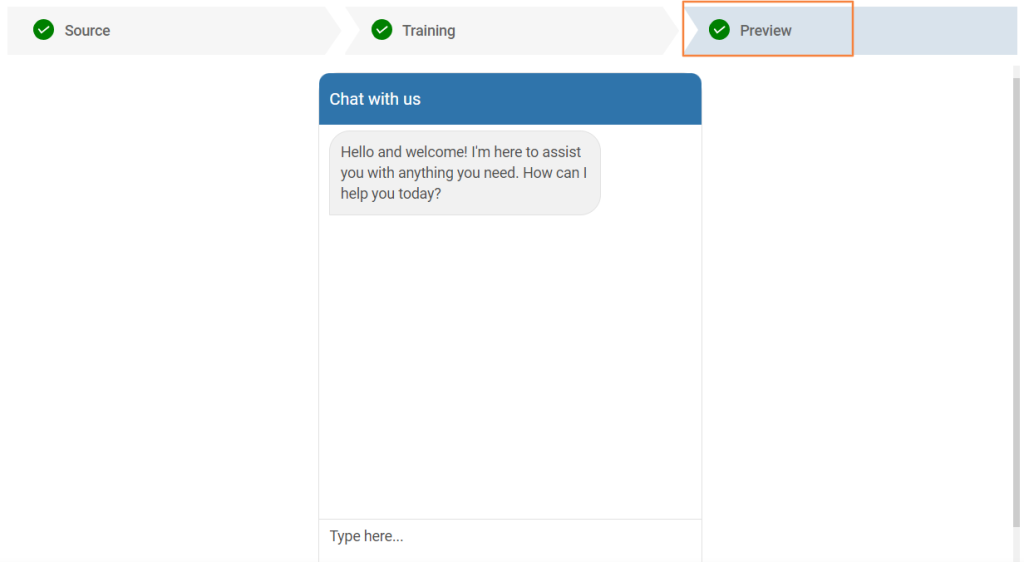
At this point, it’s ready to engage visitors.
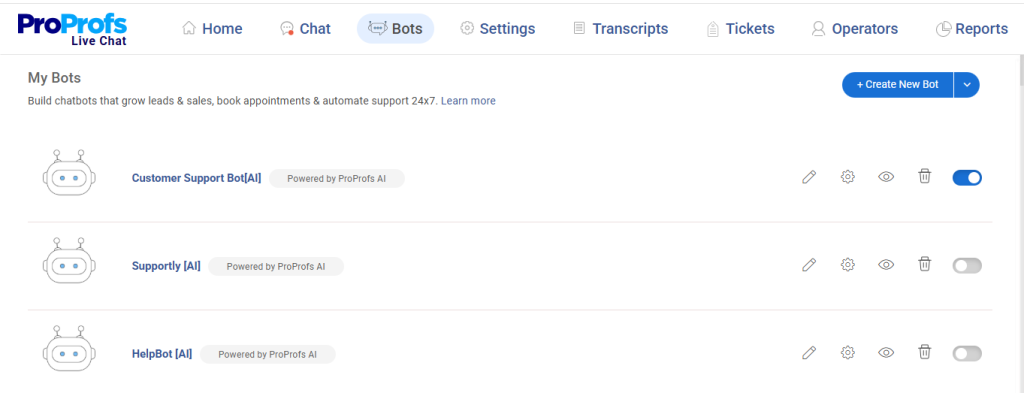
You can revisit the Bots section anytime to retrain the chatbot or adjust its settings.
High-Impact Enterprise Chatbot Use Cases Driving Results This Year
Enterprise chatbots are no longer limited to answering basic questions. In 2026, they are actively shaping how enterprises sell, support, and operate at scale. When deployed with the right intent, these chatbots move from being helpful assistants to high-impact business drivers. Below are six use cases where enterprise chatbots are already delivering measurable results.
1. Customer Support Automation at Scale
Enterprise chatbots handle high volumes of repetitive support queries such as order status, account access, and common policy questions. By resolving these instantly, they reduce ticket backlogs and response times. Support teams can then focus on complex or sensitive issues, improving efficiency while maintaining consistent service quality across all customer touchpoints.
2. Sales Qualification and Lead Routing
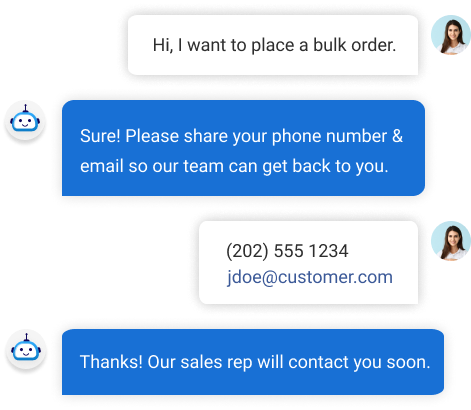
Chatbots engage website visitors the moment they arrive, asking qualifying questions to understand intent and urgency. They capture contact details, filter high-quality leads, and route them to the right sales teams. This speeds up follow-ups, reduces lead leakage, and helps sales teams focus their time on prospects most likely to convert.
3. Employee Self-service and Internal Support
Enterprise chatbots support employees by answering HR, IT, and policy-related questions instantly. Instead of raising tickets or waiting for responses, employees get immediate access to information. This reduces internal support workload, improves productivity, and ensures consistent answers across departments without constant manual involvement.
4. Appointment Booking and Scheduling
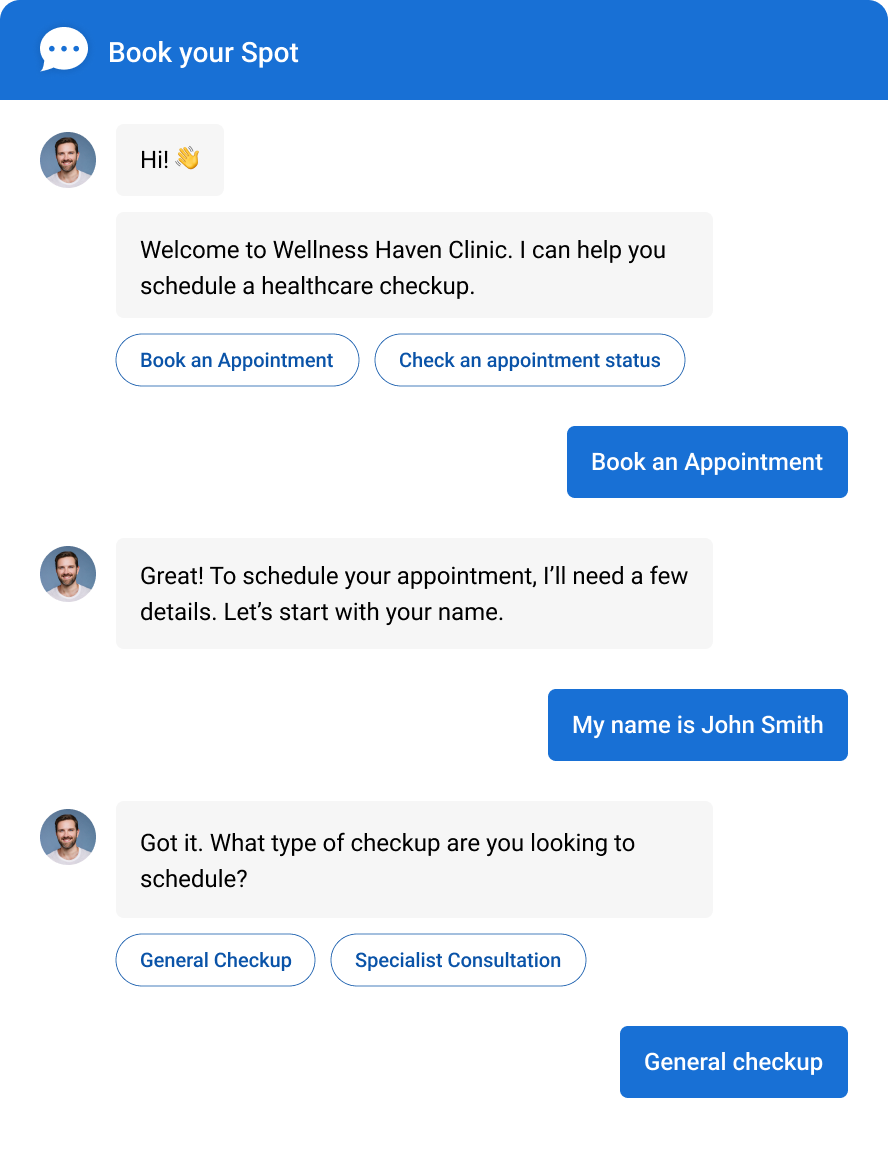
Chatbots simplify scheduling by sharing availability, booking meetings, and sending confirmations automatically. They remove the back-and-forth of emails and prevent delays in decision-making. Whether for sales calls, demos, or consultations, automated scheduling helps businesses move prospects forward faster and keeps teams organized.
5. Global Customer Engagement
With multilingual support and real-time translation, enterprise chatbots engage users across regions and time zones. Customers interact in their preferred language while receiving accurate, consistent responses. This allows global businesses to scale support efficiently, maintain service quality, and serve international audiences without expanding regional support teams.
6. Product Guidance and Onboarding
Enterprise chatbots guide users through product features, setup steps, and onboarding processes in real time. By offering contextual help when users need it, they reduce confusion and support requests. This improves product adoption, shortens time to value, and helps customers feel confident using complex platforms.
The Future of Enterprise Chatbots and What to Expect
Enterprise chatbot platforms are entering a more mature phase. What began as basic automation is now shaping how enterprises manage conversations at scale. As we move into 2026 and beyond, enterprise chatbots will be expected to deliver accuracy, control, and measurable impact. The table below highlights the key shifts ahead, what they mean for enterprises, and why they matter.
| What’s Changing | What It Means | Why It Matters |
|---|---|---|
| Deeper business context | Chatbots will use internal data, systems, and workflows to respond accurately | Answers feel relevant, reliable, and aligned with business logic |
| Stronger AI guardrails | More controls, validation layers, and governance | Reduces risk, errors, and compliance concerns |
| Proactive conversations | Bots anticipate intent instead of waiting for questions | Faster resolution and fewer escalations |
| Human–AI collaboration | Seamless handoffs and shared visibility for teams | Better experiences without losing the human touch |
| Advanced language support | Real-time translation and multilingual depth | Consistent global support at scale |
| Tighter system integrations | Deeper links with CRM, ERP, analytics, and tools | Conversations trigger real actions |
| Clear ROI measurement | Metrics tied to cost, efficiency, and revenue | Easier justification and optimization of chatbot investments |
Scale Support the Smart Way With Enterprise Chatbots
Enterprise chatbots have moved far beyond simple automation. Today, they shape how large businesses handle conversations, scale support, qualify leads, and deliver consistent experiences across channels.
If you are evaluating chatbot automation, focus on solutions that integrate with your existing tools, support AI chatbot training, offer omnichannel coverage, and provide clear analytics. Start small, measure impact, and expand use cases where automation creates the most value.
From what I’ve seen, ProProfs Chat is the best option if you want enterprise-ready chatbot automation without unnecessary complexity. It brings AI chatbots, live chat, integrations, and analytics into one place.
Try it now and start turning conversations into real business outcomes!
Do you want a free Live Chat software?
We have the #1 Online Live Chat Software for instant customer support 24x7