A patient calls your front desk at 7 PM to reschedule. Nobody answers. She tries the next morning again, sits on hold for eleven minutes, then gives up on the appointment entirely. Multiply that across every practice in the country, and you get a healthcare system quietly losing patients to something as basic as an unanswered call.
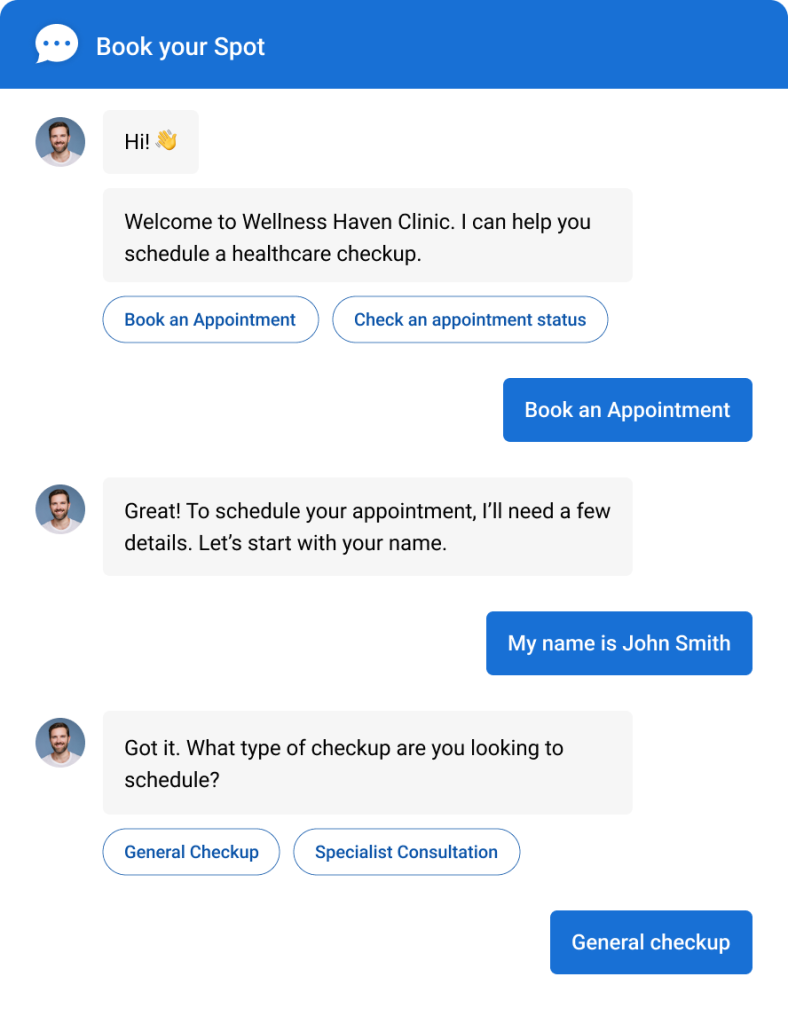
AI Support Agents for Healthcare close that gap: a real conversation, an actual action like booking or rescheduling, and a clean handoff to a human the moment clinical judgment is needed.
I tested the platforms healthcare teams actually use for this, from single-location practices to hospital call centers. Here are the ten worth your attention, what each is built for, and where each falls short.
What Is an AI Support Agent for Healthcare?
What separates an agent from a plain chatbot is that it acts, updating a record or confirming a booking directly inside your EHR or CRM, instead of just replying with text.
Demand for these tools is climbing because the old way of covering patient support, more phone lines and more after-hours staff, doesn’t scale. Health systems are turning to agents that can actually resolve a request, not just acknowledge it, and patients now expect the same instant response from a clinic that they get from any other business.
In fact, Chatbots are reshaping healthcare at an accelerating pace. According to Fortune Business Insights (2025), the global healthcare chatbot market was valued at USD 1.98 billion in 2025 and is on track to reach USD 12.63 billion by 2034.
10 Best AI Support Agents for Healthcare
I evaluated each platform on how it performs in real patient-facing and administrative scenarios, not just its marketing page. Here’s the quick comparison before the full breakdown.
| AI Support Agent | Best For | Pricing | User Rating |
| ProProfs Chat | 24/7 AI-powered patient support and ticket deflection | Free plan available. Starts at $19.99/month | 4.8/5 (Capterra) |
| Hyro | Real-time patient access automation across voice and chat | Enterprise, custom pricing | 4.9/5 (G2) |
| Kore.ai HealthAssist | Omnichannel patient and payer support at enterprise scale | Enterprise, custom pricing | 4.6/5 (G2) |
| Cognigy | Enterprise contact center AI agents with HIPAA compliance | Custom pricing | 4.6/5 (G2) |
| Talkdesk Healthcare | Unifying patient data across every contact center channel | Custom pricing | 4.4/5 (G2) |
| Notable Health | Automating patient intake and prior authorization | Custom pricing | 4.5/5 (G2) |
| Sully.ai | A modular AI workforce across front desk and back office | Starts at $79/month | Not yet rated on G2/Capterra |
| Hippocratic AI | Safety-first voice agents for non-diagnostic patient outreach | Starts at $400/month (third-party estimate) | 4.6/5 (Capterra) |
| Ada Health | AI-powered symptom assessment and triage | Custom pricing | 4.6/5 (G2) |
| Beam AI | Multi-agent automation of administrative healthcare workflows | Custom pricing | 4.9/5 (Capterra) |
1. ProProfs Chat – Best for Easiest Live Chat & AI Customer Service Agent for Instant, Automated Support
I keep coming back to ProProfs Chat for one reason: it gets a real AI support agent live the same day, without a developer touching it. You train the agent on your website, your help center, or uploaded clinical documents, and it starts answering patient questions with the source cited right in the response, so your front desk staff can trust what it’s telling people.
What makes it more than a glorified FAQ bot is the action layer. AI Agents don’t just answer, they complete tasks: confirming appointments, updating records in connected tools, or pinging your team on Slack when a patient needs a callback.
Sentiment Analysis flags when a patient sounds frustrated or anxious before the conversation goes sideways, Risk Prediction scores which conversations need urgent attention, and the Resolution Overview gives you a clean summary of exactly how every chat ended. When the bot hits its limit, human handoff carries the full conversation history over so the patient never repeats themselves.
Pros:
- Trains on your website, help center, or uploaded clinical documents with no coding required
- Proactive chat invitations based on visitor behavior engage patients who show hesitation or exit intent
- Sentiment Analysis and Risk Prediction surface at-risk patient conversations before they escalate
- Customer Delight Suite bundles live chat, help desk, knowledge base, and survey tools in one platform
- Human handoff preserves full conversation context, so patients never have to repeat themselves
Cons:
- Cloud-only – no offline access
- No dark theme
User Rating: 4.8/5 (Capterra)
Pricing: A free plan is available for growing teams. Paid plan starts at $19.99/month.
2. Hyro – Best for Real-Time Patient Access Automation Across Voice and Chat
When I tested Hyro for a health system client, what stood out immediately was how little setup it needed. It pulls straight from existing content and data sources, so there’s no messy back and forth building conversation flows from scratch.
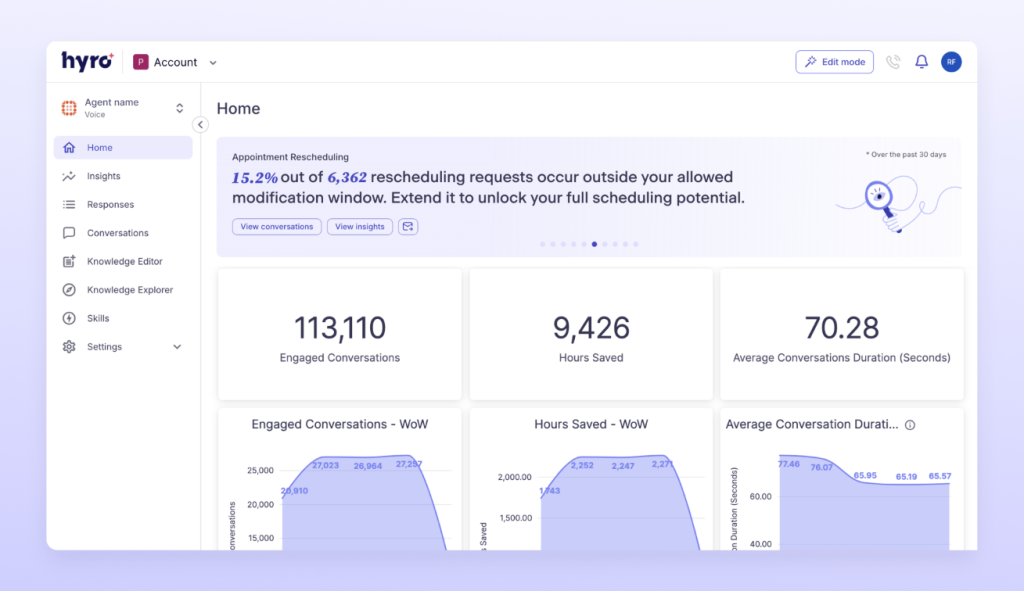
One deployment covers phone, web, mobile, and SMS, which means we didn’t need separate builds for the call center and the website. Intermountain Health uses it to bring down call abandonment and shorten patient wait times, and that case study alone convinced a few skeptical stakeholders on my team. Since it runs on Azure, it fits smoothly into our enterprise governance checks.
It’s clearly built for Epic-centric organizations, handling physician search, scheduling, and call routing well. The only friction was pricing. It’s enterprise, quote-based, and there’s nothing published for smaller practices, so budgeting takes a real sales conversation.
Pros:
- Connects to existing content and data sources instead of requiring manually built conversation flows
- Covers phone, web, mobile, and SMS from a single deployment
- Documented real-world deployment at large health systems, including Intermountain Health
- Azure-native hosting fits enterprise governance and security review processes
- Physician search, scheduling, and call routing are purpose-built for Epic-centric health systems
Cons:
- Pricing is enterprise and quote-based, with no published tiers for smaller practices
- Cloud-only deployment, with no on-premise or private VPC option disclosed
User Rating: 4.9/5 (G2)
Pricing: Enterprise, custom pricing.
3. Kore.ai HealthAssist – Best for Omnichannel Patient and Payer Support at Enterprise Scale
A colleague at a payer organization recommended Kore.ai HealthAssist to me, and after digging into it, I understood why. It’s built on the company’s XO Platform, and the no-code builder lets our clinical informatics team design assistants across voice, SMS, and chat without needing developers on standby. It connects natively with Epic, Cerner, and NextGen, which saved weeks of integration work.
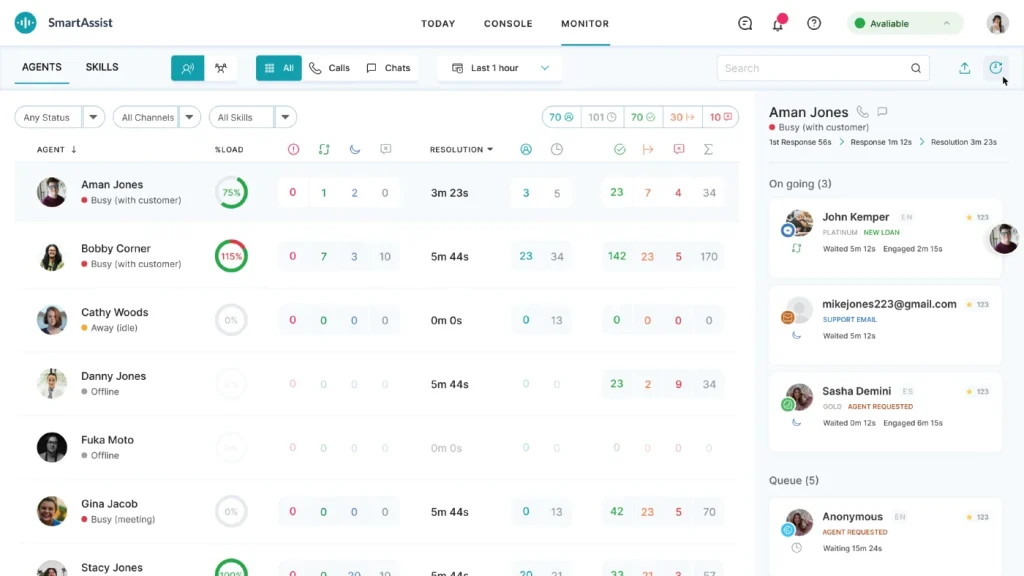
What impressed me most was the hosting flexibility. Public cloud, private cloud, or fully on-premises, all available depending on data residency needs, something that matters a lot in payer procurement. SOC 2 Type II and HIPAA compliance came standard, and the multi-agent orchestration handled both patient and payer workflows in one place. The catch is the implementation complexity.
It’s enterprise-grade through and through, and I wouldn’t suggest it to an independent or small multi-specialty practice.
Pros:
- No-code builder lets non-developers design and deploy virtual assistants across channels
- Flexible hosting across public cloud, private cloud, or on-premises for data residency requirements
- Works natively with Epic, Cerner, and NextGen for enterprise payer and patient-access automation
- Multi-agent orchestration covers voice, SMS, and chat with HIPAA compliance and SOC 2 Type II certification
- Multilingual bots handle patient registration, booking, and insurance claims
Cons:
- Implementation complexity is enterprise-grade and not well suited to independent or small multi-specialty practices
- No native EHR, clinical documentation, or ambient scribing functionality built in
User Rating: 4.6/5 (G2)
Pricing: Enterprise, custom pricing.
4. Cognigy – Best for Enterprise Contact Center AI Agents with HIPAA Compliance
Cognigy came onto my radar through a friend working in contact center operations at a large hospital network. It builds AI agents specifically for enterprise contact centers, and healthcare is one of its strongest verticals.
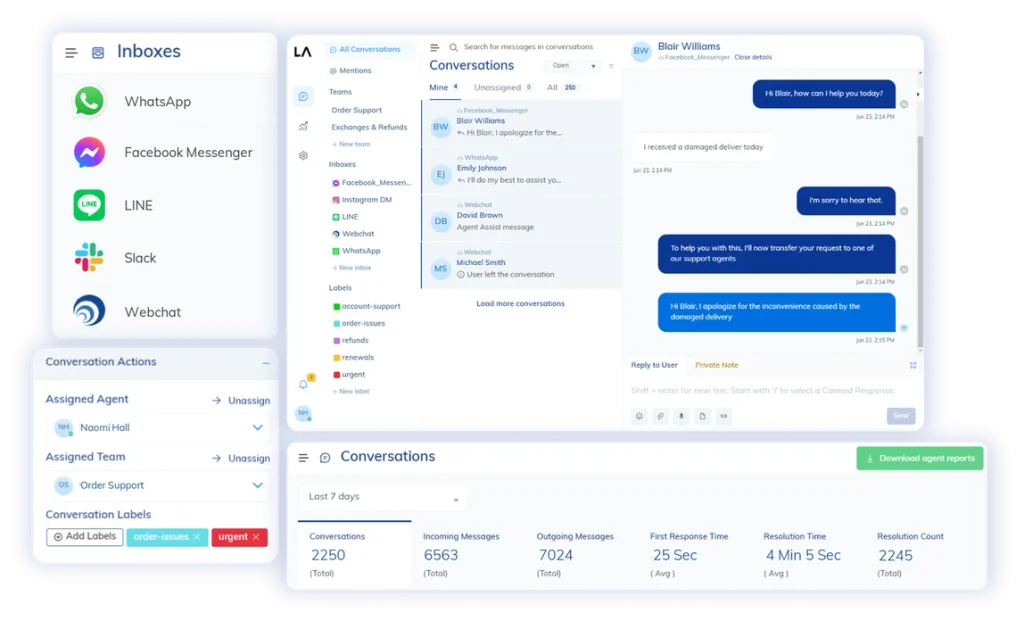
It handles insurance claims questions, prescription refill requests, and post-treatment instructions across channels ranging from web chat to WhatsApp, all while meeting GDPR and HIPAA requirements at scale. Gartner named it the sole Customers’ Choice vendor in its 2025 Peer Insights report for conversational AI platforms, which says a lot about how it’s perceived industry-wide.
I also liked the real time agent assistance feature, since it keeps human staff informed the moment something escalates. It even learns from interactions over time, cutting down on manual retraining. Pricing isn’t published anywhere, so expect a sales call, and some reviewers mention a learning curve for more advanced flows.
Pros:
- Handles insurance claims, prescription refills, and post-treatment instructions across a wide range of channels
- Named sole Customers’ Choice vendor in the 2025 Gartner Peer Insights report for conversational AI platforms
- Built to scale to high interaction volumes while meeting GDPR and HIPAA requirements
- Real-time agent assistance keeps human staff informed the moment a case escalates
- Self-improving system that learns from interactions to reduce manual retraining over time
Cons:
- No published pricing tiers; healthcare buyers need a sales conversation to get a quote
- Some reviewers note a learning curve for advanced, multi-step conversation flows
User Rating: 4.6/5 (G2)
Pricing: Custom pricing.
5. Talkdesk Healthcare – Best for Unifying Patient Data Across Every Contact Center Channel
Talkdesk’s approach centers on something called the Talkdesk Data Cloud, and once I understood what it did, the appeal made sense. It pulls transcripts, call recordings, case notes, and patient records from across your CRM and systems of record into a single real-time knowledge layer.
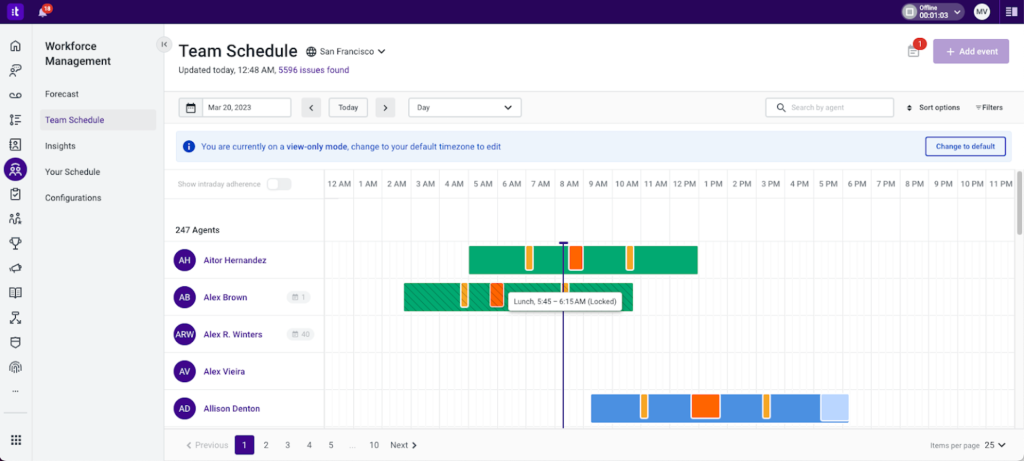
That means an AI agent responding to a patient already has their history in front of it instead of starting cold every call. The platform also reaches out to patients proactively through whichever channel they prefer, voice, SMS, or chat. G2 included it on their 2026 Best Software Awards list for agentic AI products, and reviewers consistently praise the call routing and AI-driven insights.
It supports both cross-industry and healthcare-specific workflows on one platform, which is convenient. Pricing transparency is the recurring complaint I’ve seen, and the healthcare depth trails more purpose-built vendors.
Pros:
- Talkdesk Data Cloud unifies transcripts, case notes, and patient records into one real-time context layer
- Proactively engages patients through their preferred channel: voice, SMS, or chat
- Recognized on G2’s 2026 Best Software Awards list for agentic AI software products
- Strong call routing and AI-driven insights consistently highlighted by reviewers
- Supports both cross-industry and healthcare-specific workflows on the same platform
Cons:
- Pricing transparency has been flagged by reviewers as a recurring frustration
- Built primarily as a broader contact center platform, so healthcare-specific depth trails purpose-built healthcare vendors
User Rating: 4.4/5 (G2)
Pricing: Custom pricing.
6. Notable Health – Best for Automating Patient Intake and Prior Authorization
If you’re drowning in intake questionnaires and prior authorization paperwork, Notable Health is worth a serious look. It automates the administrative grind before a patient ever sees an exam room: scheduling, referral processing, insurance eligibility checks, and prior auth forms.
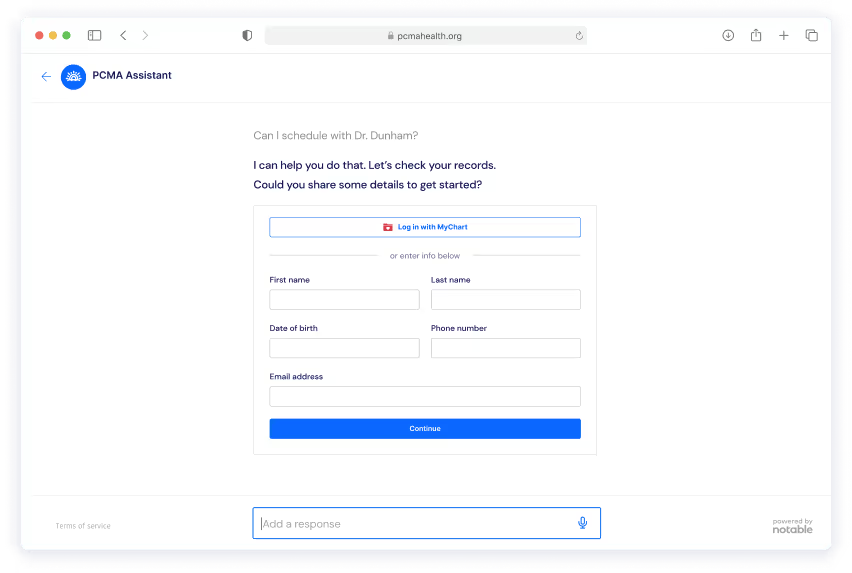
What sets it apart is that it reads and writes directly into Epic, Cerner, and Meditech, functioning more like an always-on staff member than a chatbot bolted onto the side. North Kansas City Hospital used it to automate check-in and registration, and the documented results included a major cut in patient check-in time along with higher pre-registration rates.
It combines AI with robotic process automation, running continuously rather than during business hours. One thing to know going in is that it’s not a patient-facing conversational agent, so don’t expect live chat or voice support from it, and it’s built for enterprise scale, not small practices.
Pros:
- Combines AI with robotic process automation to handle patient intake and back-office workflows
- Reads and writes directly into Epic, Cerner, and Meditech rather than sitting alongside them
- Documented outcome: a major cut in patient check-in time at North Kansas City Hospital
- Automates prior authorization, referral intake, and eligibility checks without manual staff work
- Operates continuously as an always-on administrative layer, not a business-hours tool
Cons:
- Not a patient-facing conversational agent; it focuses on administrative automation rather than live chat or voice support
- Enterprise scope and pricing make it a poor fit for small or single-location practices
User Rating: 4.5/5 (G2)
Pricing: Not publicly listed. Custom, enterprise contracts.
7. Sully.ai – Best for a Modular AI Workforce Across Front Desk and Back Office
A physician friend told me about Sully.ai after her practice started small with just the AI Receptionist agent. That’s the appeal here: role-based agents, including a Receptionist, Scribe, Medical Coder, and Nurse, that you deploy one at a time and expand as your needs grow.
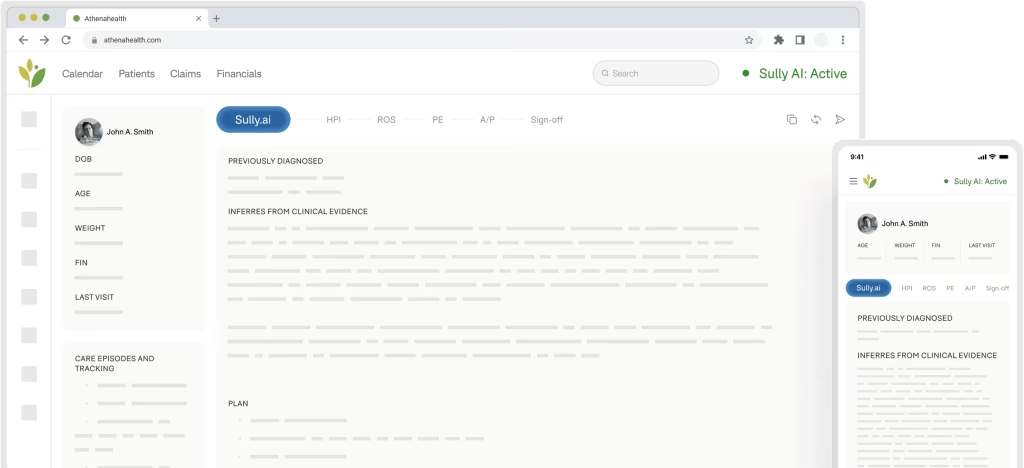
The Receptionist alone handles inbound calls, web, and chat for scheduling and intake, and bidirectional integration covers Epic, AthenaOne, Cerner, and CharmHealth. Internal testing reportedly shows strong speech recognition accuracy, and the pricing structure genuinely surprised me. It starts at $79 a month, which is unusually accessible for this category.
Since it’s a newer platform, it doesn’t have the production track record of more established enterprise vendors yet, and there’s barely any presence on G2 or Capterra, so independent feedback is thin. Still, for practices wanting to start small, this modular setup makes a lot of sense.
Pros:
- Modular agents (receptionist, scribe, coder, nurse) let you deploy one role at a time
- AI Receptionist handles inbound phone, web, and chat scheduling in a single agent
- Bidirectional EHR integration covers Epic, AthenaOne, Cerner, and CharmHealth
- Reports strong speech recognition accuracy in internal testing
- Published starting price of $79/month, unusual for this category
Cons:
- Newer platform with a shorter production track record than more established enterprise vendors
- No meaningful presence yet on G2 or Capterra, so independent user feedback is limited
User Rating: NA
Pricing: Starts at $79/month.
8. Hippocratic AI – Best for Safety-First Voice Agents for Non-Diagnostic Patient Outreach
What drew me to Hippocratic AI was its deliberate restraint. The company built its model specifically for non-diagnostic, patient-facing tasks like outreach calls, follow-ups, chronic care check-ins, and insurance coordination, staying intentionally out of clinical decision-making.
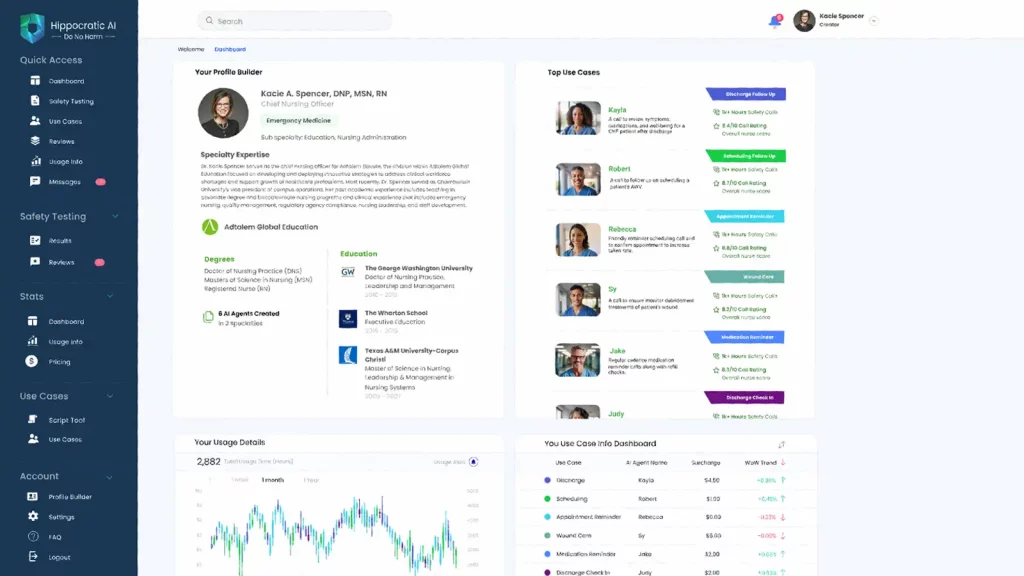
WellSpan Health used its agents to contact both English and Spanish-speaking patients about overdue cancer screenings, and that multilingual outreach at scale is a genuine strength. The company has also raised significant funding earmarked specifically for safety in generative AI agents, which reassured a few compliance-minded colleagues of mine.
Its partnership with Universal Health Services covers discharge compliance outreach across multiple hospitals. Third-party estimates put pricing around $400 a month, though the company hasn’t published an official rate card. The enterprise sales cycle and contract structure make it a tough fit for small or independent practices looking for something quick to set up.
Pros:
- Purpose-built for non-diagnostic patient engagement, explicitly avoiding clinical decision-making
- Multilingual voice outreach demonstrated at scale, including English and Spanish-speaking patient populations
- Documented case study: WellSpan Health used the platform to reach patients overdue for cancer screenings
- Backed by significant venture funding earmarked specifically for safety in generative AI agents
- Partnership with Universal Health Services for discharge compliance calls across multiple hospitals
Cons:
- Third-party pricing estimates start around $400/month, with no public rate card from the company itself
- Enterprise sales cycle and contract structure make it a poor fit for small or independent practices
User Rating: 4.6/5 (Capterra)
Pricing: Starts at $400/month.
9. Ada Health – Best for AI-Powered Symptom Assessment and Triage
I first came across Ada Health when a patient in my extended family used it to figure out whether her symptoms warranted an ER visit or a regular clinic call. Its clinical assessment engine asks structured questions and reasons through symptom combinations, severity, and risk factors rather than just matching keywords.
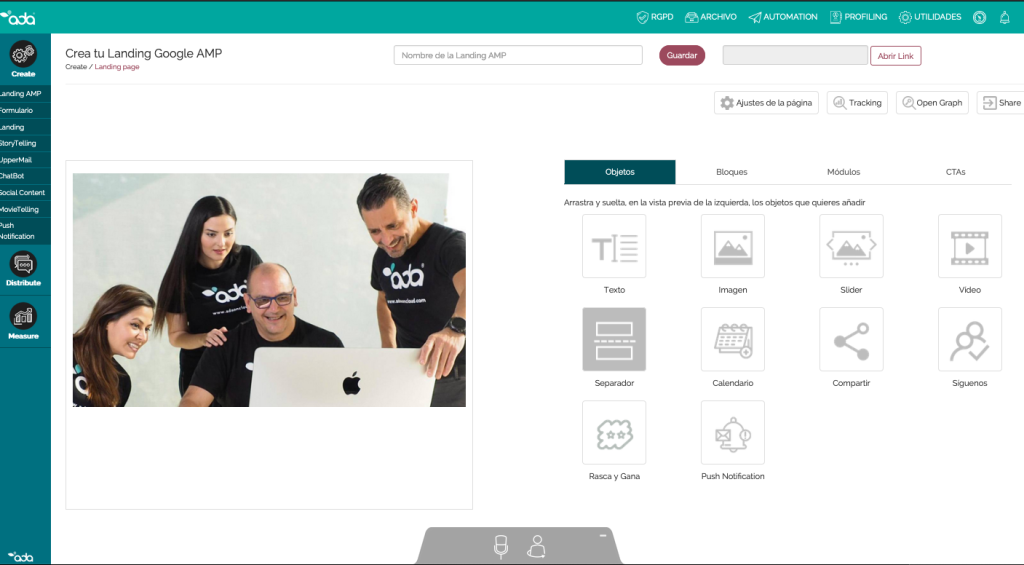
It also includes CBT modules for structured mental health conversations, all within the same interface, and the white-label option means it stays inside your own patient portal rather than feeling like a bolted-on third party tool.
Patient calendars handle medication reminders and appointment confirmations automatically, and feedback surveys go out right after each assessment to capture satisfaction while it’s fresh. Pricing is custom with nothing published, so plan on a sales call. Keep in mind the output isn’t a diagnosis, and patients expecting a definitive answer might find that framing a little unclear at first.
Pros:
- Clinical symptom assessment engine reasons through combinations of symptoms and patient risk factors
- CBT modules support structured mental health conversations within the same interface
- White-label deployment keeps the experience inside your own patient portal
- Patient calendars automate medication reminders and appointment confirmations
- Feedback surveys capture patient satisfaction immediately after each assessment
Cons:
- Custom pricing with no published tiers makes it difficult to budget without a sales call
- Symptom assessment output is not a diagnosis, and patients expecting certainty may find the framing ambiguous
User Rating: 4.6/5 (G2)
Pricing: Custom pricing.
10. Beam AI – Best for Multi-Agent Automation of Administrative Healthcare Workflows
Managing the administrative backend of a healthcare practice is where Beam AI earns its keep. Its multi-agent system handles medical record-keeping, billing, compliance documentation, and appointment scheduling, with agents coordinating across external systems through APIs rather than following a rigid static script.
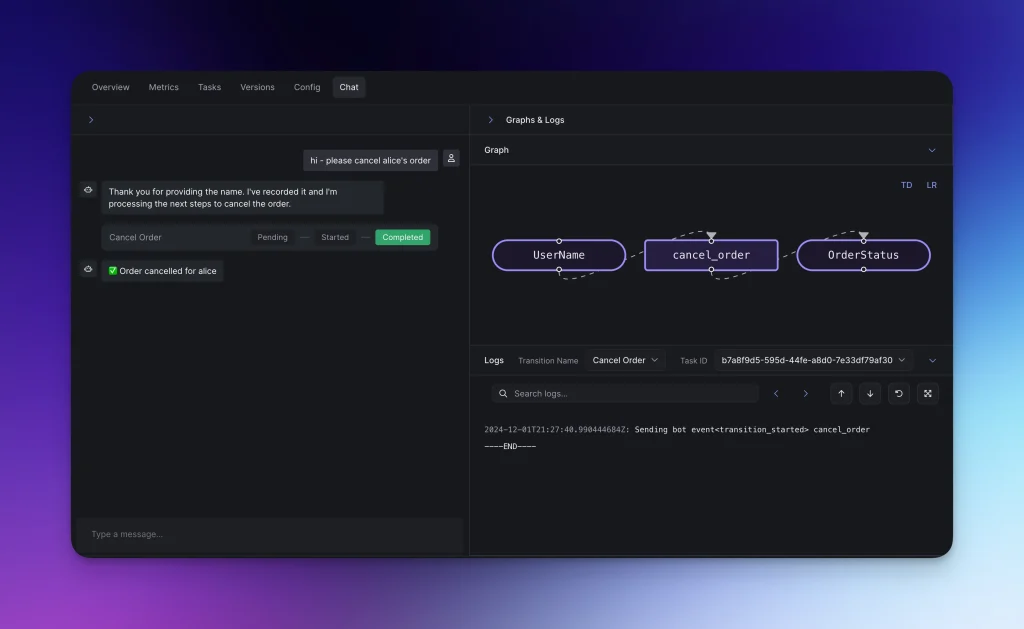
Avi Medical uses Beam AI’s multilingual agents to retrieve patient data and answer complex queries, and from what I’ve seen, the agents handle the bulk of routine ticket volume without needing a human to step in.
That’s the real value proposition here: reducing the repetitive administrative load that eats up staff hours without adding another rigid workflow tool to the stack. For practices juggling multiple systems and looking to automate the paperwork side rather than the patient conversation side, it fills a specific and useful niche.
Pros:
- Multi-agent system coordinates across medical records, billing, compliance, and scheduling
- Agents retrieve data from external systems via API instead of relying on static scripts
- Documented case study: Avi Medical automated a majority of routine ticket volume using Beam’s agents
- Multilingual capability supports diverse patient populations without separate deployments per language
- Coordinated agent handoffs reduce the need for a human to bridge between administrative systems
Cons:
- Less healthcare-specific track record compared to vendors built exclusively for the industry
- No meaningful G2 or Capterra presence yet, limiting independent verification of claims
User Rating: 4.9/5 (Capterra)
Pricing: Custom pricing.
How I Evaluated These AI Support Agents
Getting this wrong in a healthcare context costs more than in most industries. A bad chatbot experience loses a sale. A bad AI support agent experience can mean a missed screening or a patient who gives up on care entirely. Here’s exactly how I approached the evaluation:
- User Reviews and Ratings: I pulled verified feedback from G2, Capterra, and Gartner, filtering for recurring complaints and what real users valued after six or more months of use. Recency mattered because older reviews often miss product changes.
- Core Features and Functionality: I specifically tested healthcare-relevant capabilities: patient FAQ handling, scheduling and rescheduling flows, insurance and intake questions, human handoff quality, and EHR or CRM integration depth.
- Ease of Deployment: The benchmark was simple: can a non-technical team member get the agent running and trained without a developer or a call with sales?
- Integration Quality: I looked at whether native integrations with Epic, Cerner, Salesforce, HubSpot, and help desk tools worked reliably in practice, not just in the feature list.
- Customer Support Quality: I paid attention to how vendors responded during setup issues and whether ongoing support operated as a real partnership or a ticket queue.
- Value for Money: I compared pricing against actual feature depth. A tool that covers three things well is not a bargain at enterprise pricing.
- Personal Experience: I used each platform directly and cross-checked my findings with peers who manage live healthcare support operations.
My Top 3 Picks for AI Support Agents in Healthcare
Still narrowing it down? Here’s where I’d point most healthcare teams first.
1. ProProfs Chat
For clinics and mid-sized healthcare organizations that want a real AI support agent live without a developer or a months-long sales cycle, ProProfs Chat is the clearest starting point. It handles patient FAQs, scheduling, and intake, takes real action through its Action-Based AI Agents, and gives you Sentiment Analysis and Risk Prediction to keep improving from day one, all on a plan that starts free.
2. Hyro
For health systems whose biggest problem is call center volume and patient access, Hyro’s real-world deployment history, including its work with Intermountain Health, makes it the strongest option on this list for that specific problem. Best fit when the phone, not the website, is where most of your patient friction lives.
3. Notable Health
For large health systems buried in administrative overhead rather than patient conversation volume, Notable Health solves a different problem entirely: intake, scheduling, and prior authorization paperwork running continuously in the background. Best fit when the bottleneck is staff time on repetitive back-office tasks, not front-line patient support.
FREE. All Features. FOREVER!
Try our Forever FREE account with all premium features!
Stop Losing Patients to Slow Support
The right AI support agent doesn’t just answer patient questions. It closes the gap between when a patient needs help and when your staff is actually available, without adding headcount or asking your team to learn a complicated new system.
Before you commit to any platform, map out where your actual friction lives: is it phone volume, website chat, intake paperwork, or after-hours coverage? Test the human handoff on a real scenario before going live, and get HIPAA and BAA commitments in writing, not just implied on a pricing page.
For clinics and mid-sized practices that want something fast, reliable, and genuinely easy for non-technical staff to manage, ProProfs Chat is where I’d start. It covers the essentials, AI Agent Training, Sentiment Analysis, and Risk Prediction, right out of the box, with a free plan that lets you test it before committing to anything.
Try it free and see how quickly it changes your after-hours patient experience.
Frequently Asked Questions
Can AI support agents replace front desk staff entirely?
No. The realistic outcome across health systems using these tools is that the same staff handle significantly more volume without burning out, not that staff get replaced. AI agents handle high-volume, repetitive requests like scheduling and reminders, while staff focus on complex cases and relationship-driven interactions.
Can AI support agents handle appointment scheduling and reduce no-shows?
Yes. Automated reminders, confirmations, and self-service rescheduling directly reduce no-show rates. Action-based AI agents can trigger these workflows automatically without staff manually calling or emailing every patient.
Do AI support agents work for both patient-facing and administrative healthcare tasks?
It depends on the platform. Some are built purely for patient conversation, like live chat and voice support. Others focus entirely on back-office automation, like intake forms, prior authorization, and billing. A few combine both. Know which problem you're actually trying to solve before evaluating vendors.
What happens when an AI support agent doesn't know the answer to a patient's question?
A well-built agent recognizes the limits of its training data and escalates rather than guessing. It should hand the conversation to a human with full context attached, not leave the patient with a vague or made-up answer. Always test this specific scenario before going live.
Do patients need to download an app or create an account to use an AI support agent?
Not with most platforms. The majority run inside your existing website, patient portal, or phone system, so patients interact with them the same way they already contact your practice, through chat, text, or a phone call, without any new software on their end.
How much ongoing staff training does an AI support agent require?
Very little for day-to-day use. Most non-technical staff can review conversation logs, retrain the agent on new content, and adjust responses without developer support. The bigger investment is upfront, deciding what the agent should and shouldn't handle before launch.
What is the realistic ROI of implementing an AI support agent in healthcare?
The clearest signals are reduced call abandonment, fewer no-shows, faster check-in times, and staff hours recovered from repetitive administrative work. Documented results across the industry range from meaningfully shorter call wait times to check-in processes cut from minutes to seconds, though results vary significantly by use case and implementation quality.
FREE. All Features. FOREVER!
Try our Forever FREE account with all premium features!

 We'd love your feedback!
What did you like & how can we make it even better?

 Thanks for your feedback!
 Ask Your Question
Have a question? Get expert help to make your decision easier.