An AI agent vs human agent debate shows up in almost every support team meeting once ticket volume starts climbing. You’re short on hiring budget, your response times are slipping, and someone on the team just asked if a chatbot could take some of the load.
I’ve had this exact conversation with dozens of business owners, and the honest answer is neither side wins outright. You’re really weighing three pain points at once: slow response times chasing away visitors, support costs rising faster than headcount budget allows, and no coverage once your team logs off for the night.
This blog breaks down where an AI agent beats a human agent, where a human still wins, and how to combine both without overspending.
How Do AI Agents and Human Agents Compare Side by Side?
Here’s how the two stack up across the factors that matter most to a support team.
| Factor | AI Agent | Human Agent |
| Response time | Near-instant | Depends on channel and staffing |
| Availability | 24/7, including nights and holidays | Limited to shift hours unless staffed globally |
| Cost per interaction | Low, scales with usage | Higher, and rises further with overtime |
| Best at | Repetitive queries, order status, FAQs, password resets | Complex complaints, emotional situations, judgment calls |
| Consistency | Same answer every time | Varies by agent training and mood |
| Empathy | Limited, still improving | High, reads tone and context naturally |
| Scalability | Handles volume spikes with no added cost | Requires more hires as volume grows |
Where Does an AI Agent Win?
Some parts of customer support are simply a numbers game, and this is where AI pulls ahead.
1. Speed is No Contest
An AI agent replies the instant a customer types a question, day or night, while human response times still depend on channel and staffing levels. Slow first response is one of the biggest drivers of a poor customer experience.
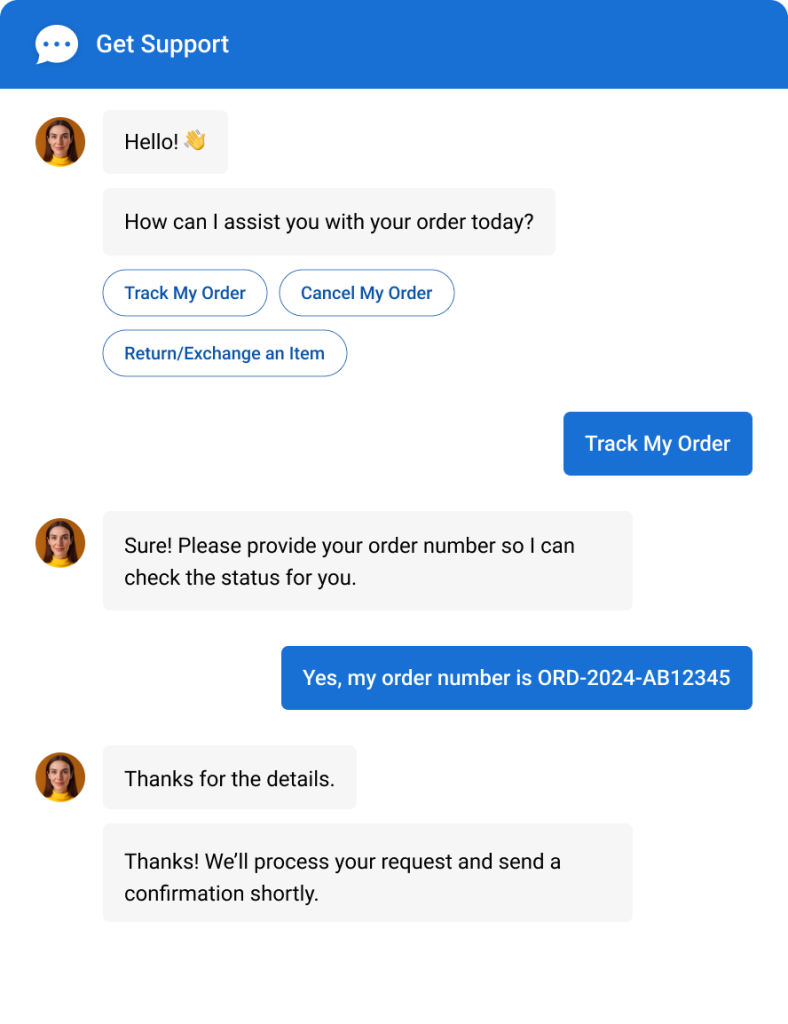
Visitors invited to chat proactively convert at a much higher rate, and that only works if something is there to answer the moment they show interest.
2. The Cost Gap is Real
A human support agent comes with salary, benefits, training, and turnover costs that add up fast, especially once you factor in overtime for nights and weekends. An AI agent runs on a leaner cost structure, since you’re paying for software rather than headcount. That cost doesn’t climb the same way ticket volume does, which matters most once your team is already stretched thin.
3. Availability Doesn’t Take a Vacation
An AI agent works the same at 3 a.m. on a Sunday as it does at 2 p.m. on a Tuesday. Human agents need premium pay for nights and weekends, or you accept gaps in coverage. For a business selling across different time zones, that gap directly costs you leads, since visitors rarely wait around for your team to log back on.
4. Consistent Answers, Fast Training
Every AI agent answer comes from the same trained data source, so a customer gets the same accurate response whether it’s their first message or their fiftieth.
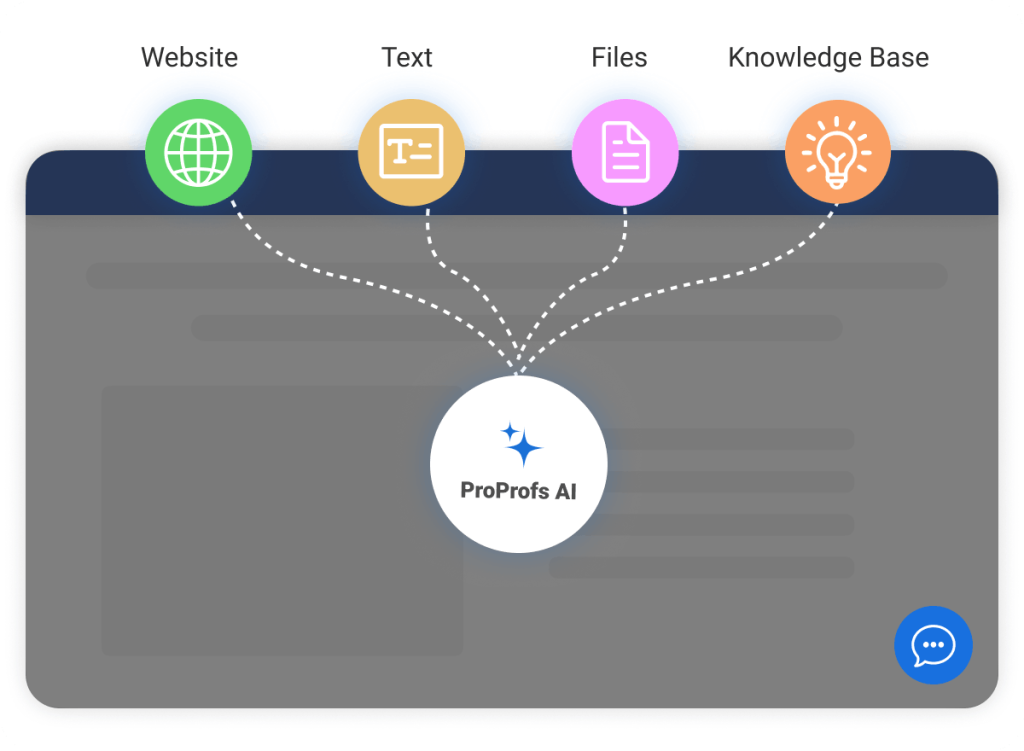
Training a bot on your website, help center, or uploaded files takes minutes, not the weeks it takes to onboard a new hire, so you get consistency and speed without the usual ramp-up time.
Where Does a Human Agent Still Win?
AI closes a lot of gaps, but a few things still need a person on the other end.
1. Judgment on Ambiguous or Emotional Issues
Structured requests like password resets or refund status checks are easy for AI to resolve on its own. Nuanced complaints are different, since they require reading between the lines, weighing exceptions, and making a judgment call the AI wasn’t trained to make. A human can sense when a customer needs patience rather than a policy recited back to them.
2. Trust and Preference
Plenty of customers still say they’d rather talk to a person when the stakes feel high, even if they’re happy to let a bot handle something quick. That preference matters most in industries like healthcare, legal, or high-ticket sales, where a wrong answer has real consequences. Knowing a human is reachable builds confidence that your business takes problems seriously.
3. Improving the System Itself
Human agents don’t just answer tickets. They flag product gaps, refine documentation, and catch the edge cases your AI training data missed. Every question an AI agent couldn’t answer becomes a signal for a human to review and fix, which means your support team is quietly making the AI smarter every time they step in to handle what it couldn’t.
4. Creative Problem-solving in Unusual Situations
Not every customer issue fits a template. A shipment gets lost in an unusual way, a policy doesn’t quite cover someone’s specific circumstance, or a complaint touches multiple departments at once. A human agent can improvise, bend a rule when it makes sense, or coordinate across teams to solve something an AI agent would simply escalate without knowing where to send it.
Why Is “AI vs Human” the Wrong Frame Compared to Email and Phone?
Zoom out from AI versus human for a second, and the bigger shift is really live conversation versus the old default of email and phone.
Email and phone support still put your customer in a queue, whether that queue is an inbox or a hold line. A live chat software setup, whether staffed by a bot or a person, answers in the moment instead of making someone wait for a callback or a reply the next business day.
That’s why proactive chat invitations lift engagement so reliably, something a phone tree or a static contact form simply can’t replicate. Once you’ve made that shift to live conversation, the AI agent vs human agent question becomes about who handles which slice of that conversation, not whether to offer it at all.
FREE. All Features. FOREVER!
Try our Forever FREE account with all premium features!
The Hybrid Model: Combining AI and Human Support
Once you see the strengths on both sides, the real question isn’t which one to pick, it’s how to combine them well.
The teams getting this right aren’t picking a side. They’re running a hybrid customer service model where AI takes first contact and repetitive volume, and humans step in the moment a conversation needs judgment or a decision the AI isn’t authorized to make. Done well, this blended approach keeps satisfaction high while still controlling cost per resolution.
Getting the handoff right is the part most teams struggle with. It’s not enough for the AI to say “let me transfer you.” The operator taking over needs full conversation context so the customer never has to repeat themselves.
Look for a live chat tool with an AI Customer Service Agent that trains on your website, help center, or uploaded files. ProProfs Chat, for example, lets its AI answer routine questions instantly, then hands off to a live operator with full transcript when needed, auto-creating a ticket if no one’s available.
Setup should be no-code. With ProProfs Chat, you paste a URL, connect help center articles, upload docs, or add FAQs as text. Its drag-and-drop builder lets you map conversation flows and test them before launch, while unanswered questions get logged as a built-in roadmap for improvement.
Knowledge base integration matters too. ProProfs Chat’s AI surfaces the right article before humans step in, cutting ticket volume, and works across website, WhatsApp, Facebook, and SMS, with sentiment analysis flagging when chats need a human touch.
What Problems Does a Hybrid AI and Human Setup Solve?
A hybrid approach tends to fix the same handful of pain points, regardless of industry.
- Slow first response times that push customers to abandon a purchase or open a ticket somewhere else
- No coverage outside business hours, which costs you leads from visitors in other time zones
- Rising support costs as ticket volume grows faster than your headcount budget
- Inconsistent answers between different human agents on the same policy or product question
- Operator burnout from handling the same repetitive questions dozens of times a day
Fully engaged customers who get fast, consistent answers also tend to spend more, which is one more reason a hybrid setup pays for itself quickly.
Which Use Case Fits Your Business Best?
The right split between AI and human support looks a little different depending on what you sell.
1. eCommerce
Shoppers ask the same handful of questions on repeat, order status, shipping timelines, return policies, sizing. An AI agent answers all of that instantly, day or night, so a visitor never abandons a cart while waiting on a reply. Your human operators stay free for returns disputes, damaged shipments, and upset customers who need a real apology, not a script.
2. SaaS
Most support volume in SaaS is documentation questions people could technically find themselves if they knew where to look. An AI agent trained on your help center surfaces the right article instantly and resolves tier-1 tickets without a human touching them. That leaves your team free to focus on onboarding calls, technical escalations, and the accounts at real risk of churning.
3. Healthcare and Services
Patients and clients often reach out after hours, asking about appointment availability, office hours, or basic eligibility questions. AI handles that volume around the clock without anyone on staff, then hands off cleanly to a human the moment a question touches anything sensitive, medical, or specific to someone’s individual case or history.
4. Agencies
If you’re reselling chat support to your own clients, a white-labeled AI plus human setup lets you promise 24/7 coverage without staffing a night shift yourself. The AI absorbs routine volume across every client account, while your team steps in only where judgment or a client relationship actually needs a human voice.
5. Travel
Travelers ask time-sensitive questions at odd hours from odd time zones, booking changes, baggage policies, visa requirements, flight delays. An AI agent trained in 70+ languages answers instantly no matter where or when someone reaches out, while your human agents focus on rebookings, refunds, and the kind of travel emergencies that need a person who can actually make a judgment call.
How Should You Decide Between AI Agent and Human Agent for Your Team?
Use this as a starting checklist rather than a rigid rulebook, since every support queue looks a little different.
- Map your ticket volume by type. Pull a sample of recent tickets. Outcome: you’ll see which categories are repetitive enough for AI to handle.
- Set a confidence threshold for handoff. Define exactly when the AI escalates. Outcome: customers get a human before frustration builds, not after.
- Start with your highest-volume, lowest-complexity queries. Train the AI on FAQs, order status, and account questions first. Outcome: fast wins without risking your trickiest interactions.
- Review unresolved queries regularly. Use the log of questions the AI couldn’t answer to retrain it. Outcome: your AI agent gets sharper every week instead of staying static.
- Keep a human always reachable. Never fully hide the option to talk to a person. Outcome: you protect trust with customer support automation in place.
FREE. All Features. FOREVER!
Try our Forever FREE account with all premium features!
Take the First Step Toward Hybrid Support
The AI agent vs human agent question isn’t about which one is better. It’s about matching the right resource to the right conversation. Start by letting AI absorb your repetitive, high-volume questions, keep your team focused on the conversations that need a real person, and make sure the handoff between the two feels invisible to the customer.
ProProfs Chat helps you deliver instant, human-quality support without the complexity or cost of enterprise tools, and you can start on the Free Forever plan with every premium feature included for a single operator, no credit card required.
Set up your AI Customer Service Agent today and see how many tickets your team never has to touch.
Frequently Asked Questions
Is an AI agent better than a human agent for customer service?
Neither is better across the board. AI wins on speed, cost, and availability. Humans win on judgment and empathy for complex or emotional issues.
Can an AI agent fully replace a human customer service team?
No. Even the most advanced AI agents still need to escalate a share of complex or ambiguous issues to a human for accurate resolution.
What happens when an AI agent can't answer a question?
A well-configured AI agent detects when it's out of its depth and hands the conversation to a live operator with full context, or logs a support ticket if no one is available.
What industries benefit most from AI agents?
eCommerce, SaaS, healthcare, and any business with high volumes of repetitive, well-defined questions see the fastest returns from AI agents.
How long does it take to set up an AI customer service agent?
Most no-code AI agent builders let you train a bot on your website or help center content and have it live within minutes, not weeks.
Can AI agents work across multiple channels?
Yes. A trained AI agent can operate on website chat, WhatsApp, Facebook, and SMS from a single dashboard, keeping answers consistent everywhere.
What's the first step to building a hybrid support model?
Start by identifying your highest-volume, lowest-complexity ticket types and train your AI agent on those first, then expand as you review its performance.
FREE. All Features. FOREVER!
Try our Forever FREE account with all premium features!

 We'd love your feedback!
What did you like & how can we make it even better?

 Thanks for your feedback!
 Ask Your Question
Have a question? Get expert help to make your decision easier.