
“Your website gets visitors at 2 AM. But your team is away. What happens to those leads?“
That question hit me hard when I looked at my analytics one morning and saw dozens of visitors leaving my WordPress site without a single interaction. No chat. No form fill. Nothing.
That’s when I added a chatbot for my WordPress website, and the difference was immediate.
Response time dropped. Lead capture shot up. And my team finally got to focus on the conversations that actually needed a human.
In this guide, I’m sharing the 11 best WordPress chatbot plugins I’ve tested, compared, or run myself so you can skip the trial-and-error phase and pick the right one the first time.
What Is a WordPress Chatbot and Why Does it Matter?
It is no surprise that businesses are catching on fast. A study by Grand View Research in 2025 projects the global chatbot market to nearly quadruple from USD 9,560.7 million to USD 41,244.2 million by 2033.
With quick setup, AI-powered replies, and deep customization, they enhance support without the need for constant monitoring. These tools work around the clock, improve user engagement, and deliver key chatbot benefits, like creating a smooth, responsive experience that truly reflects your brand.
Here’s what makes these plugins a smart pick for any WordPress site:
- Automate responses using AI or custom workflows.
- Capture leads with pre-chat forms and email prompts.
- Support multiple languages for global reach.
- Easy setup with no coding required.
- Seamless integration with CRMs and messaging apps.
- Customize design, behavior, and chat timing to match your brand.
See how AI WordPress chatbots and human agents team up for better patient support—watch this short video!
What Are the Top 11 Free WordPress Chatbot Plugins?
I’ve managed enough WordPress sites to know that customer support can quickly become overwhelming. Chatbot plugins automate support and keep things running 24/7.
So, I’ve rounded up 11 of the best free WordPress chatbot plugins worth checking out. I’ve also included a quick list of pros for each, so you know exactly what to expect.
Before we dive in, here’s a quick look at the 11 best WordPress chatbot plugins!
| WordPress Chatbot Plugin | Best For | Pricing | User Rating |
|---|---|---|---|
| ProProfs Chat | Easy Live Chat & AI Customer Service Agent for Instant, Automated Support | A free plan is available for growing teams. Paid plan starts at $19.99/user/month. | 4.8 (Capterra) |
| Zendesk | Zendesk Users | Starts at $55/agent/month (14-day free trial is available). | 4.3 (G2) |
| Tidio | Live Chat with Ticketing Functionality | Paid plans start at $24.17/month (Free plan is available with limitations) | 4.7 (G2) |
| HubSpot Service Hub | Hubspot Users | Starts at $800/month ( Free plan is available for up to 5 users). | 4.4 (G2) |
| Smartsupp | Lead Generation | Paid plans start at $14/month (Free plan is available). | 4.7 (G2) |
| Collect.chat | High-Quality Chatbot Templates | Paid plans starts at $18/month (Free plan is available) | 4.7 (G2) |
| Join.Chat | Chat Funnels | Starts at $39/month(free version is available) | 4.0 (Capterra) |
| Botsify | Voice AI | Starts at $49/month (14 days free trial available) | 4.5 (Capterra) |
| IBM Watsonx Assistant | VOIP calls | Paid plans start at $140/month (free plan available) | 4.4 (G2) |
| Chatra | Targeted Chats and Triggers | Plan starts at $25/agent/month (Free plan is available) | 4.7 (Capterra) |
| HelpJet | AI Powered Customer Support | Free plan with 100 interactions per month. Paid plan at $29/month. | NA |
1. ProProfs Chat – Best for Easy Live Chat & AI Customer Service Agent for Instant, Automated Support
I’ve been using ProProfs Chatbot on my WordPress site for over a year now. Setup takes minutes with no coding or developer needed, and the customization options let you match the chat widget to your brand without any friction.
Advanced AI agent training trains the chatbot on your website, help center, and FAQs, so AI-generated answers always pull from your actual data with the source cited. Once live, action-based AI agents complete tasks like updating orders and scheduling meetings directly from chat.
Sentiment analysis detects emotions in real time and feeds into risk prediction, which assigns churn scores so your team knows who needs attention. Resolution overviews and AI agent performance reports, then continuously track satisfaction.
Think setting up an AI chatbot takes hours? See how fast this actually is. Try it now!
What really gives me peace of mind is the security aspect of things. It is GDPR-ready, comes with SSL encryption, single sign-on, and full control over access and data. So not only is my support faster and smarter, but it is also secure, reliable, and built to scale. Another advantage is that it integrates seamlessly with ProProfs Knowledge Base and ProProfs Help Desk, making it easy to offer self-service resources, AI assistance, and live support through one connected experience.
Pros:
- Action-based AI support agents that update orders, schedule meetings, and trigger notifications
- Sentiment analysis and risk prediction to flag frustrated or at-risk customers early
- Resolution overviews and AI performance reports to track and improve chatbot quality continuously
- Visitor tracking to engage users based on their on-site behavior
Cons:
- Cloud-only – no offline access
- No dark theme
Pricing: A free plan is available for growing teams. Paid plan starts at $19.99/user/month.
User Rating: 4.8 (Capterra)
Your competitors are already using AI chat. Don’t let them win the conversation.
2. Zendesk – Best for Zendesk Users
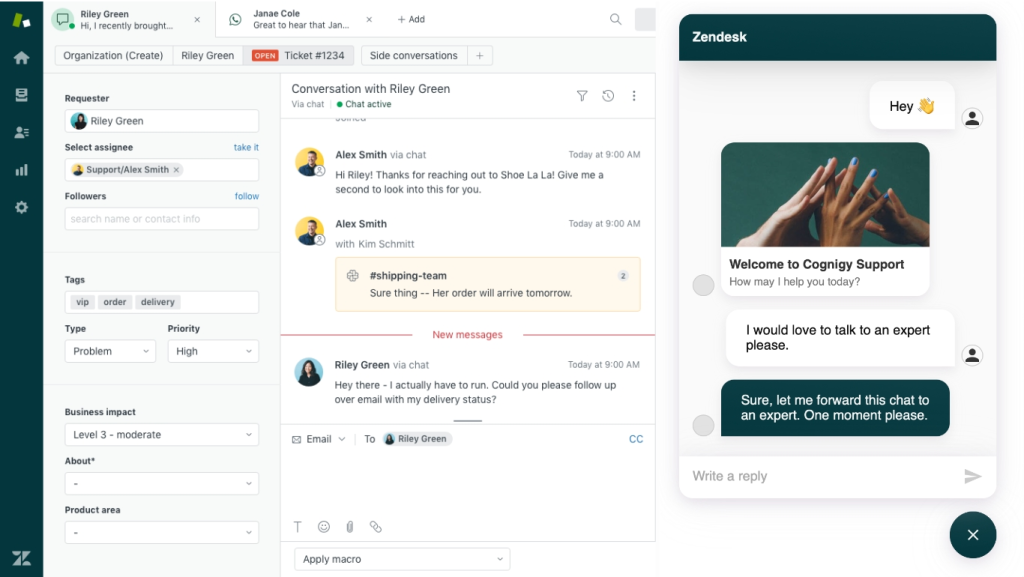
Another great free WordPress chatbot plugin I’ve used is Zendesk. It’s especially helpful if you’re already part of the Zendesk ecosystem. It plugs right into the full suite, keeping everything centralized. The integration makes managing support feel seamless and organized.
Features like Single Sign-On make life easier by letting users log in once across platforms. The AI-powered bots and help center tools empower customers to find answers on their own. It’s a smooth way to reduce tickets while keeping users happy.
What really stands out is Zendesk’s focus on data security. With BYOK encryption and granular access controls, I get peace of mind knowing my data’s safe. Plus, the Support Web Widget and Feedback Tab give visitors simple, flexible ways to get help right from the site.
Pros:
- AI Chatbots to automate replies and reduce ticket volume
- Unified Dashboard to manage all support channels in one place
- Help Center to enable self-service with quick-access FAQs
- Data Security to protect customer data with BYOK and access controls
Cons:
- Limited value if you’re not already in the Zendesk ecosystem
- Chat widget customization is more restricted than dedicated chatbot tools
Pricing: Starts at $55/agent/month (14-day free trial is available).
User Rating: 4.3 (G2)
3. Tidio – Best for Live Chat with Ticketing Functionality
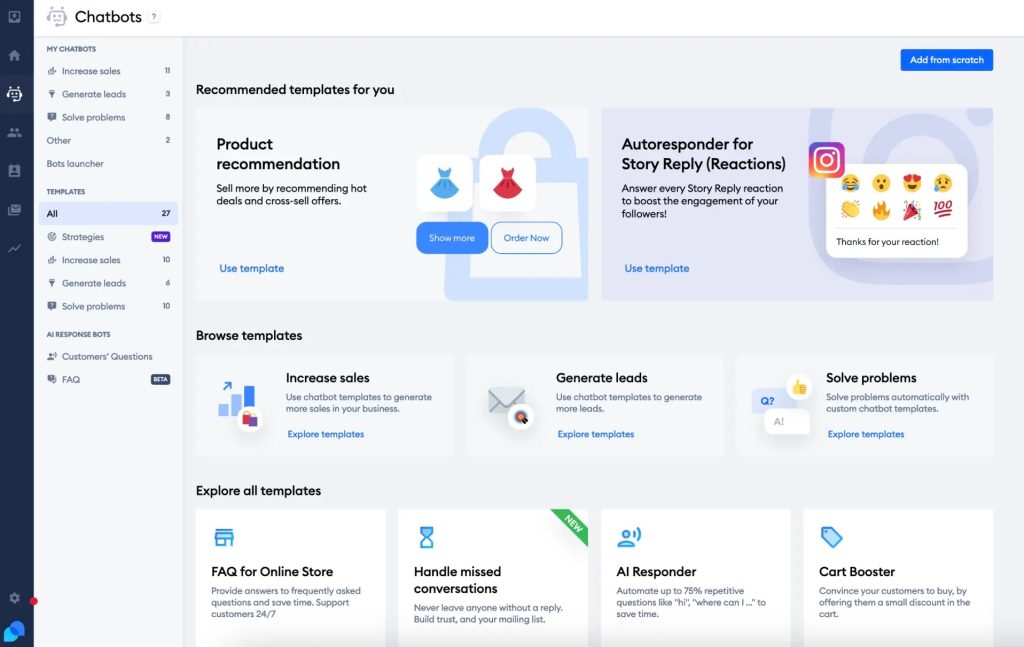
I used Tidio for a while on my WordPress site, and it made handling customer chats much easier. It’s free to start and works well for anyone looking to add quick, responsive support. What stood out the most was its smooth Live Chat, combined with Ticketing functionality, which kept everything organized.
The chatbot templates did a great job managing routine questions automatically. I relied on the Ticketing System to convert support emails into tickets, which helped track and prioritize requests. It was simple to assign tasks and manage them as a team without missing a beat.
Sharing WooCommerce product cards in the chat was a nice touch, especially during peak sales. Canned responses saved time and helped me respond consistently. Overall, Tidio brought structure and speed to my support workflow.
Pros:
- Canned responses to instantly answer FAQs and save tons of time
- Ticketing system to manage support emails more efficiently as team tasks
- Visitor tracking to see who’s browsing and engage proactively
- Multichannel inbox to manage live chat, Messenger, and email from one place
Cons:
- Service businesses get significantly less value than eCommerce teams
- Conversation history and advanced reporting require higher-tier plans
Pricing: Paid plans start at $24.17/month.
User Rating: 4.7 (G2)
4. HubSpot Service Hub – Best for Hubspot Users
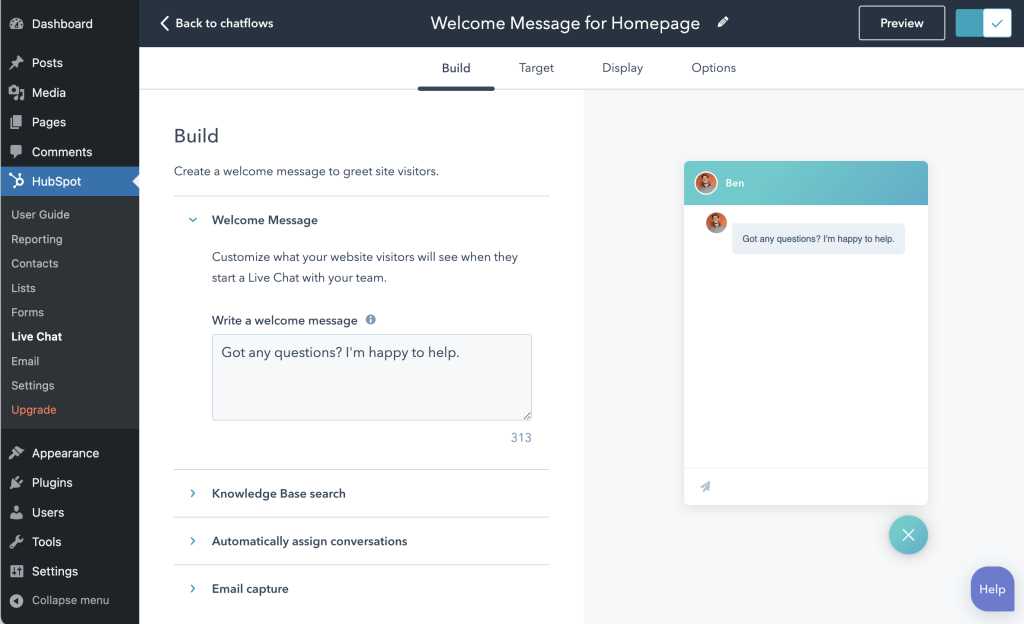
HubSpot brings everything together: CRM, marketing, sales, and support, all in one smooth integration with WordPress. It’s perfect for entrepreneurs looking to grow without juggling five different tools. I’ve found it incredibly helpful in building stronger customer relationships, right from the first touchpoint.
The free chatbot plugin is part of Service Hub and makes managing customer interactions a breeze. From chat and email to tickets and feedback surveys, everything lives in one place. It’s best for HubSpot users who want a centralized, scalable way to handle support without extra overhead.
Email campaigns are effortless with its drag-and-drop builder and automation tools. The live chat and AI chatbot features help turn passive visitors into active customers—day or night. It’s like having a 24/7 sales and support assistant on your website.
Pros:
- Built-in CRM integration to manage leads, contacts, and sales right from your
- Multichannel support tools to handle chat, emails, tickets, and surveys in one centralized space.
- Smart email automation to design, schedule, and track email campaigns without hassle
- In-depth analytics to monitor customer engagement and campaign performance in real time.
Cons:
- Chatbot AI is basic compared to dedicated bot platforms
- Initial setup and onboarding takes considerable time
Pricing: Starts at $800/month.
User Rating: 4.4 (G2)
5. Smartsupp – Best for Lead Generation
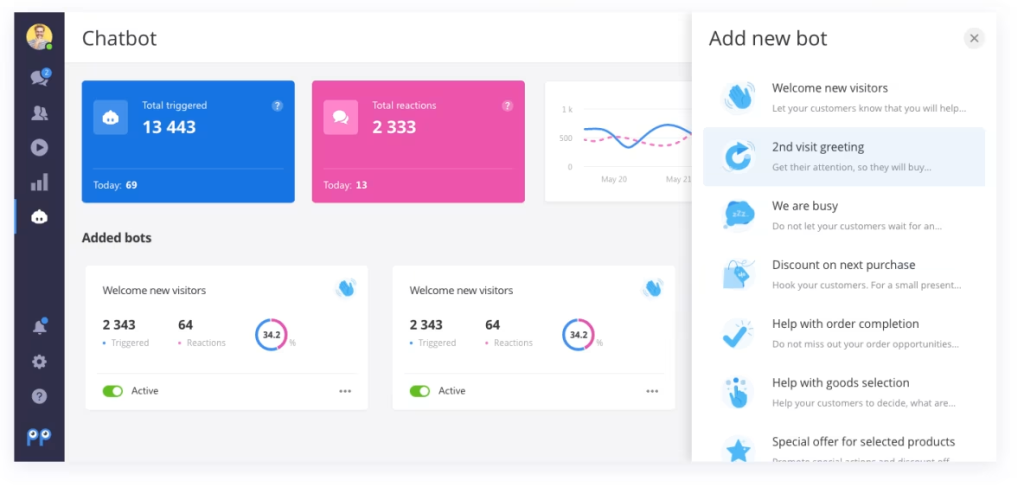
The next best chatbot for WordPress I’ve explored is Smartsupp, a powerful tool built to boost online sales through real-time, meaningful customer interactions. It combines AI, lead-gen chatbots, and live chat to help businesses engage visitors and convert them faster. Everything feels smooth, smart, and sales-focused right out of the box.
It integrates easily with Messenger and email, and even has a mobile app, so you’re never out of touch. Whether it’s a quick support query or a sales opportunity, you’re covered anywhere, anytime.
It also digs deeper, offering insights into chat quality, team performance, and customer satisfaction. Plus, it’s GDPR-compliant and secure, making it a great fit for privacy-conscious businesses. Everything you need to engage, convert, and support is right inside your WordPress site.
Pros:
- Lead-gen chatbots to capture and qualify leads directly through engaging chat flows
- Multi-channel integration to manage chats across your website, Messenger, and email
- Mobile app access to chat with customers on the go, anytime, from your phone
- GDPR compliance to keep customer data secure and your business privacy-ready
Cons:
- Session recording storage is capped on lower plans
- Chatbot builder lacks depth for complex conversation flows
Pricing: Paid plans start at $14/month (Free plan is available).
User Rating: 4.7 (G2)
6. Collect.chat – Best for High-Quality Chatbot Templates
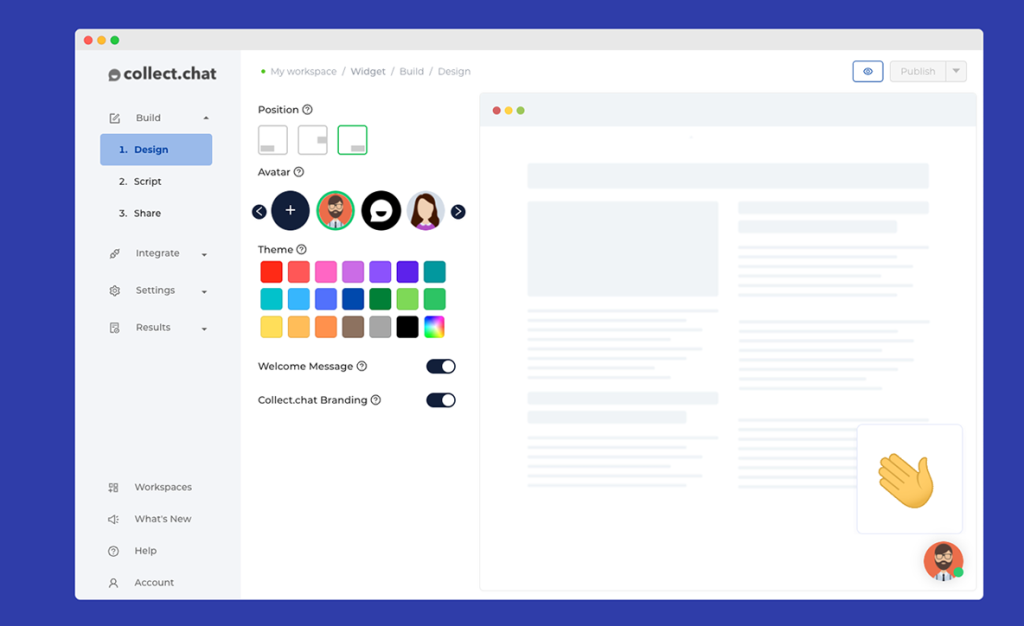
I’ve also explored Collect.chat in the past, and I must say, it’s pretty impressive. The platform offers a wide array of chatbot templates that are not only designed to enhance user engagement but also streamline the data collection process on websites.
What’s particularly appealing is the diversity of templates available. This caters to various needs, such as feedback collection, appointment booking, and lead generation, to name a few.
The templates are not only visually appealing but also incredibly user-friendly. This is a big win for professionals who aim to implement effective chatbots without diving into the complexities of coding.
Another feature I find invaluable is the platform’s drag-and-drop tool, simplifying the customization process. Also, Collect.chat’s robust integration capabilities with popular apps like Salesforce, Mailchimp, and Slack enhance the functionality of these chatbots, making them a powerful tool in the digital toolkit.
Pros:
- Ready-to-use templates to ensure a logical and intuitive flow of questions
- Powerful visualizations for informed decision-making
- Integration with Salesforce, Mailchimp, Slack, etc
- Drag and drop feature to add relevant questions to chatbot interactions
Cons:
- Questionnaire format feels more like a form than a real conversation
- Follows fixed scripts — can’t handle open-ended questions
Pricing: Paid plans starts at $18/month.
User Rating: 4.7 (G2)
7. Join.Chat – Best for Chat Funnels
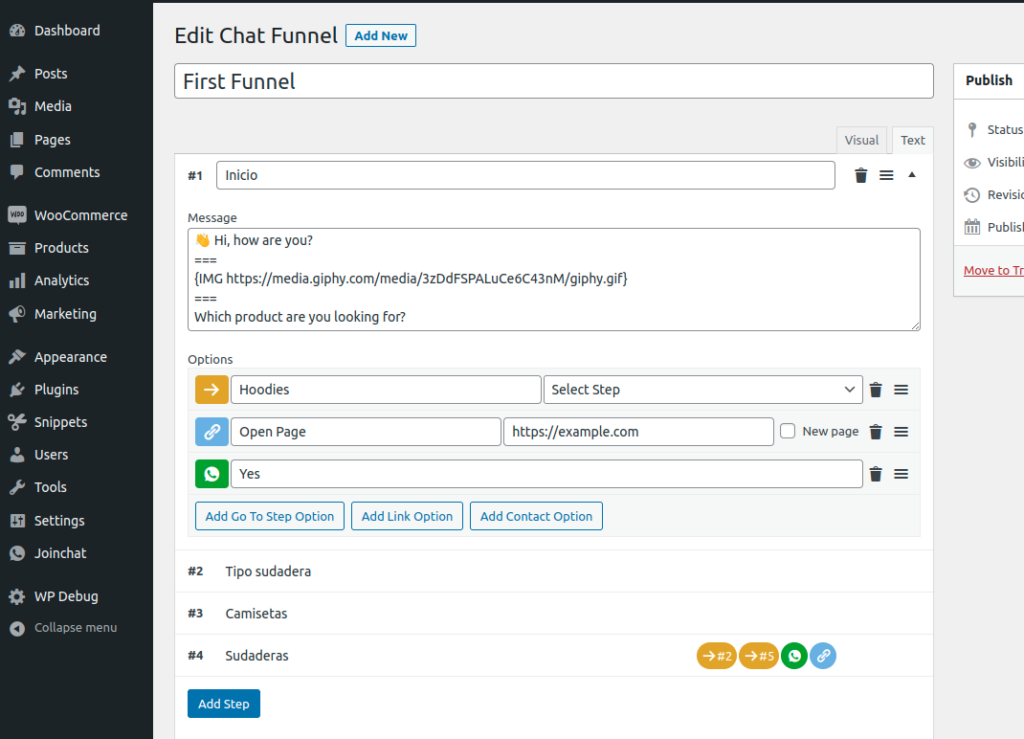
I’ve found Joinchat to be one of the best WordPress chatbot plugins for boosting customer interactions. It’s like having a smart assistant that not only answers questions but also guides visitors exactly where I want them, whether that’s capturing leads, qualifying them, or offering instant support.
What I love is how flexible it is. With Markdown support, I can jazz up conversations with images, GIFs, videos, links, buttons, you name it. I even embedded a Calendly widget so people can book appointments without any back-and-forth.
Each Chat Funnel I create is like its own little campaign. I can build as many as I need and control where they appear using simple shortcodes. And setting them up? Surprisingly easy. Joinchat really makes it effortless to create rich, engaging experiences that run 24/7 across all my channels.
Pros:
- Chat funnels to guide visitors with interactive, media-rich chat flows
- AI assistant to automate 80% of support with smart AI responses
- Custom triggers to start chats on clicks, scrolls, or time delays
- Analytics to track chat activity with Google Analytics integration
Cons:
- Only useful if your audience is already active on WhatsApp
- Setting up funnels per page gets tedious on larger sites
Pricing: Starts at $39/month.
User Rating: 4.0 (Capterra)
8. Botsify – Best for Voice AI
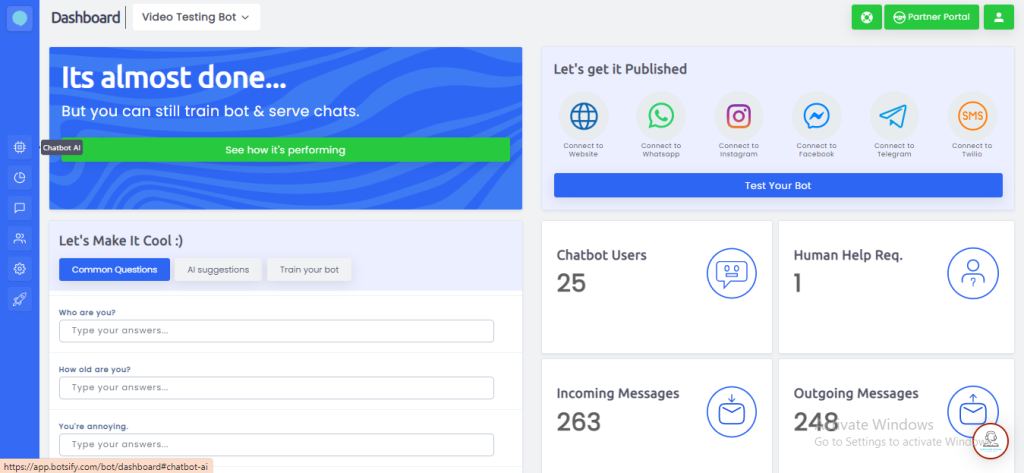
I’ve used Botsify to streamline both support and lead generation, and it’s made a real difference. It lets me build chat and voice bots without any coding, thanks to an easy drag-and-drop builder. The setup was quick, and I was up and running in no time.
What I really love is the Voice AI feature. I used to create AI phone agents that handle support calls and even qualify leads. It’s like having a smart assistant who never sleeps. I even cloned my receptionist’s voice to keep things on-brand and personal.
Botsify also supports multiple languages, records calls for performance tracking, and integrates with all the tools I already use. Whether it’s live chat on my site or voice support on the phone, I’ve got everything covered—and it’s all running smoothly.
Pros:
- Voice AI agents to create lifelike AI phone bots for support and sales
- Drag-and-drop bot builder to build bots without writing a single line of code
- Multilingual support to engage customers in their native language
- Call recording & analytics to track calls and improve performance
Cons:
- Voice AI accuracy drops with accents or fast speech
- Interface feels dated with a steeper learning curve than newer tools
Pricing: Starts at $49/month.
User Rating: 4.5 (Capterra)
9. IBM Watsonx Assistant – Best for VOIP calls
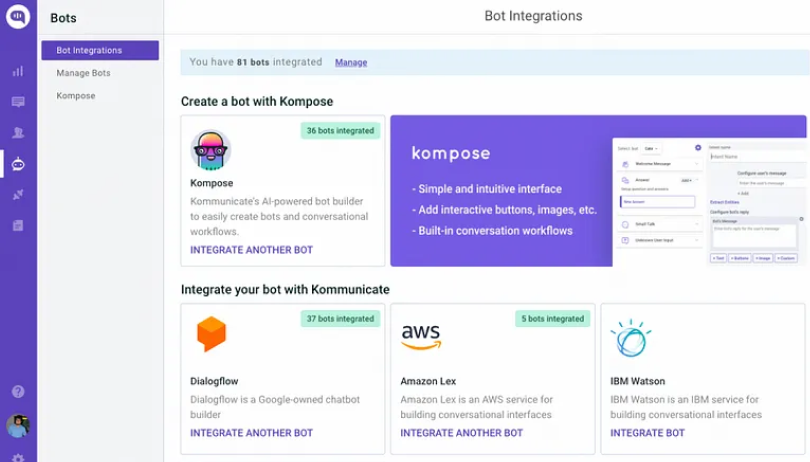
Even though I haven’t used this chatbot on my own, most of my peers have tried it. Based on their feedback, the IBM Watsonx Assistant is highly recommended due to its comprehensive AI-powered features.
What captures attention the most is its ability to deliver complex responses, not just in text but with images and interactive elements, too. This makes the chat experience engaging and intuitive, thanks to clickable buttons that guide users through conversations.
Another standout feature is its integration with Twilio for VOIP calls, enabling a smooth transition from text to voice communication with a live representative. This ensures users receive the support they need without interruption.
The chatbot’s prowess in natural language processing impresses me as well, as it accurately understands and responds to diverse inquiries. This isn’t a one-off; the chatbot evolves, learning from each interaction to refine its responses.
Pros:
- LLM-powered chat to enable natural, intelligent conversations
- No-code builder to design chatflows without coding
- Omnichannel support to deploy chatbot across web, mobile, and messaging apps
- Analytics dashboard to track performance and user interactions
Cons:
- Advanced flows require developer involvement despite the no-code label
- WordPress integration needs more technical setup than any other plugin here
Pricing: Paid plans start at $140/month.
User Rating: 4.4 (G2)
10. Chatra – Best for Targeted Chats and Triggers
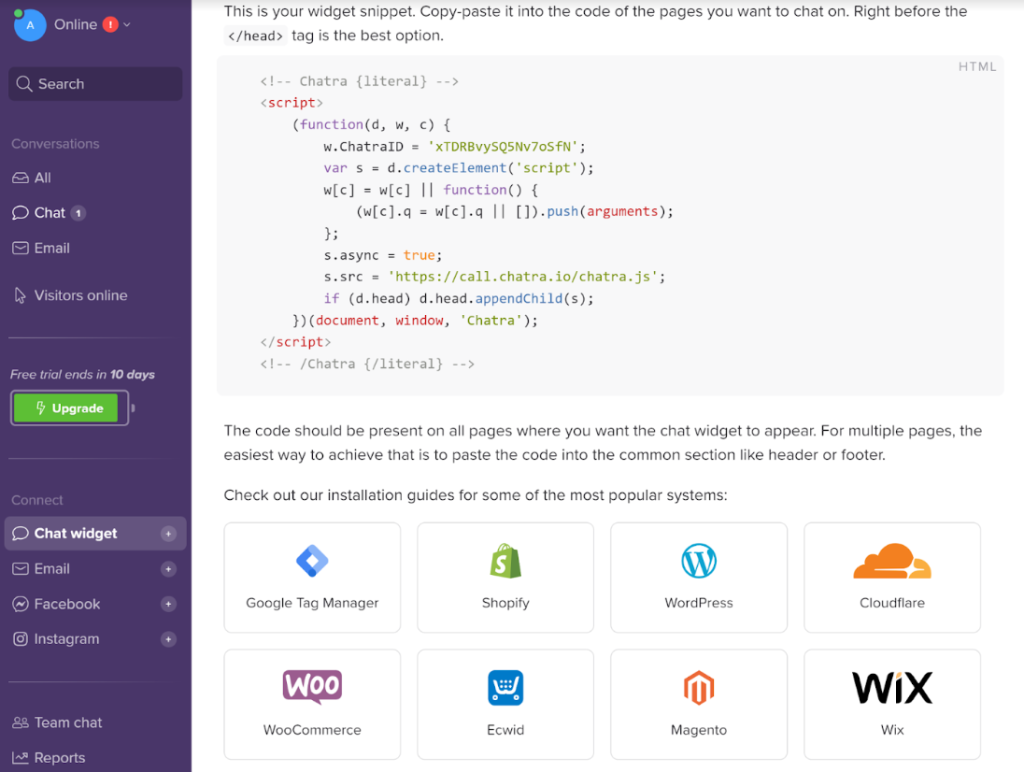
The next chatbot plugin I’d like to discuss is Chatra. It’s best known for its targeted chats and smart triggers, which help reduce bounce rates and drive more conversions without being pushy.
Setup was smooth, with ready-to-use templates for key triggers. I simply picked the pages I wanted the chats to appear on and tweaked the messages to match my site’s voice. It made personalizing the experience feel effortless.
What I really like is how thoughtful Chatra is about timing. Instead of jumping in too soon, it waits just long enough so the message feels helpful, not intrusive. That balance makes it a quiet powerhouse for proactive support.
Pros:
- Proactive chat triggers to start chats based on visitor behavior to boost engagement
- Custom chatbot flows to guide users with pre-set reply options and conversation paths
- Offline lead capture to collect contact info when agents are unavailable
- Multichannel inbox to manage chats from your site, email, and social media in one place
Cons:
- No native CRM integration on entry plans; needs Zapier as a workaround
- Mobile app is noticeably stripped down compared to the desktop version
Pricing: Plan starts at $25/agent/month.
User Rating: 4.7 (Capterra)
11. HelpJet – Best for AI Powered Customer Support
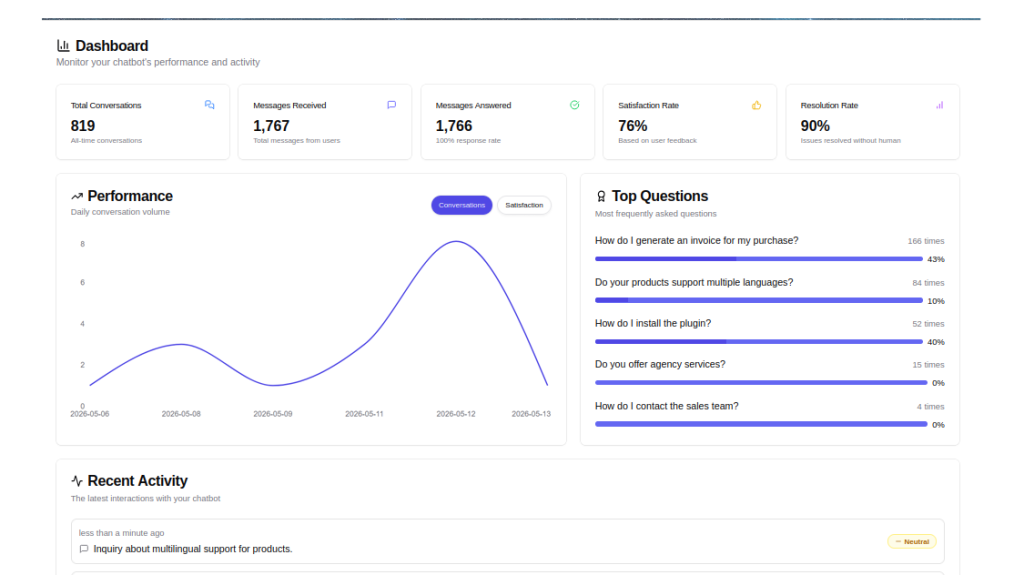
Unlike most chatbot plugins, HelpJet doesn’t require you to build the answers before the bot can provide them. Just point it to your site’s documentation URL, select which post types to pull in, and you’ll have a live AI support chatbot in about five minutes. No flowchart, decision tree, or prompt writing needed.
What sold me during testing was the preview environment. You can interrogate the bot with real customer questions and tune its tone before a single visitor sees it, which is a step far too many chatbot tools treat as optional.
Embedding is equally low-friction: install the WordPress plugin for a floating widget, or drop the bot inside a specific article with a block or shortcode.
Pros :
- Five-minute setup that trains on content you’ve already published, including PDFs and private SOPs
- Weekly automatic re-crawls plus manual refresh
- Built-in preview environment for testing answers and tone before going live
- WooCommerce awareness covering product related questions, shipping classes, and tax rules
- Human handoff that feeds the resolution back into the bot’s knowledge
- Works beyond WordPress on Shopify, Wix, Squarespace, BigCommerce, and Webflow
Cons:
- This is a new product that was launched in July 2026
- The free plan’s 100 monthly interactions disappear quickly on a moderately busy site
Pricing: Free plan available. Starts at $29/month.
What Are My Top 3 Picks for WordPress Chatbots?
Still not able to decide? Here are my top 3 picks:
1. ProProfs Chat
ProProfs Chat excels in delivering delightful customer support with AI chatbots. It enhances interaction and support, offering proactive support and engaging the audience effectively. The ability to capture quality leads and integrate seamlessly with CRM tools makes it a game-changer for sales and marketing efforts.
2. Zendesk
Zendesk stands out for its focus on advanced data privacy and protection. It integrates seamlessly into WordPress, allowing for efficient issue escalation and top-notch customer service. Features like Single Sign-On and converting blog comments into support tickets streamline user experience and support management.
3. Tidio
Tidio is exceptional for its canned responses and pre-made chatbot strategies, handling up to 70% of customer questions effortlessly. Its integration with WooCommerce and the ability to preview carts and recommend products directly in the chat personalize the shopping experience, making it a comprehensive support tool.
How a WordPress Chatbot Plugin Adds Value to Your Website
Adding a chatbot to your WordPress site isn’t just about convenience; it’s about making support smarter, faster, and more engaging.
Here’s how the right chatbot plugin for WordPress can seriously boost your customer experience:
1. Automate Conversations to Save Time
An AI chatbot can instantly reply to FAQs, schedule demos, and even handle lead queries, so you’re not stuck answering the same questions over and over.
You can set up AI-powered responses or create a simple rule-based flow to handle the most common situations. Gartner predicted in 2025 that chatbots can handle up to 80% of routine inquiries, cutting customer support costs by up to 30%.
2. Capture Quality Leads Around the Clock
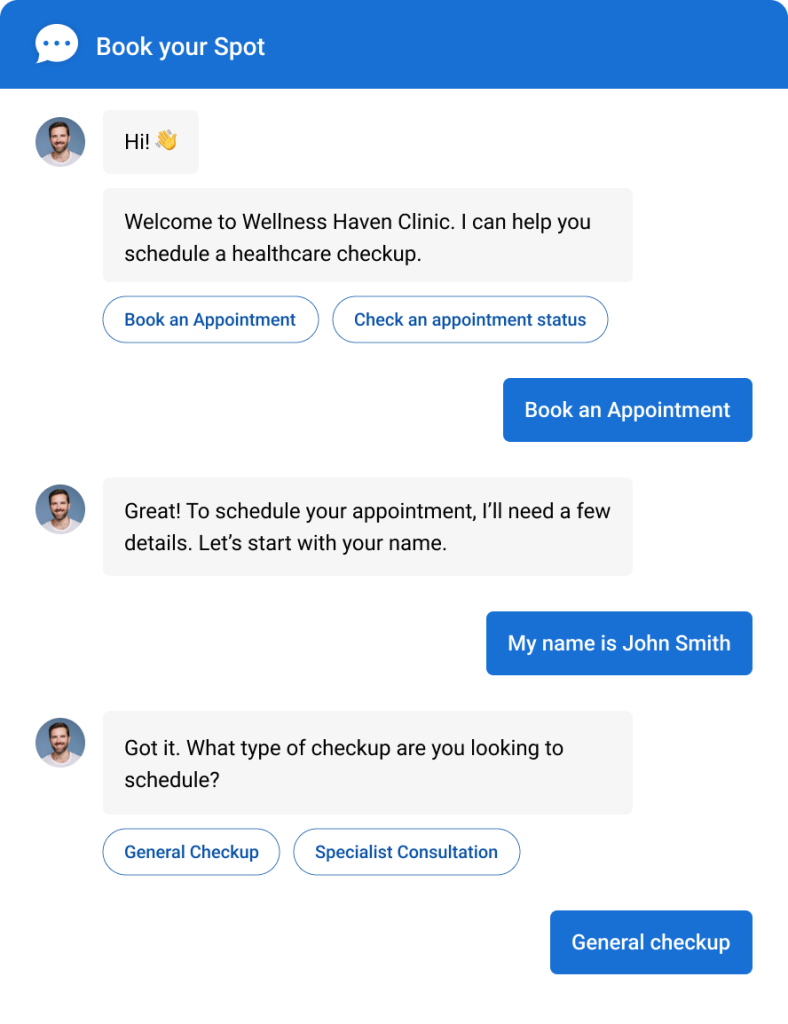
No more losing leads after business hours. With pre-chat forms and email prompts, your chatbot captures names, contact info, and intent, even when your team is offline.

That means you wake up to warm leads in your inbox.
3. Offer Support in Multiple Languages
Want to serve a global audience? A multilingual WordPress chatbot translates chats in real time, so customers feel at home no matter where they’re from.
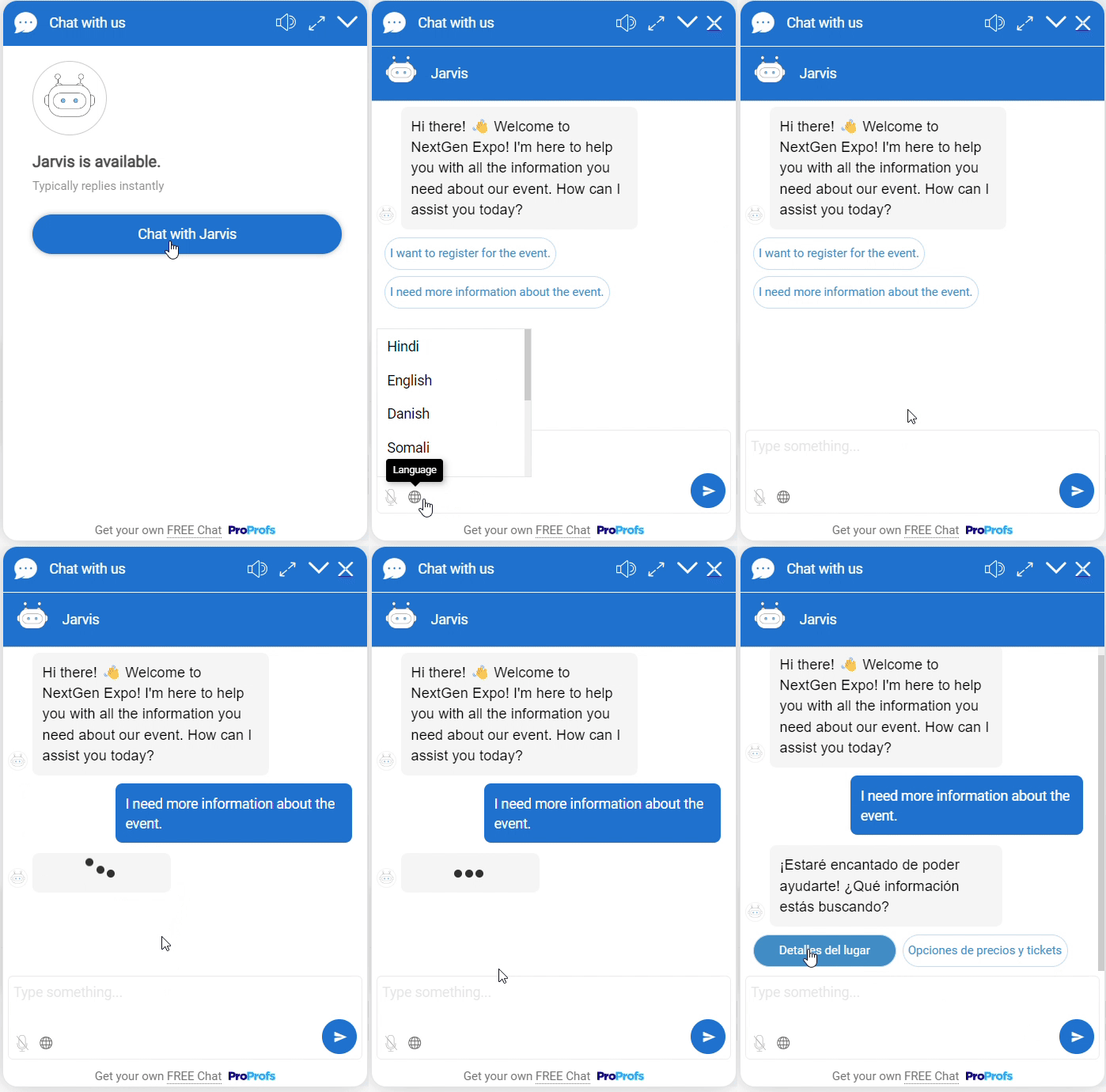
It’s inclusive, easy to set up, and essential for growing international brands.
4. Engage Visitors Proactively Across Channels
Why wait for visitors to ask for help? Chatbots can automatically trigger greetings based on user behavior, like time spent on a page or cart abandonment.
Plus, with integrations for WhatsApp, Messenger, and Instagram, you meet your audience where they already are.
5. Track, Improve, and Stay Compliant
Great support isn’t just about conversations, it’s about learning from them. A solid WordPress chatbot plugin lets you view chat reports, analyze agent performance, and ensure data handling is GDPR-compliant.
FREE. All Features. FOREVER!
Try our Forever FREE account with all premium features!
Evaluation Criteria for WordPress Chatbots
I’ve tested enough of these tools to know that picking the wrong one costs more than just money — it costs you leads, time, and team frustration.
Here’s exactly what I check before recommending any chatbot plugin.
1. AI + Human Handoff: A chatbot should be able to transfer conversations to a live agent when queries get complex. This one feature can prevent a lot of customer frustration and keep satisfaction levels high.
2. Reviews & Ratings: Before testing any tool, check verified user feedback on G2 and Capterra. Real-world reviews give an honest view of performance that no product page will tell you.
3. CRM Integration: Chat leads should sync automatically to a CRM so no conversation slips through the cracks and every follow-up happens on time.
4. Ease of Setup: A no-code setup allows any team to deploy a chatbot without depending on a developer, saving both time and resources.
5. Multilingual Support: Real-time translation helps engage visitors in their own language without building separate bots for each market.
6. Built-in Lead Capture: Pre-chat forms, email collection, and scheduling should all be built in, turning passive visitors into actionable leads directly through chat.
7. Useful Analytics: Tracking chat volume, satisfaction scores, and agent performance helps optimize the chatbot and improve results over time.
8. GDPR Compliance: Secure data handling protects users and keeps the business on the right side of the law.
9. Trial Period: A free trial allows teams to test the tool on an actual site before committing, reducing risk and helping evaluate real performance.
How to Add an AI Chatbot Plugin to Your WordPress Website
Adding a chatbot to your WordPress site is quick and easy. I’ll show you how using ProProfs Chat as an example.
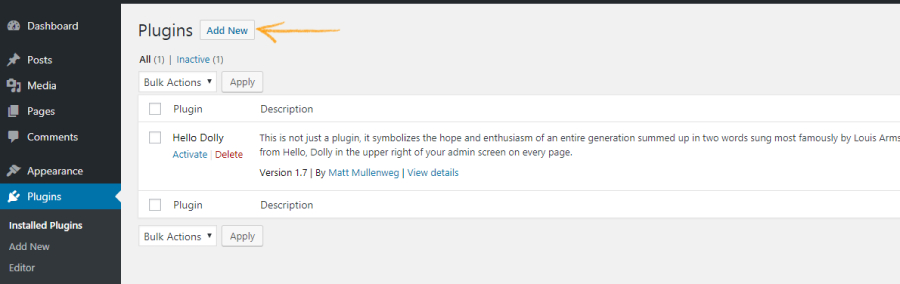
Step 1: Go to your WordPress dashboard and navigate to Plugins > Add New.
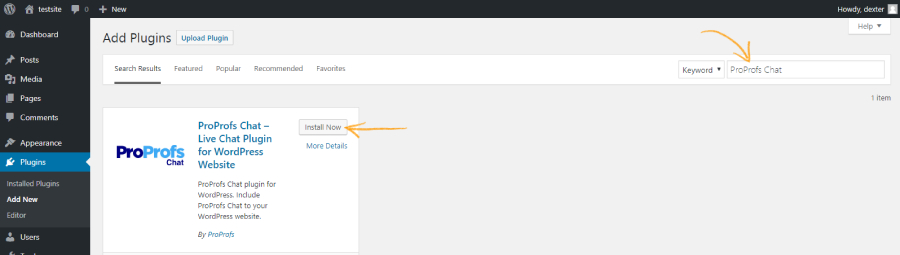
Step 2: Search for ProProfs Live Chat and click Install Now.
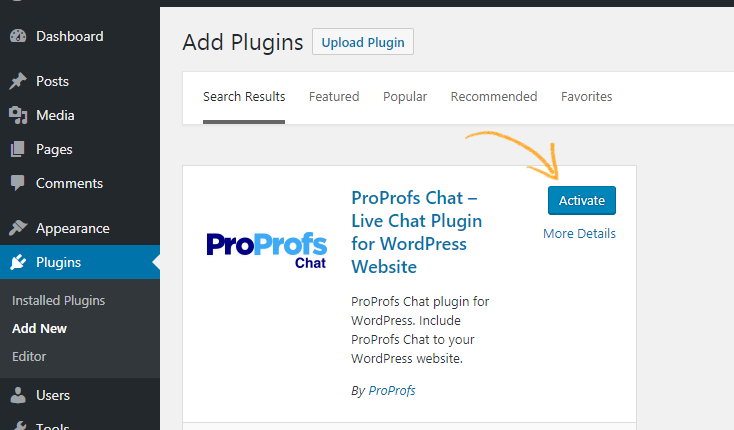
Step 3: After installation, click Activate, then click Settings under ProProfs Live Chat.
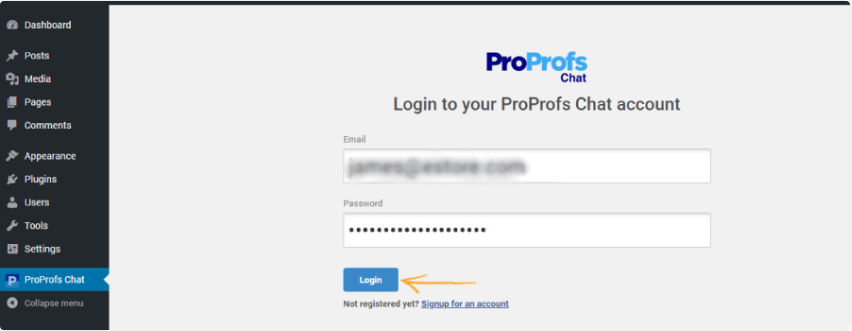
Step 4: Log in with your ProProfs Chat credentials.
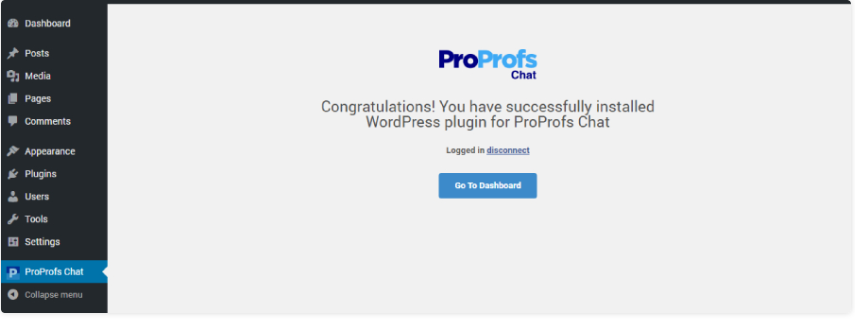
Step 5: That’s it! Your live chat is now active and ready to use via the ProProfs dashboard.
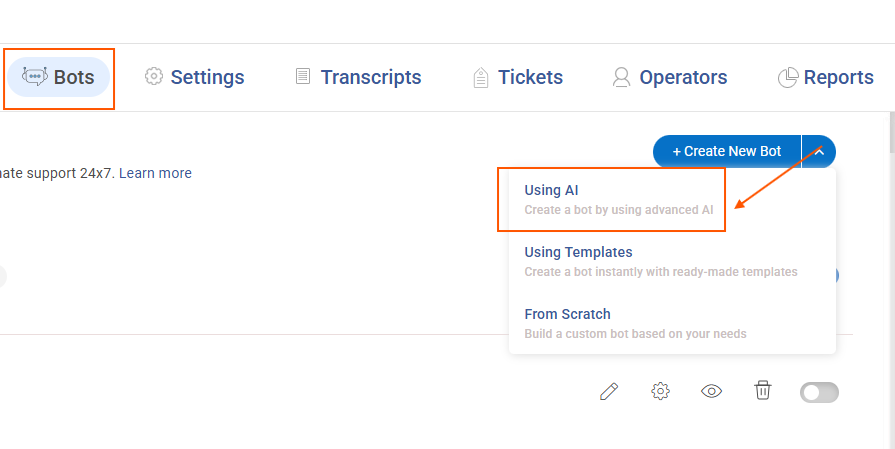
Step 6: Now, go to the “Bots” tab in your dashboard and click “+Create New Bot” → “Using AI.”
Step 7: Feed the Data
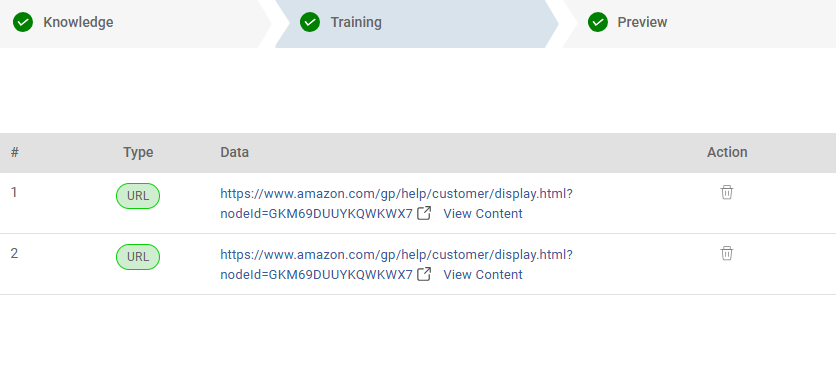
Enter your website or help center URL to let the bot learn from your content. You can also add text manually for things like policies, instructions, or custom replies.
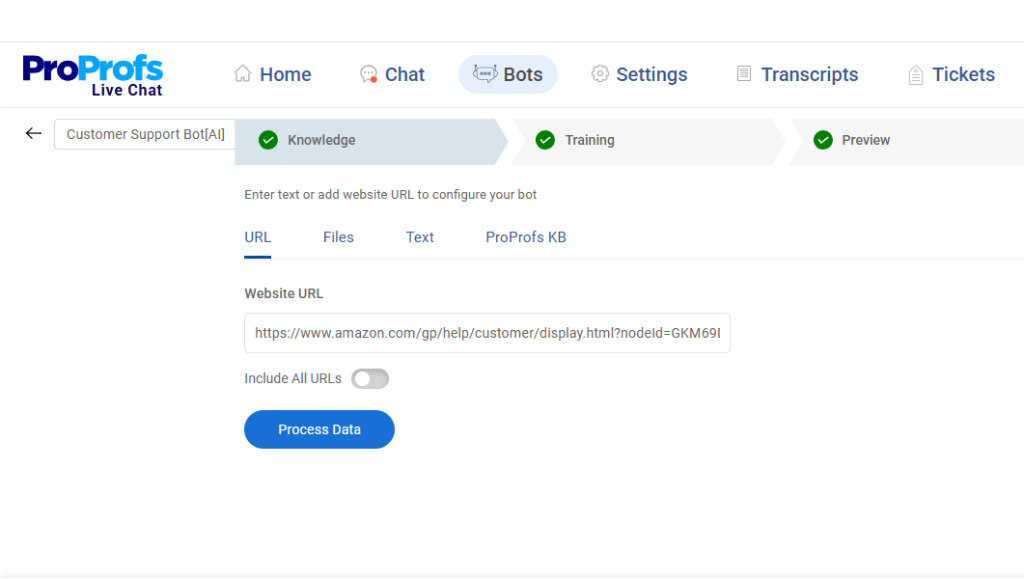
Once done, click “Process Data” to train your bot.
Here’s how the website content looks after processing:
Step 8: Preview & Test
Click “Preview” to test the WordPress bot. Ask sample questions such as “Which items can’t be returned?” and tweak if needed.
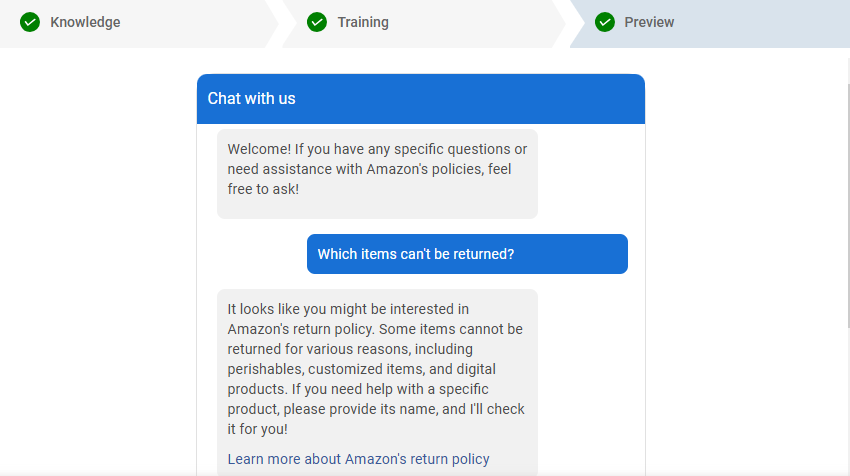
That’s it! Your AI WordPress chatbot is now live and ready to assist your customers.
Common Mistakes People Make With WordPress Chatbot Plugins (And How to Fix Them)
Most chatbot issues come from setup, not the tool itself. Small mistakes can quietly hurt conversions, frustrate visitors, and waste leads.
Here are the most common ones and how to fix them.
Mistake 1: Launching Without Training the Bot
An untrained bot gives vague answers, fails to address queries properly, and quickly reduces trust and engagement on your website. This is a real risk worth noting, given that a study by McKinsey in 2025 found that 71% of companies now use generative AI in at least one business function.
How to Fix it:
Before going live, upload your FAQs, product docs, pricing page, and support scripts. Tools like ProProfs Chat allow training directly from URLs or PDFs, making setup quick and effective.
Mistake 2: Running a Bot With No Human Handoff
Without human support, bots frustrate users during complex queries, causing drop-offs when visitors cannot reach real help when needed.
How to Fix it:
Set up an escalation path. If the bot cannot resolve an issue within a few exchanges, offer a live agent. A hybrid approach works far better than full automation.
Mistake 3: Using Generic Triggers That Annoy Visitors
Instant popups interrupt the experience, feel intrusive, and push visitors away instead of engaging them at the right moment.
How to Fix it:
Use behavior-based triggers. Show the chatbot after meaningful actions like scrolling or time spent on a page. Exit intent and delayed triggers perform better.
Mistake 4: Ignoring Analytics After Launch
Ignoring chatbot data means missing insights into user behavior, common questions, and drop-offs, leading to poor optimization.
How to Fix it:
Review analytics regularly. Track top questions, drop-off points, and engagement metrics. Use these insights to refine your chatbot flows and responses.
Mistake 5: No Integration With Your CRM
Without CRM integration, captured leads are not stored or tracked properly, resulting in lost opportunities and weak follow-up.
How to Fix it:
Test the integration before launch. Run a test conversation, submit details, and confirm the lead appears in your CRM. Always verify the full flow works.
Upgrade Your WordPress Site with the Right Chatbot Plugin
Finding the right free AI chatbot plugin for WordPress can make a big difference in how smoothly your website runs and how well you connect with visitors.
To get the most out of your chatbot, look for options with features like lead capture forms, AI-powered replies, and integrations with tools you already use. Start with a simple setup, test different flows, and track performance with built-in analytics.
If you’re not sure where to begin, try ProProfs Chat. It comes with ready-made templates, easy customization, and fast installation—so you can launch quickly and start delivering better support right away.
Frequently Asked Questions

Can I customize the chatbot’s appearance and behavior?
Definitely. You can personalize colors, greetings, triggers, and even remove branding depending on the plugin.
Will a chatbot slow down my website?
No, reputable chatbot plugins are designed to be lightweight and won’t noticeably impact your site speed.
Do I need coding skills to use a chatbot plugin?
No coding needed—most plugins are user-friendly with simple setup wizards and drag-and-drop interfaces.
Frequently Asked Questions
Can I use a chatbot on a WordPress multisite installation?
Some plugins support WordPress multisite, but not all. Tools like ProProfs Chat can be deployed across multiple sites from a single account. Always check the plugin’s documentation before installing on a multisite network, as behavior can vary between sub-sites.
How do I prevent my chatbot from giving wrong answers?
Train it on verified content only, such as your help docs, FAQs, and pricing pages. Avoid letting it guess on topics outside its training data. Most platforms let you review low-confidence responses and add corrections over time. Set up a fallback message that routes to a human when the bot is not sure.
Can I run a chatbot and live chat at the same time on WordPress?
Yes, and this is actually the recommended setup. The bot handles routine queries automatically. When it cannot resolve something, it hands off to a live agent without the visitor having to restart the conversation. Most tools on this list support this hybrid model natively.
Is it possible to customize the chatbot’s appearance to match my brand?
Yes. Most plugins let you change the widget color, avatar, greeting message, and chat button position. ProProfs Chat and Tidio offer deeper customization, including branded chat windows, custom icons, and the option to remove the "powered by" label on paid plans.
Can a WordPress chatbot handle appointment booking?
Yes. Several plugins support calendar integrations that let visitors book appointments directly inside the chat. You can embed a Calendly link or connect a native scheduling tool, depending on the platform.
Are WordPress chatbots secure?
Yes, most chatbot plugins use SSL encryption and offer features like spam protection and role-based access controls.
FREE. All Features. FOREVER!
Try our Forever FREE account with all premium features!

 We'd love your feedback!
What did you like & how can we make it even better?

 Thanks for your feedback!
 Ask Your Question
Have a question? Get expert help to make your decision easier.