
Choosing AI chatbot software for small businesses can be frustrating. You try different Google searches, such as “chatbot for small business,” and each one seems to uncover yet another tool.
Still, the search is worth the effort. According to the U.S. Chamber of Commerce’s 2025 Empowering Small Business Report, 58% of small businesses now use generative AI, up from 40% a year earlier, with customer-facing tools helping drive adoption.
So, if you’re still unsure about choosing an AI chatbot for small business use, many of your competitors may already be ahead.
The harder part is sorting through the options, features, pricing, and unanswered questions. That’s exactly what this guide is here to simplify.
I’ve covered the key chatbot platforms, what they offer, and how to choose the right one for your business. Let’s get started.
12 Best Chatbot Software for Small Businesses
In the last few months, I have connected with industry experts (product managers, corporate training managers, HR managers, etc.). This has given me a first-hand idea of how these different chatbot tools work in real life, as well as their drawbacks, strengths, etc.
Here, have a first glance at the tools that I’ve compared in the blog –
| Tool | Best For | User Rating (G2) | Pricing Starts From |
| ProProfs Chat | Easy Live Chat & AI Customer Service Agent for Instant, Automated Support | 4.5/5 | Free (1 operator). Paid from $19.99/operator/month |
| Zoho SalesIQ | CRM-Connected Live Chat and Lead Capture | 4.4/5 | Free (3 operators). Paid from $10/operator/month |
| Manychat | Making Chatbots for Messaging Apps | 4.5/5 | Free (1,000 contacts). Paid from $14/month |
| REVE Chat | Omnichannel Support with Video and Co-Browsing | 4.3/5 | From $14/agent/month |
| HelpCrunch | Live Chat, AI Chatbot & Help Desk in One Inbox | 4.7/5 | $15/agent/month |
| Smartsupp | Multi-Channel Chat with an AI Shopping Assistant | 4.7/5 | Free (25 conversations/month). Paid from $17/month |
| Pandorabots | Building AI Chatbots With AIML Scripting | 5/5 (only 2 reviews) | Free plan. Paid from $19/month |
| Flow XO | Automating Customer Interactions via AI Chatbots | 4.2/5 | $25/month |
| tawk.to | Truly Free Live Chat with Optional AI | 4.5/5 | Free forever. AI Assist add-on from $29/month |
| Chaport | Transparent Multi-Channel Messaging | 4.8/5 | Free plan. Paid from €29/month |
| Customers.ai | Multi-Platform Marketing Automation | 4.8/5 | $49/month |
| Glassix | Omnichannel Customer Support | 4.8/5 | $49/user/month |
Combining that with my personal research and experience with these tools, I created this in-depth comparison to help you make an informed decision.
1. ProProfs Chat – Best for Easy Live Chat & AI Customer Service Agent for Instant, Automated Support
ProProfs Chat stands out for its ability to create an AI chatbot for small business use that captures leads and provides 24/7 customer support. These chatbots enhance website engagement and lighten the load on your support team.
Advanced AI agent training trains the chatbot on your website, help center, and FAQs, so AI-generated answers always pull from your actual data with the source cited. You can also get an AI Customer Support Agent up and running in just a few steps. Enter your website URL, and ProProfs AI automatically generates a chatbot that starts answering customer questions based on your existing content.
Once live, action-based AI support agent completes tasks like updating orders and scheduling meetings directly from chat. Sentiment analysis detects emotions in real time and feeds into risk prediction, which assigns churn scores so your team knows who needs attention. Resolution overviews and AI agent performance reports, then continuously track satisfaction.
For businesses looking to centralize support, ProProfs Chat also connects natively with ProProfs Knowledge Base and ProProfs Help Desk, bringing AI assistance, self-service content, and live agent support together in one unified experience. The software also supports multiple-choice and open-response questions, offering a versatile tool for customer engagement and support.
United Performance Metals used ProProfs Chat to connect with prospects in real time and handle multiple customer requests simultaneously. The company was able to answer questions instantly, increase online orders, and ultimately boost its online sales.

Pros:
- Captures leads efficiently through interactive chat conversations
- Action-based AI agents that update orders, schedule meetings, and trigger notifications
- Resolution overviews and AI performance reports to track and improve chatbot quality continuously
- Sentiment analysis and risk prediction to flag frustrated or at-risk customers early
- Gathers customer feedback with post-chat surveys
Cons:
- Does not have an on-premise solution for customer support
- The free plan is available only for a single chat operator
User Rating: 4.5/5 (G2)
Pricing: A free plan is available for a single operator. Paid options start from $19.99/operator/month.
2. Zoho SalesIQ – Best for CRM-Connected Live Chat and Lead Capture
Zoho SalesIQ is built around a simple idea I really appreciate: your chat tool shouldn’t be disconnected from your sales data. It combines live chat, visitor tracking, and chatbot automation with native syncing into Zoho CRM, so a conversation on your site turns into a lead record without any manual entry on your end.
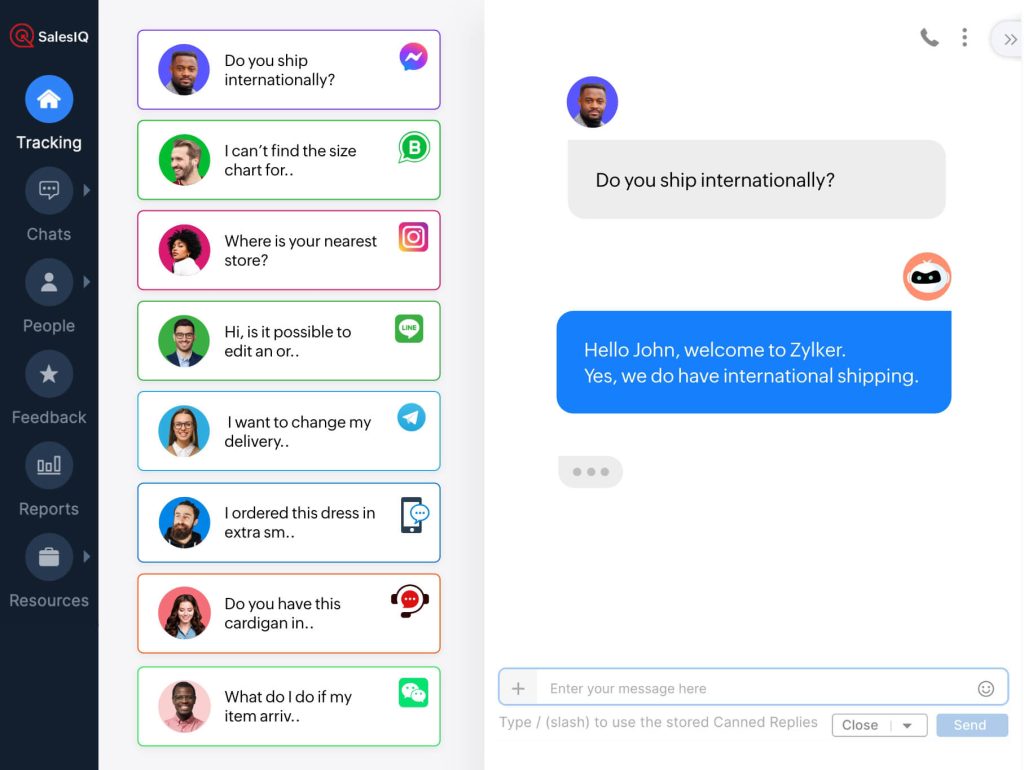
I also liked that the chatbot side covers both a rule-based flow builder called Zobot and an Answer Bot that pulls from your own help center content, so responses come from your actual documentation rather than generic scripts.
It connects to Facebook, Instagram, WhatsApp, Telegram, LINE, and WeChat too, which matters a lot if your customers reach out across more than just your website. For a small business already using Zoho’s ecosystem, I think this is one of the smoothest integrations you’ll find on this list.
Pros:
- Native Zoho CRM integration that turns chats into leads automatically
- Answer Bot trained on your own help center content, plus a custom-flow Zobot builder
- Messaging channels spanning WhatsApp, Instagram, Facebook, Telegram, LINE, and WeChat
- Visitor tracking that shows pages viewed, time on site, and repeat visits
- A genuinely usable free plan for very small teams
Cons:
- The interface can feel dated next to newer competitors, and some users note a learning curve
- Ticketing requires a separate Zoho Desk subscription, so full support coverage means adding another tool
User Rating: 4.4/5 (G2)
Pricing: Free plan for up to 3 operators. Paid plans start at $10/operator/month.
3. Manychat – Best for Making Chatbots for Messaging Apps
When I read user reviews about Manychat, I felt it was a good chatbot for small businesses. It excels at creating chatbots for messaging apps like Facebook Messenger and Instagram. Users appreciate how it seamlessly automates business conversations across these platforms, keeping them effortlessly connected with customers.
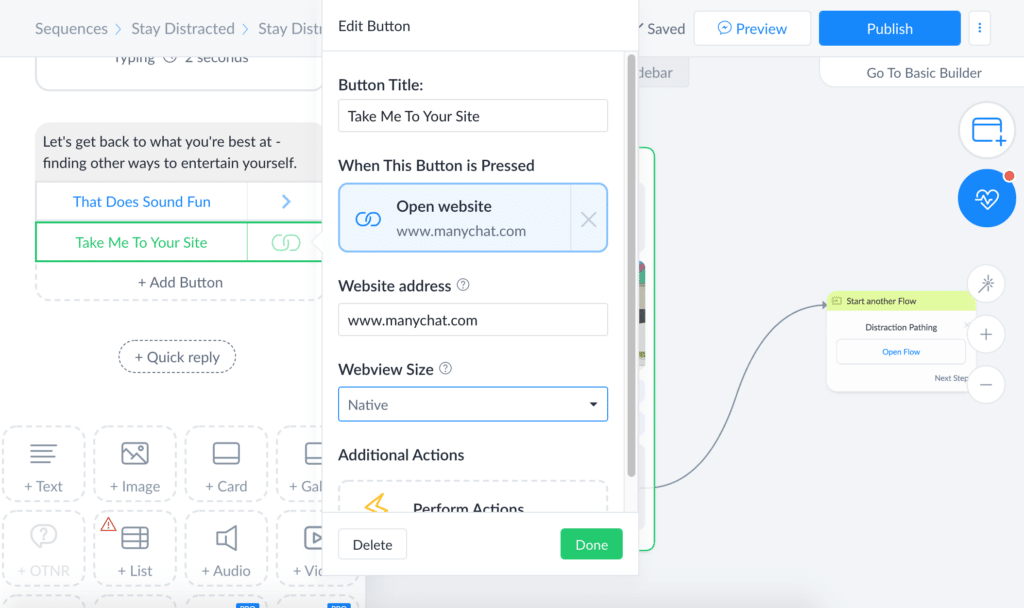
I liked the software’s ability to craft engaging conversational experiences, which was frequently mentioned. Many noted how it transformed visitors into loyal customers.
Users also highlighted the tool’s effectiveness in capturing leads and generating revenue, thanks to its extensive library of templates. In my opinion, it’s a decent chatbot tool for small firms.
Pros:
- Supports multi-channel messaging on Facebook Messenger, Instagram, SMS, and email
- Customizable templates for quick chatbot setup
- Automated follow-ups to nurture leads and increase conversions
- Detailed analytics to track chatbot performance and user engagement
- Incorporates AI-driven natural language processing for smarter conversations
Cons:
- No analytics and insights feature in the free plan
- Customer support of the company may not be the best as per existing users
User Rating: 4.5/5 (G2)
Pricing: A free plan is available for up to 1000 contacts. Paid options start from $14/month.
4. REVE Chat – Best for Omnichannel Support with Video and Co-Browsing
I found REVE Chat to be a strong fit for small businesses that want more than a basic chat widget without paying enterprise prices for it.
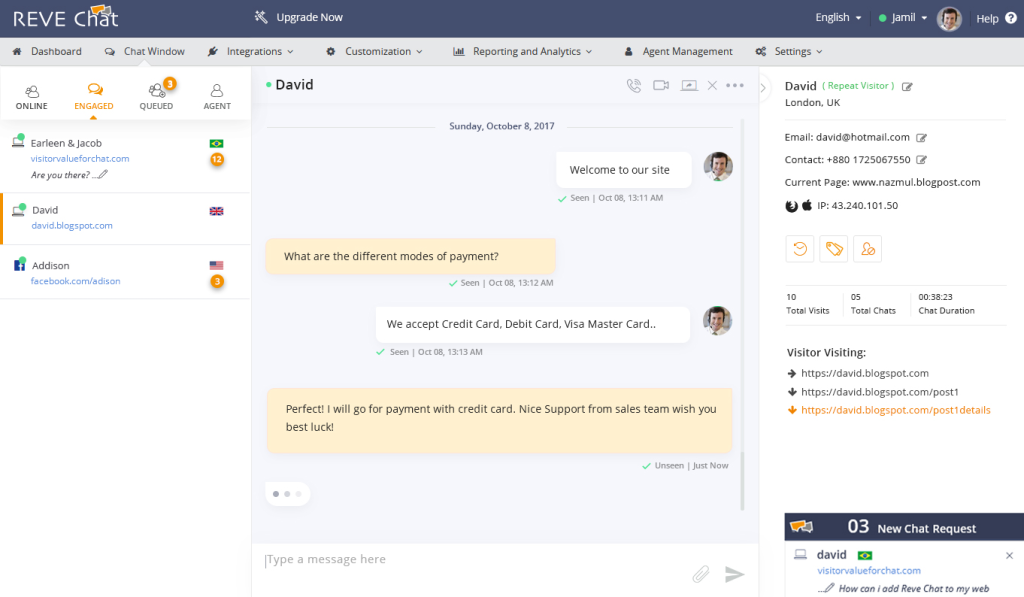
The platform brings live chat, AI-powered chatbots, video and voice calls, and co-browsing into one dashboard, so a customer can go from a text chat to a screen-share without switching tools.
What stood out to me is the omnichannel reach. REVE Chat connects to Facebook, Instagram, WhatsApp, and Telegram, so a small team can manage every conversation from one inbox instead of juggling four apps. The no-code chatbot builder also lets you train bots on your own FAQs and help content, and CRM integrations mean lead details flow straight into the tools you already use.
Pros:
- No-code AI chatbots that can be trained on your own website and help content
- Omnichannel messaging across WhatsApp, Instagram, Facebook, and Telegram from one inbox
- Co-browsing and video/voice calls for higher-touch support without extra software
- CRM integrations that sync lead and visitor data automatically
- Mobile apps so operators can respond on the go
Cons:
- Review volume is smaller than more established competitors, so it’s worth testing before committing
- Some advanced features are gated behind higher-priced plans
User Rating: 4.3/5 (G2)
Pricing: Starts around $14/agent/month for live chat, with chatbot-inclusive plans from roughly $64/month. A free trial is available.
5. HelpCrunch – Best for Live Chat, AI Chatbot & Help Desk in One Inbox
I tried HelpCrunch after noticing how many small SaaS teams mentioned using it to replace three separate tools at once. It combines live chat, an AI chatbot, a shared inbox, and a knowledge base into a single dashboard, so I never had to bounce between apps just to answer one customer question.
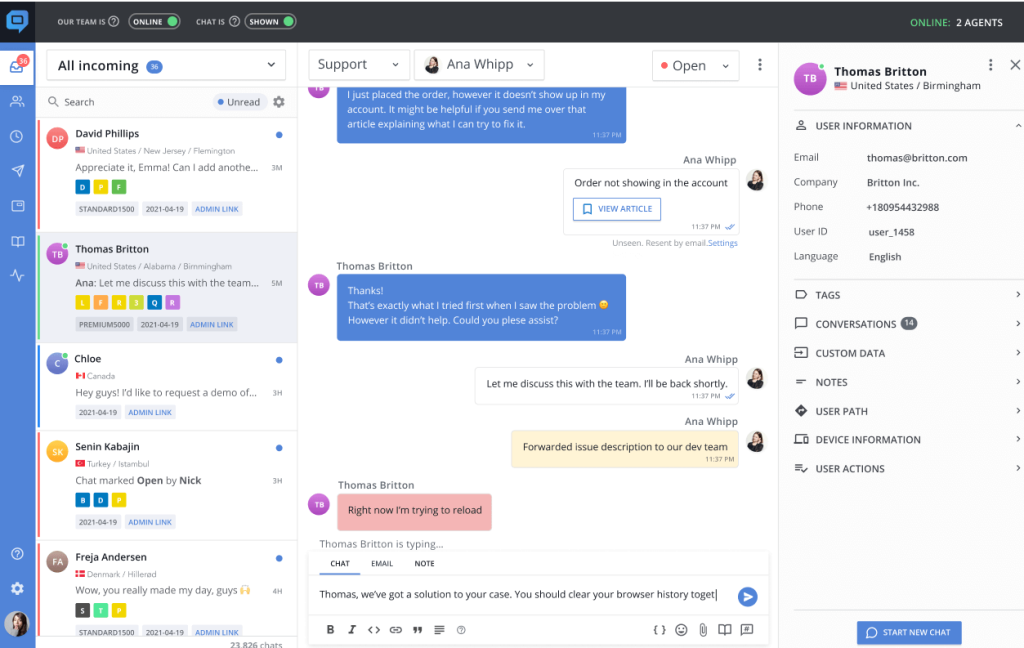
What stood out to me is that the AI chatbot trains only on your own content, help articles, FAQs, and documentation, so it isn’t pulling generic answers from nowhere. When it can’t resolve something, it hands the conversation to a live agent along with the full chat history, so customers never have to repeat themselves.
I also liked that it reaches customers across live chat, WhatsApp, Instagram, and Facebook from the same inbox, which kept our whole support workflow in one place instead of scattered across channels.
Pros:
- AI chatbot trained exclusively on your own knowledge base and help content
- Shared inbox that unifies live chat, email, and social messages like WhatsApp and Instagram
- Smooth handoff from bot to human agent with full conversation history carried over
- Built-in knowledge base so customers can self-serve before a chat even starts
- Saved replies and automation rules to speed up repetitive tickets
Cons:
- The AI chatbot is locked behind the Pro plan and up, not available on Basic
- AI conversations are metered even on paid plans, so high-volume sites may need add-ons
User Rating: 4.7/5 (G2)
Pricing: Starts at $15/user/month for Basic. AI chatbot and AI Agents unlock from $25/user/month.
6. Smartsupp – Best for Multi-Channel Chat with an AI Shopping Assistant
Smartsupp pairs live chat with Mira, an AI agent built specifically around answering product questions and making recommendations, and I think that makes it a natural fit for small retailers and service businesses that want their chatbot to double as a sales assistant, not just a support ticket filter.
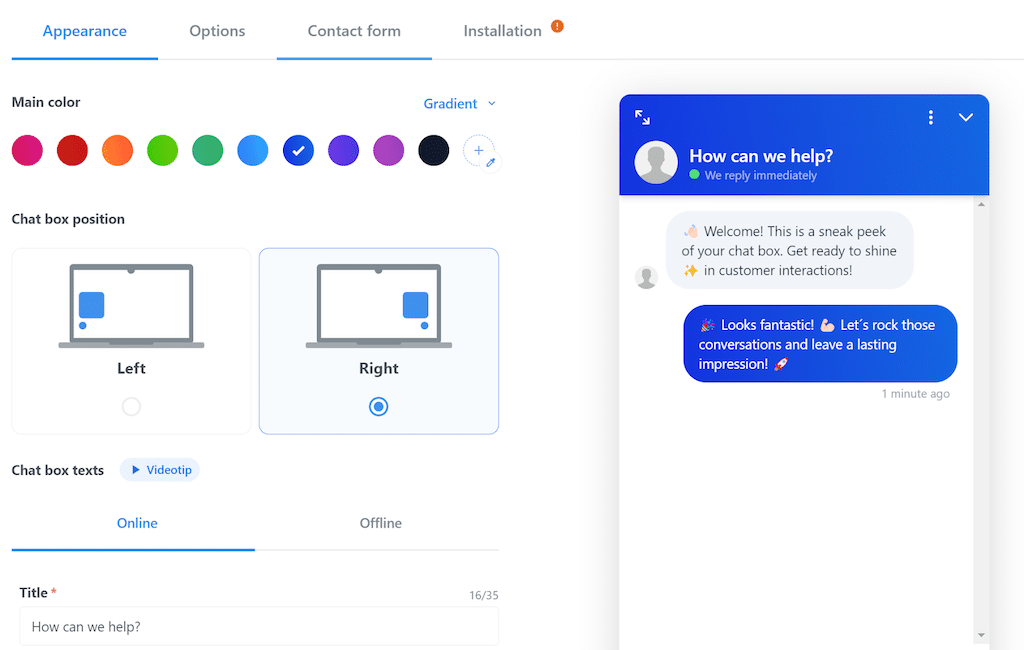
Beyond the AI layer, I found Smartsupp covers live chat, WhatsApp, and Messenger from a single inbox on every paid plan, which cuts down on the tool-switching I’ve dealt with elsewhere. It also includes visitor recording, so you can see exactly how someone navigated your site before they reached out, which I found genuinely useful for understanding intent.
Setup was straightforward in my experience, and the free plan is generous enough that you can actually test real conversations before paying anything, rather than just poking at a demo.
Pros:
- Multi-channel support across live chat, WhatsApp, and Messenger on every plan
- Mira AI agent that answers product questions and makes recommendations around the clock
- Visitor recording for understanding customer behavior before a chat starts
- A free plan that includes real conversations, not just a demo
- Strong marks for ease of use and setup from small business reviewers
Cons:
- The Mira AI agent is billed as a separate add-on from the base plan
- Free plan conversation limits mean active stores will likely need to upgrade fairly soon
User Rating: 4.7/5 (G2)
Pricing: Free plan available (25 conversations/month). Paid plans start at $17/month.
7. Pandorabots – Best for Building AI Chatbots With AIML Scripting
I’ve heard a lot about Pandorabots and its exceptional capabilities in building AI chatbots using AIML scripting. This platform is renowned for its flexibility, making it suitable for virtually any industry use case.
Although I haven’t used it personally, I believe it’s a great recommendation for those looking to create sophisticated chatbots. With Pandorabots, some coding knowledge is required, which speaks to its maturity and the advanced features it offers.
You can start with a free plan and upgrade to a premium plan for additional flexibility and features.
Pros:
- Supports AIML (Artificial Intelligence Markup Language) for advanced chatbot scripting
- Robust analytics dashboard for monitoring and optimizing chatbot performance
- Multi-channel bot creation, ensuring broad reach and engagement
- Real-time chat capabilities for immediate customer interaction
- Offers a visual chat flow builder for designing conversation paths
Cons:
- No API access in the free plan
- Users may need to invest time in understanding the intricacies of AIML when customizing chatbots
User Rating: 5/5 (Based on 2 reviews) (G2)
Pricing: A free plan is available with limited features. Paid options start from $19/month.
8. Flow XO – Best for Automating Customer Interactions via AI Chatbots
Flow XO stands out as a premier messenger chatbot platform. This versatile tool allows you to welcome visitors, create first impressions, and offer immediate responses to customer queries, ensuring quick support.
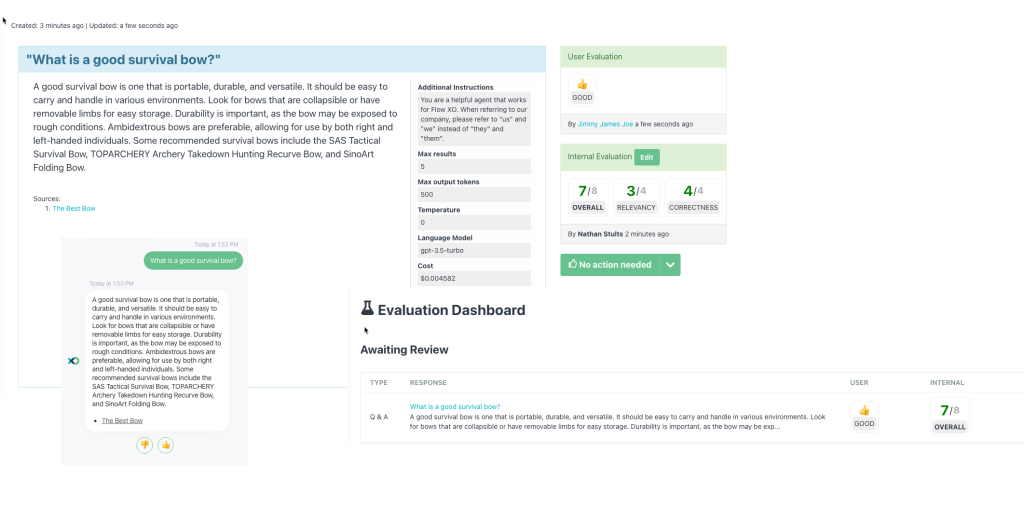
One of its unique features that I like is its capability to facilitate transactions directly through the chatbots, simplifying the payment process for customers. These chatbots can hand over conversations to human agents whenever necessary, ensuring that more complex issues are addressed efficiently.
Creating these chatbots is pretty simple. You can use a visual editor to build and customize chatbots without any coding knowledge.
Pros:
- Provides instant answers to customer queries for quick support
- Facilitates transactions directly through chatbots, simplifying payments
- Smooth handoff to human agents for complex issues
- An intuitive visual editor for easy chatbot customization
- Pre-built templates for quick and efficient chatbot deployment
Cons:
- Some users feel the platform’s analytics are basic and lack depth
- Pricing structure can be confusing for beginners
User Rating: 4.2/5 (G2)
Pricing: Starts at $25/month.
9. tawk.to – Best for Truly Free Live Chat with Optional AI
If budget is the deciding factor, tawk.to is hard to beat. I was skeptical at first that a completely free live chat tool could hold up in real use, but the core platform genuinely delivers: unlimited agents, unlimited chat history, and a built-in ticketing system, all at no cost, and not as a time-limited trial either.
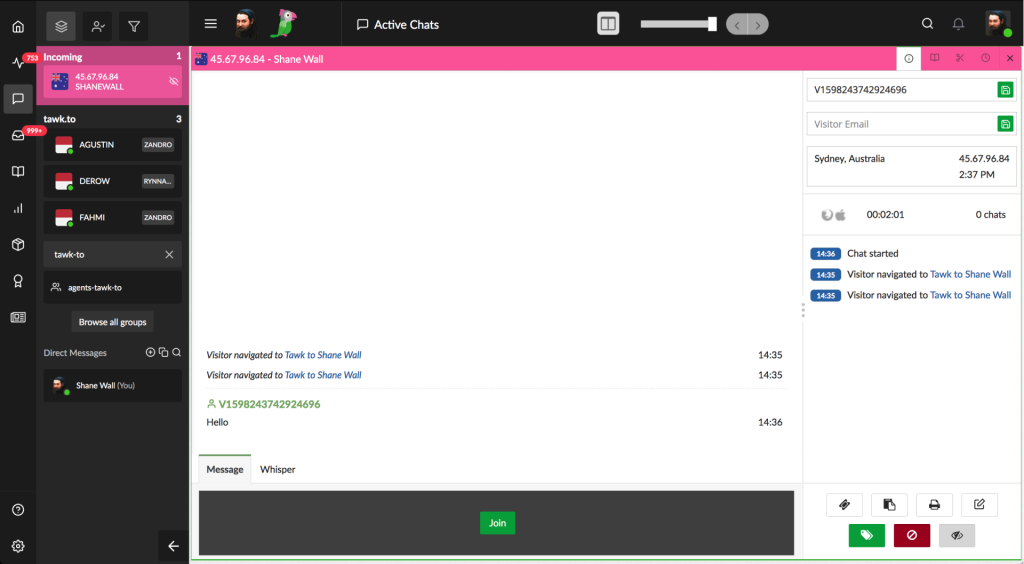
That alone makes it worth a serious look if you’re not ready to commit to a monthly bill yet. Where I think tawk.to earns its keep for growing teams is the AI Assist add-on.
It answers repeat questions using your own knowledge base and FAQ content, and it even comes with a free tier of 100 AI messages a month before any paid tier kicks in. I also liked that you can add a hosted knowledge base for customer self-service without touching the free live chat core at all.
Pros:
- Free core live chat with unlimited agents, chats, and history
- AI Assist add-on trained on your own knowledge base, with a free usage tier before you pay anything
- Built-in ticketing so support requests don’t get lost in chat
- Hired human agents available as an optional add-on if you need overflow coverage
- Mobile and desktop apps included at no cost
Cons:
- Removing tawk.to branding and adding AI both cost extra on top of the free plan
- The interface feels more utilitarian than some newer competitors
User Rating: 4.5/5 (G2)
Pricing: Free forever for core live chat. AI Assist starts at $29/month, branding removal from $19/month.
10. Chaport – Best for Transparent Multi-Channel Messaging
Chaport was built to feel less like a corporate helpdesk and more like chatting with a friend, and honestly, that shows the moment you start using it. I found it combines live chat, a chatbot builder, and messaging integrations with Facebook, Viber, and Telegram into one modern-feeling inbox, all without the setup headaches I’ve run into with heavier platforms.
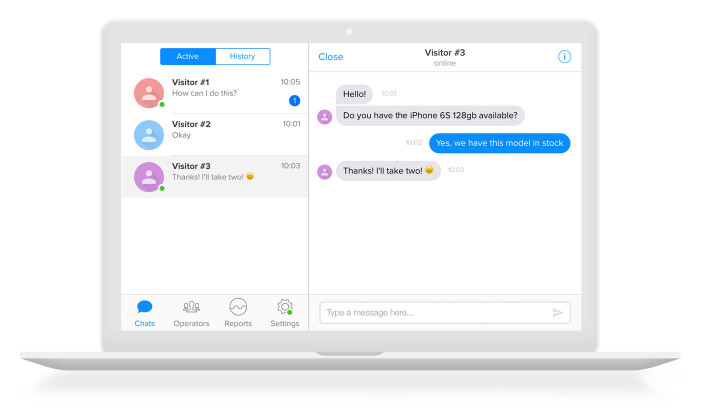
What I appreciated most is that Chaport doesn’t hide its pricing behind a sales call, something I can’t say for every tool on this list. The free plan covers two operators and unlimited chats, which is generous for a solo founder just getting started.
The Pro plan then adds saved replies, detailed reports, and an autoresponder for basic automation, all still at a price a small team can realistically plan a budget around without any surprises later.
Pros:
- Multi-channel messaging across Facebook, Viber, and Telegram from one dashboard
- Chatbot automation paired with a knowledge base and FAQ bot for self-service
- Clear, published pricing with no custom quotes required
- Saved replies and an autoresponder to speed up repetitive questions
- Web, desktop, and mobile apps included on every plan
Cons:
- The free plan caps you at two operators, so growing teams will need to upgrade fairly quickly
- Advanced automation and unlimited operators are reserved for the top-tier plan
User Rating: 4.8/5 (G2)
Pricing: Free plan available. Paid plans start at €29/month.
11. Customers.ai – Best for Multi-Platform Marketing Automation
When I first saw a colleague use Customers.ai (formerly MobileMonkey), I was impressed by its versatility as a chatbot platform. They explained how it offers round-the-clock instant responses to customer inquiries, which significantly improved their customer engagement.
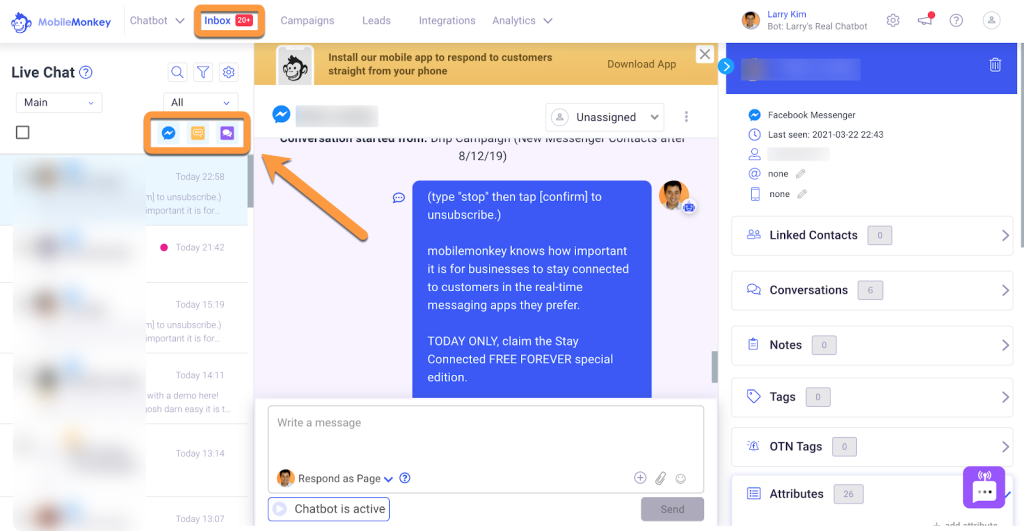
I noticed how popular the software is in the chatbot market, and it’s easy to see why. Instead of a drag-and-drop editor, it displays chat sequences in a linear format. My colleague mentioned that while this format makes it easy to reorder elements, it can get a bit tricky when adding conditionals.
I found the software also excels in multi-platform marketing automation. It allows seamless management of marketing efforts across various platforms, providing a cohesive and streamlined approach.
Pros:
- Provides 24/7 customer support across Instagram, Facebook, SMS, and web chat
- Includes advanced marketing automation tools for lead capture and nurturing
- A coding-free advanced chatbot builder for creating complex conversational flows
- Utilizes natural language processing for smart replies and understanding customer inquiries
- Integrates with CRM and other business applications via Zapier and API
Cons:
- Pricing is not transparent
- Users find the linear interface for chat sequences challenging
User Rating: 4.8/5 (G2)
Pricing: Starts at $49/month.
12. Glassix – Best for Omnichannel Customer Support
Glassix, an advanced AI-powered chatbot, stands out as a customer support and messaging tool. I was pleasantly surprised to see that it integrates the latest GPT-4 AI for effective customer interactions.
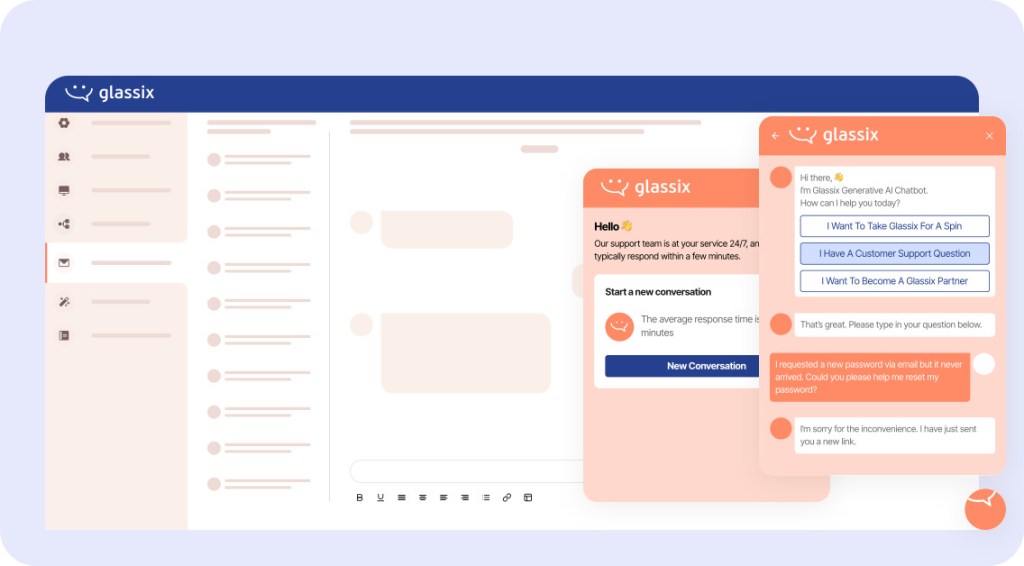
Unlike traditional chatbots, Glassix doesn’t just rely on preset responses; it uses AI to provide more dynamic and contextual replies.
The platform includes a drag-and-drop flow builder, making creating and deploying chatbots across multiple channels easy. The tool also offers features like automatic conversation tagging and one-click conversation summaries.
Pros:
- Multi-channel deployment supports web, mobile, and messaging platforms
- Integrates with CRM systems for streamlined customer data management
- Lets you add rich media elements like images, videos, and files
- Seamless handover from chatbot to human agents
- Customizable templates are available for quick and tailored chatbot setup
Cons:
- AI capabilities are not available for chatbots in the starter plan
- May not be the best option for non-technical teams
User Rating: 4.8/5 (G2)
Pricing: Starts at $49/user/month.
How I Chose These Chatbots for Small Businesses
The evaluation of products or tools chosen for this article follows an unbiased, systematic approach that ensures a fair, insightful, and well-rounded review. This method employs six key factors:
- User Reviews / Ratings: Direct experiences from users, including user ratings from reputable sites like G2, provide a ground-level perspective. This feedback is critical in understanding overall satisfaction and potential problems.
- Essential Features & Functionality: The value of a product is ascertained by its core features and overall functionality. Through an in-depth exploration of these aspects, the practical usefulness and effectiveness of the tools are carefully evaluated.
- Ease of Use: The user-friendliness of a product or service is assessed, focusing on the design, interface, and navigation. This ensures a positive experience for users of all levels of expertise.
- Customer Support: The quality of customer support is examined, taking into account its efficiency and how well it supports users in different phases, like setting up, addressing concerns, and resolving operational issues.
- Value for Money: Value for money is evaluated by comparing the quality, performance, and features. The goal is to help the reader understand whether they would be getting their money’s worth.
- Personal Experience / Expert’s Opinion: This part of the evaluation criteria draws insightful observations from the personal experience of the writer and the opinions of industry experts.
3 Best Chatbots for Small Businesses
Want to know if the chatbot tool you shortlisted makes it into the top #3 in my review? Here, check them out –
1. ProProfs Chat
ProProfs makes building lead-generating chatbots a breeze. I trained mine with website and help center data, then designed conversation flows with ease. Canned responses, smart routing, and real-time language translation make it a powerful tool for customer engagement and support.
2. REVE Chat
REVE Chat impressed me with how it brings omnichannel messaging, video calls, and co-browsing into a single dashboard. Building a bot that pulls answers from your own FAQs is straightforward, and jumping from a text chat straight into a live screen-share helps close out the trickier support tickets fast.
3. Manychat
Manychat excels at building Messenger and Instagram chatbots. It automates conversations, fosters customer loyalty with engaging experiences, and captures leads through pre-built templates, a solid option for budget-conscious firms.
How can a Chatbot Software Grow Your Small Business?
First things first, why should you even consider an AI chatbot for small business operations?
Chatbots can handle customer inquiries 24/7, and that’s the first thing you’ll hear. They can take a load off your shoulders by automating customer interactions. They can handle common questions, book appointments, process orders, and even gather feedback.
“By 2027, chatbots will become the primary customer service channel for roughly a quarter of organizations.”
Gartner, Inc.
Let’s quickly have a look at some of the few ways chatbot software for small businesses can revolutionize your operation –
Provide 24/7 Customer Support
One of the most significant advantages is providing round-the-clock support. Your customers can get answers to their queries at any time, enhancing their experience and satisfaction. No more missed inquiries because your support team was on leave.
Boost Support Efficiency
Chatbots can handle multiple conversations at once, unlike human agents who can only focus on one at a time. This means shorter wait times for your customers and a more streamlined operation for you.
Reduce Support Costs
Hiring staff to work on free live chat software as human agents is a must. But customer support can be expensive.
With chatbots, you can significantly reduce these costs by taking on repetitive tasks and allowing your human employees to focus only on complex issues, such as growing sales or marketing efforts.
Generate Leads & Grow Sales
You’re probably already aware of how you can generate leads by using proactive chat invitations and automated greetings in your live chat software. Did you know chatbots take this convenience to the next level?
AI chatbots can engage visitors on your website, ask qualifying questions, and guide them through the sales funnel. They can also upsell and cross-sell products based on customer preferences. How awesome is that!
Personalize Customers’ Experience
Advanced chatbots can use customer data to provide personalized recommendations and offers, making the customer feel valued and increasing the chances of a sale. This is especially important for those investing in live chat software for eCommerce.
When you line up the best AI chatbots for small business owners are actually using day to day, you’ll notice most of them nail two or three of these benefits well before price even enters the conversation.
Read more: Top 15 Benefits of Chatbots for your Business & Customers in 2026
FREE. All Features. FOREVER!
Try our Forever FREE account with all premium features!
What are Some of the Use Cases of Chatbot Software in Small Businesses?
Okay, now that you know that a chatbot for small businesses brings in many benefits, you may want to know about some top use cases. How exactly can you put chatbots to work in your small business? Let’s find out –
- Customer Service: This is the most common use case. A chatbot can answer FAQs, resolve common issues, and even escalate complex problems to human agents when necessary.
- Appointment Scheduling: If you run a service-based business like travel or healthcare, chatbots can handle appointment bookings, reminders, and cancellations. This reduces no-shows and ensures a smooth scheduling process. AI chatbots designed for small service businesses are especially useful here, since they can sync directly with your booking calendar and confirm slots without anyone touching a phone.
- eCommerce: For eCommerce stores, chatbots can assist with order tracking, returns, and product recommendations. They can also handle inquiries about product availability and specifications.
- Lead Generation: Chatbots can engage website visitors in conversations, qualify them as leads, and capture their contact information for follow-up. This is particularly useful for real estate, finance, and consulting businesses.
- Marketing & Promotions: Chatbots can send customers personalized offers, discounts, and updates. They can also gather feedback on promotions and events to help you refine marketing strategies.
- HR & Recruitment: For small businesses with a growing team, chatbots can assist with recruitment by screening candidates, scheduling interviews, and providing information about job openings.
- Feedback & Surveys: Want to know what your customers think? Chatbots can conduct surveys and gather feedback, providing insights to improve your products and services.
Want to explore more use cases? Read: Top 20 Chatbot Use Cases to Help You Build Delightful Experience
What are the Different Types of Chatbot Software Small Businesses Can Use?
Let me guess: If you’ve used chatbots for commercial purposes, you probably used a rule-based traditional one. These chatbots are great for most businesses, but have a limited domain of functionality.
The good news is you have options. And a lot of them. Let’s check them out briefly.
Rule-Based Chatbots
These are the simplest forms of chatbots. They follow predefined rules and scripts to respond to user inputs. They’re great for handling straightforward, repetitive tasks like answering FAQs. However, they hand over the conversation to a live chat operator when it comes to complex queries.
Rule-based chatbots are pretty easy to build. Want to see how? Watch this short video –
AI-Powered Chatbots
“By 2026, more than 80% of enterprises will have used generative artificial intelligence (GenAI) application programming interfaces (APIs) or models, and/or deployed GenAI-enabled applications in production environments, up from less than 5% in 2023.”
Gartner, Inc.
Generative AI chatbots are everywhere today. That’s partly because of the wide spectrum of benefits they bring. These chatbots use artificial intelligence (AI), machine learning (ML), and natural language processing (NLP) to understand and respond to more complex queries.
They’re more advanced than rule-based chatbots and can handle a wider range of questions. They learn from interactions and improve over time, providing more accurate and personalized responses.
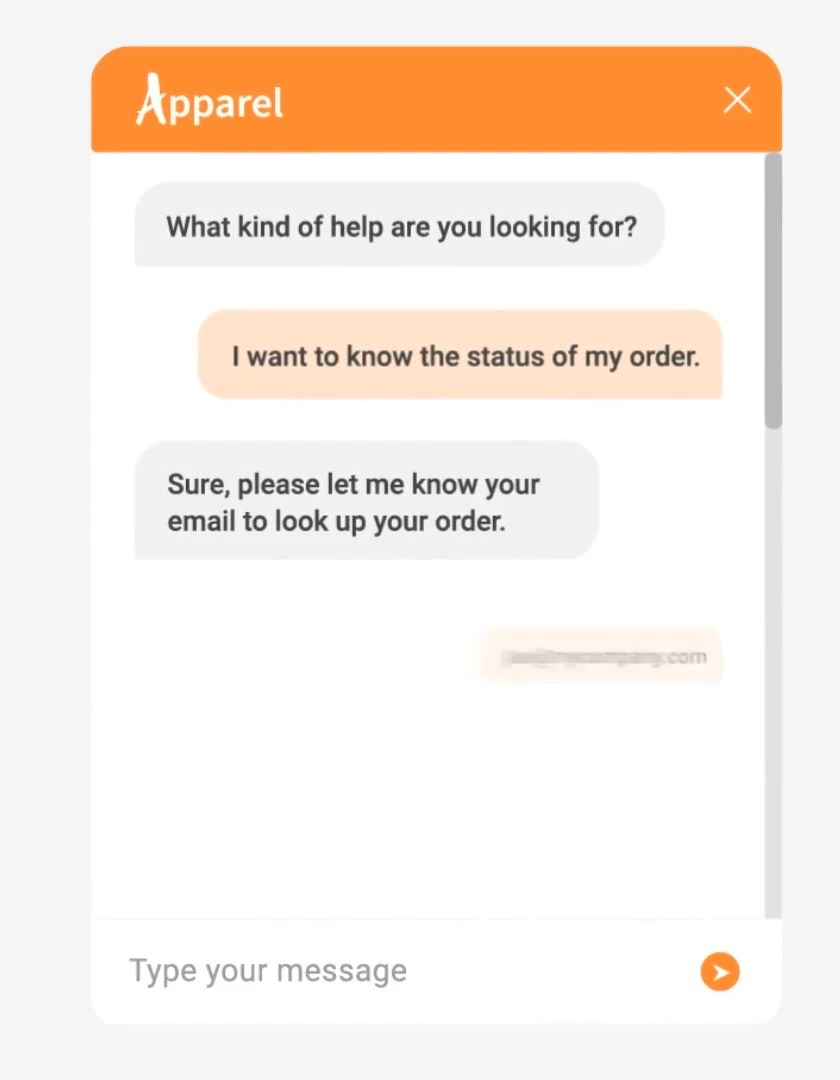
Most of the software solutions (chatbot for small business) you read in the list above let you create AI chatbots for your business niche. If you’re comparing the best AI chatbot apps for small business use, this AI-powered category is where you’ll spend most of your evaluation time, since it covers almost every tool on this list.
Hybrid Chatbots
As the name suggests, these combine the best of both worlds. They start with predefined rules and switch to AI when the queries get more complex, giving them an even wider range of functionality.
Voice-Activated Chatbots
These chatbots can interact with users through voice commands. They’re particularly useful if you want to offer a hands-free experience, like in a smart home setup or a driving assistant app.
Even though they’re becoming increasingly popular with the rise of smart speakers and voice assistants like Amazon Alexa, Apple’s Siri, and Google Assistant, they still haven’t found their way for customer support or engagement purposes.
Also read: A Detailed Guide To Types Of Chatbot And Why You Must Have Them Today!
How to Choose the Right Chatbot Software for Your Small Business
Now, here’s the thing: choosing the right chatbot software for your business is more than you think. Yes, there are some common factors to consider, but more than that, what you need depends on your specific business requirements.
Let’s give you a quick walkthrough of the factors you need to keep in mind –
Identify Your Needs
Start by determining what you want the chatbot to do. Is it for customer support, lead generation, sales, or something else? Knowing your goals will help you narrow down your options.
The reason why this is important is because a lot of software programs do not offer a multifunctional chatbot tool like ProProfs Chat. So, if you want a chatbot that can help with customer support as well as lead generation, choose wisely.
Budget Considerations
How much are you willing to invest in a chatbot? While investing in a good chatbot is important, you don’t want to break the bank. Compare the pricing plans of different platforms and choose one that offers the best value for your money.
Options range from free basic versions to advanced AI-powered solutions. Some vendors also offer a freemium plan for a limited number of users.
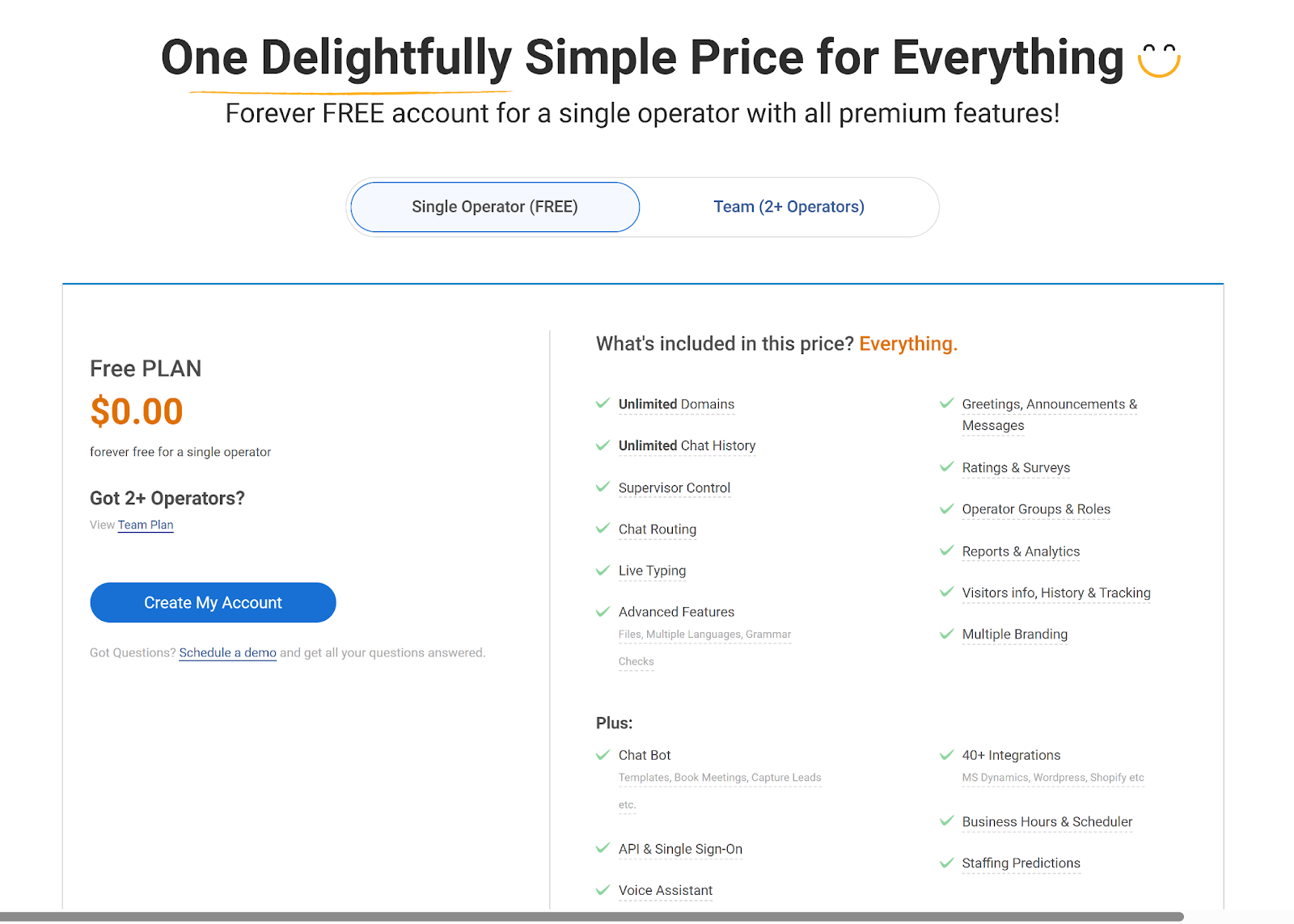
Take ProProfs Chat as an example. They offer all their premium features in the free plan for a single live chat operator, including the AI chatbot tool. If you’re hunting for the most affordable AI chatbot for small businesses, start with vendors that offer a genuine free tier rather than a time-limited trial, since that’s the fastest way to test real conversations before committing budget.
Ease of Use
Look for a user-friendly chatbot platform that doesn’t require extensive technical knowledge. A simple drag-and-drop interface is ideal for small business owners who may not have a tech background. You want something you can set up and manage without hiring a developer.
Integration Capabilities
Ensure the chatbot software can integrate with your existing systems, such as your website, CRM, and social media platforms. This will streamline your operations and provide a cohesive customer experience.
Customization
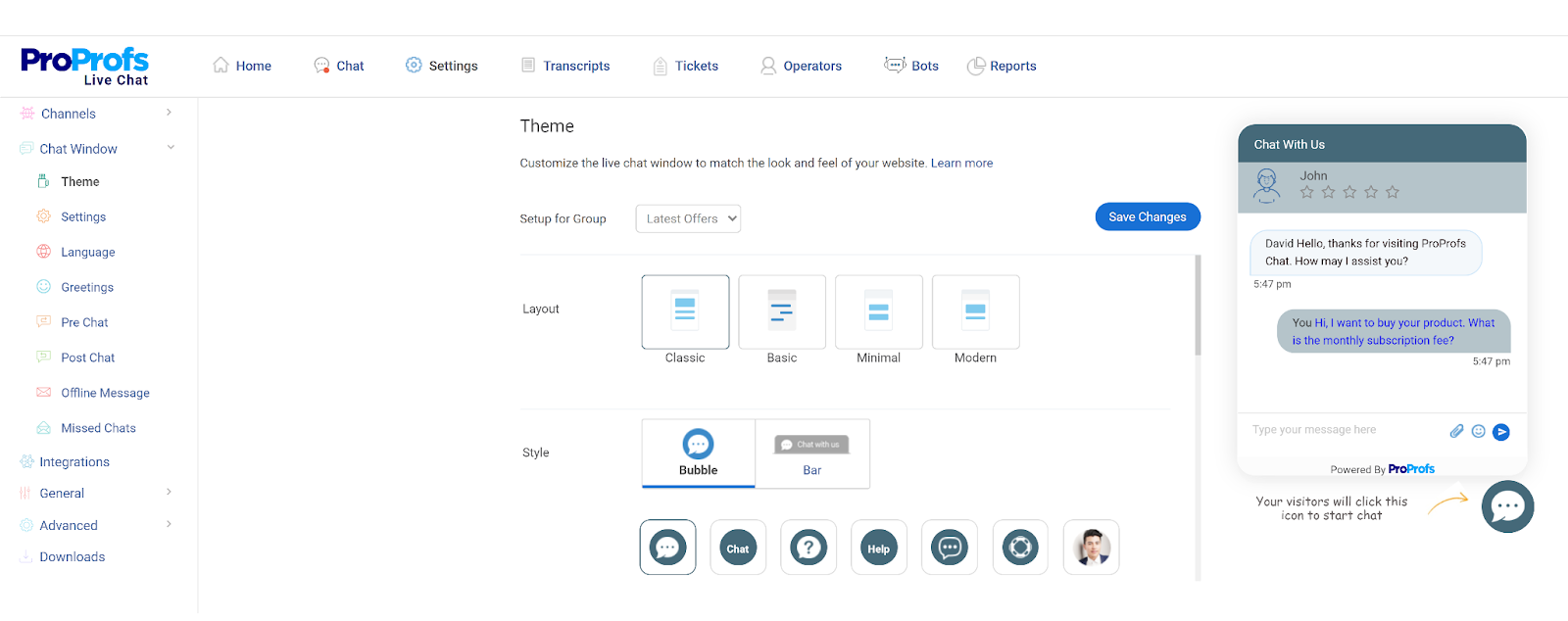
Every business is unique, so look for a chatbot that can be customized to fit your brand’s voice and style. Choose a platform that allows you to customize the chatbot’s responses and appearance. This will make interactions more engaging and consistent with your overall brand image.
Analytics & Reporting
Data is crucial. Opt for a chatbot that offers robust analytics and reporting features so you can track performance and make data-driven decisions.
You may watch this video to have a basic understanding of what reporting features you should expect –
Customer Support
Great after-sale customer support from the software vendor should be a must when choosing a chatbot tool for your business. Poor customer support can ruin your business. Make sure the provider offers reliable customer support across different platforms (live chat, call, email, social media, etc.) to help you troubleshoot problems.
Pricing Structures & Budget Considerations
Chatbot software has various pricing models. Understanding each type of pricing is crucial to determining what’s best for your budget.
- Subscription-Based: Many chatbot platforms operate on a subscription basis, with monthly or annual fees. The cost typically depends on the number of users, interactions, or features you need. Basic plans might be quite affordable, while more advanced plans with AI capabilities and integrations can be pricier.
- Pay-As-You-Go: Some providers offer pay-as-you-go models, where you pay based on the number of interactions or messages. This can be cost-effective if your interaction volume is low, but costs can add up quickly as your usage grows.
- One-Time Purchase: A few platforms offer one-time purchase options. You pay a single fee to buy the software and use it indefinitely. While this can be a larger upfront investment, it might save you money in the long run. I won’t recommend this for small businesses with tight budget constraints.
- Freemium Models: Many chatbot platforms offer free tiers with basic features. This can be a great way to test the waters and see if the software meets your needs before committing to a paid plan.
- Custom Solutions: For businesses with specific needs, custom chatbot development is an option. This is usually the most expensive route but offers the highest level of customization and functionality. Again, this may not be the most ideal solution for small businesses.
As for platforms like ProProfs Chat, you can expect to see a subscription-based pricing structure. The company also offers a freemium plan and a custom solution.
FREE. All Features. FOREVER!
Try our Forever FREE account with all premium features!
Uplift Your Small Business With Chatbot Software
As customers demand instant responses, chatbots have become central to customer support. These tools offer intelligent targeting, lead capture forms, and other features that help you drive conversions and engage customers.
Now, I know how selecting a software solution is such a big decision for small businesses. There are some key requirements, and then there is the budget factor, which is the biggest of them all.
In such a case, my top recommendation would be to choose a platform like ProProfs Chat that lets you use their features for free. It can be a free plan, a free trial, or an in-depth product demo.
That largely cuts down the risk of landing into software that looks and feels different from what you saw on the company’s webpage. As for ProProfs Chat, you can just sign up to start using the freemium plan as it’s free for a single operator.
Frequently Asked Questions
What is an AI chatbot for small business?
An AI chatbot for small businesses is a software tool that uses artificial intelligence to answer customer questions, capture leads, and route conversations to the right team, without needing a human on standby around the clock. Most modern tools train directly on your website or help center content.
Is there a free AI chatbot for small businesses?
Yes. Several tools on this list, including ProProfs Chat, Manychat, Pandorabots, and SnatchBot, offer a free plan or free trial. Free tiers usually cap the number of operators, contacts, or monthly messages, so check those limits before committing.
How much does chatbot software typically cost for a small business?
Pricing varies widely by plan and provider, ranging from around $15 to $80 per month for most small-business-friendly tools, with enterprise-grade or custom-built solutions running much higher. Subscription-based pricing tied to operators or interactions is the most common model.
Can I build a chatbot without any coding experience?
Yes, most chatbot platforms built for small businesses use a drag-and-drop or visual flow builder, so no coding is required. Some advanced platforms, like Pandorabots, do require basic scripting knowledge for deeper customization.
What's the difference between a rule-based chatbot and an AI chatbot?
A rule-based chatbot follows predefined scripts and works best for simple, repetitive questions. An AI chatbot uses natural language processing and machine learning to understand intent and handle more complex, open-ended conversations, improving its answers over time.
Do small business chatbots work with WhatsApp and Facebook Messenger?
Many do. Tools like Activechat, Manychat, and Customers.ai are built specifically for messaging-app deployment, while others focus primarily on website-based live chat widgets, so check channel support before choosing a platform.
How long does it take to set up a chatbot for a small business?
Basic rule-based chatbots can often go live within a day using a template, while AI chatbots that need to be trained on your website or help center content may take a few hours to a few days, depending on how much content you feed them.
FREE. All Features. FOREVER!
Try our Forever FREE account with all premium features!

 We'd love your feedback!
What did you like & how can we make it even better?

 Thanks for your feedback!
 Ask Your Question
Have a question? Get expert help to make your decision easier.