
You built a great product. You worked hard on your website. And somewhere tonight, a potential customer is going to visit, have one question about pricing, find nothing but silence, and hand that sale to a competitor who simply had a chat widget running.
I know that sounds dramatic. But I have watched it happen to founders and early-stage startups who were doing everything else right. Limited teams, tight budgets, and no dedicated support staff make missed conversations even more costly when every lead counts.
Here is the thing most people get wrong. They think live chat is just a support tool. It is not. The right business live chat software is a revenue engine that works the shift you cannot. It greets visitors, qualifies leads, answers objections with AI, and books meetings at 2 AM without waking anyone up.
The hard part is choosing from dozens of platforms without wasting months on the wrong one. Overpaying for unused features, missing key integrations, or deploying a chatbot that gives customers wrong answers are all very real and very costly mistakes for a startup trying to grow on a lean budget.
I have personally tested and researched these platforms, so you do not have to. In this guide, I am breaking down the 10 best live chat solutions for startups and small businesses in current_year], with honest pros, cons, and real pricing, so you can skip the guesswork and get the right tool from day one.
Let us get into it.
What Is Business Live Chat Software?
Business live chat software is a real-time communication tool that allows companies to interact with website visitors, customers, or prospects directly through a chat interface typically embedded as a widget on a website or app.
Unlike email, where replies take hours or days, live chat gives visitors an answer in seconds. That speed difference has a measurable impact on whether they buy or leave.
According to a survey by Gartner in 2025, live chat and self-service will overtake phone and email by 2027, making it one of the smartest channels a startup can invest in right now.
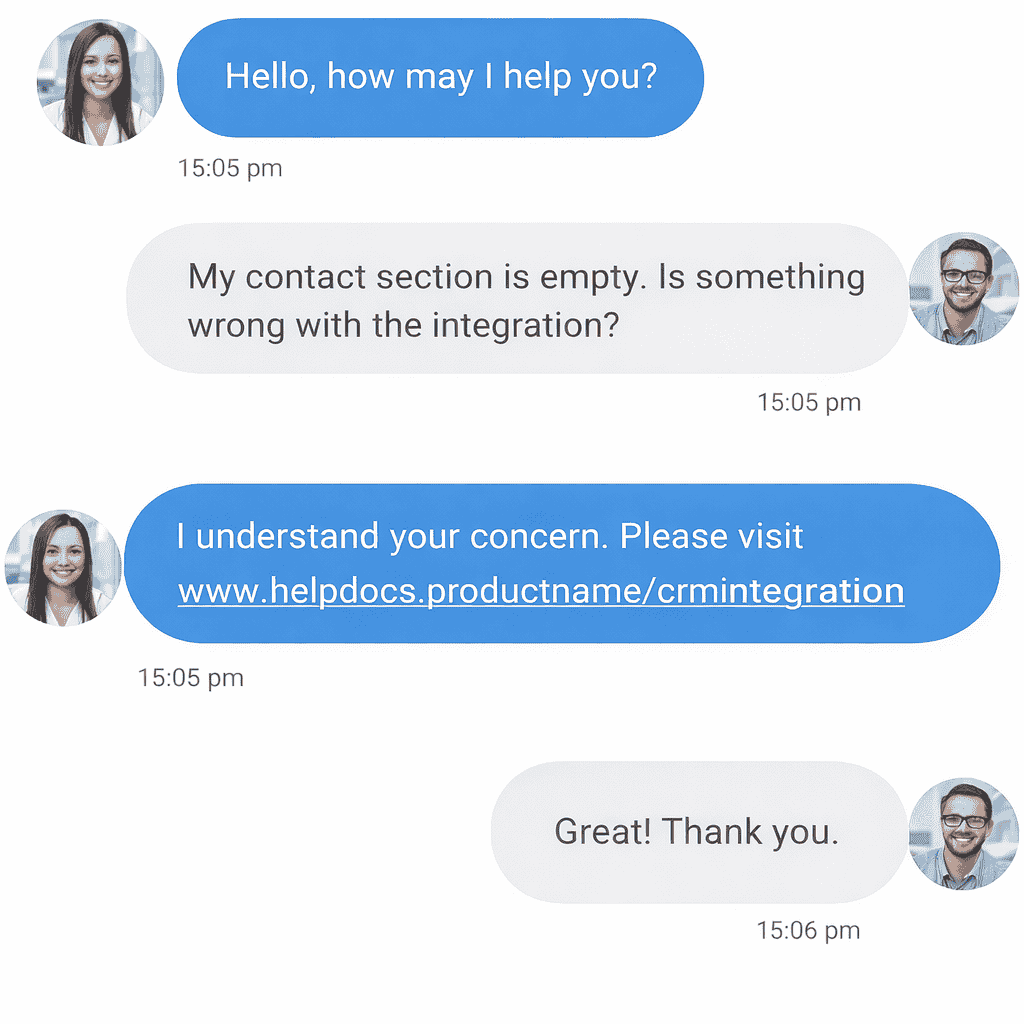
Modern platforms go far beyond a simple chat window. Here is what the best ones bring to the table:
- Real-time agent chat — Talk to visitors instantly with full browsing context visible before the first message is sent.
- AI-powered chatbots — Handle common questions automatically, 24/7, and hand off to a live agent when needed.
- CRM integration — Automatically create or update lead records so no conversation falls through the cracks.
- Proactive chat triggers — Engage visitors based on behavior, like 45 seconds spent on your pricing page, before they leave.
- Visitor tracking — See who is on your site, what they are reading, and where they drop off in real time.
- Analytics and reporting — Monitor response times, satisfaction scores, and agent performance from one dashboard.
What Are the 10 Best Business Live Chat Software Options for Startups?
Over the past few months, I have had conversations with product managers, customer support leaders, and directors to understand which live chat tools they trust, what they’d consider switching to next, and the reasons behind their choices.
I combined those insights with my own hands-on testing and feedback from reliable review platforms to put this list together.
Before I get into the detailed reviews, here’s a quick snapshot of the 10 best live chat software for startups.
| Business Live Chat Software | Best For | Pricing | User Rating |
|---|---|---|---|
| ProProfs Chat | 24/7 customer support with AI chatbots | A free plan is available for growing teams. Paid plan starts at $19.99/user/month. | 4.8/5 (Capterra) |
| Zendesk | Existing Zendesk users | Starts at $19/agent/month (billed annually) | 4.3/5 (Capterra) |
| HubSpot | Sales conversion with free live chat | Starts at $15/seat/month (billed annually) | 4.5/5 (G2) |
| Acquire.io | Flexible API workflows | Starts at $500/month (billed annually) | 4.6/5 (Capterra) |
| PureChat | Real-time visitor analytics & contact history | Starts at $39/month (billed annually) | 4.5/5 (G2) |
| Crisp | Engaging chatbot conversations | Starts at $25/month/workspace | 4.7/5 (G2) |
| Intercom | Omnichannel messaging & in-app chat | Starts at $39/seat/month | 4.5/5 (Capterra) |
1. ProProfs Chat – Best for 24/7 Delightful Customer Support With AI Chatbots
ProProfs Chat is more than a messaging widget. It is a cloud-based platform that combines real-time agent support with AI chatbot automation, enabling businesses to handle customer queries around the clock. It is built for teams that want to reduce response times without adding headcount, and it delivers that without requiring any technical setup.
What I found particularly useful is the drag-and-drop chatbot builder that lets you create automated conversation flows for FAQs, lead capture, and ticket routing with no coding required. You can train the AI chatbot on your own content so it improves over time and delivers more accurate, context-aware responses. Proactive chat triggers also let you reach out to visitors based on their behavior, such as time spent on a pricing page or repeated visits to a help article.
For small support teams, the native integration with ProProfs Help Desk and ProProfs Knowledge Base makes a real difference. Agents can pull up relevant help articles mid-conversation or convert a chat into a support ticket without switching tabs.
Pros:
- Proactive chat invitations to boost interaction and conversion.
- Train AI chatbots using your website or help center data for highly accurate responses
- Real-time visitor tracking for timely engagement
- Offer 360-degree support with the Customer Delight Suite (Live Chat + Help Desk + Knowledge Base + Survey + Qualaroo)
Cons:
- Cloud-only; no offline access
- No dark theme
User Rating: 4.8/5 (Capterra)
Pricing: A free plan is available for growing teams. Paid plan starts at $19.99/user/month.
Learn how Horse Saddle Shop improved its revenue by quickly responding to customers and offering 24/7 live chat assistance.

2. Zendesk – Best for Zendesk Users
Zendesk is the perfect live chat platform for small startups if you’re already integrated into the Zendesk ecosystem. Its live chat functionality seamlessly integrates with Zendesk’s powerful ticketing system, ensuring a cohesive customer support experience.
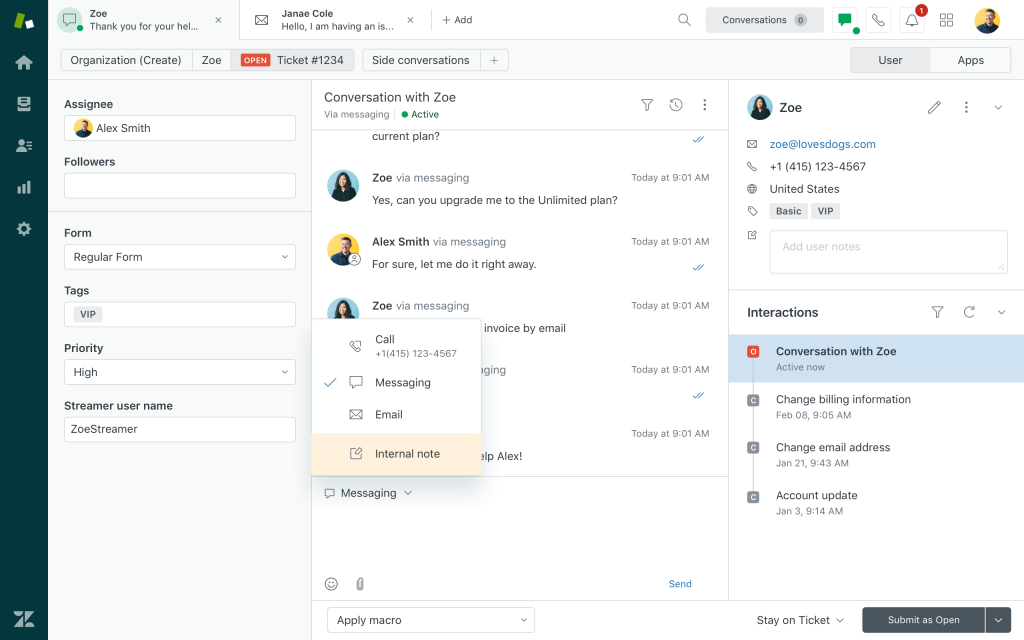
For startups and SMBs, this means you can leverage your existing tools to enhance customer interactions without a steep learning curve. The platform’s scalability ensures it grows with your business, providing the flexibility you need.
With Zendesk, you’re not just getting a chat tool; you’re getting a comprehensive customer service solution.
Pros:
- The AI-powered chatbots help automate responses and streamline support, reducing the workload on human agents and improving response times.
- The platform supports multiple communication channels, including social media and email, ensuring that you can engage with customers wherever they are.
- Proactive engagement tools allow you to initiate conversations based on visitor behavior, helping you to connect with customers at the right moment.
- Extensive customization options for chat widgets enable you to match the chat interface with your brand’s look and feel.
Cons:
- Some users find the interface to be complex and not very intuitive, which can make it challenging to navigate and utilize effectively.
- The initial setup and configuration process can be time-consuming, requiring significant effort to get everything up and running smoothly.
User Rating: 4.3/5 (Capterra)
Pricing: Starts at $19 per month per agent. Billed annually.
3. HubSpot – Best for Converting Sales and Engaging Customers With Free Live Chat
Hubspot’s free live chat tool is an incredible asset for startups and SMBs focused on converting sales and engaging customers. The integration with Hubspot’s CRM is seamless, allowing you to track and nurture leads effortlessly.
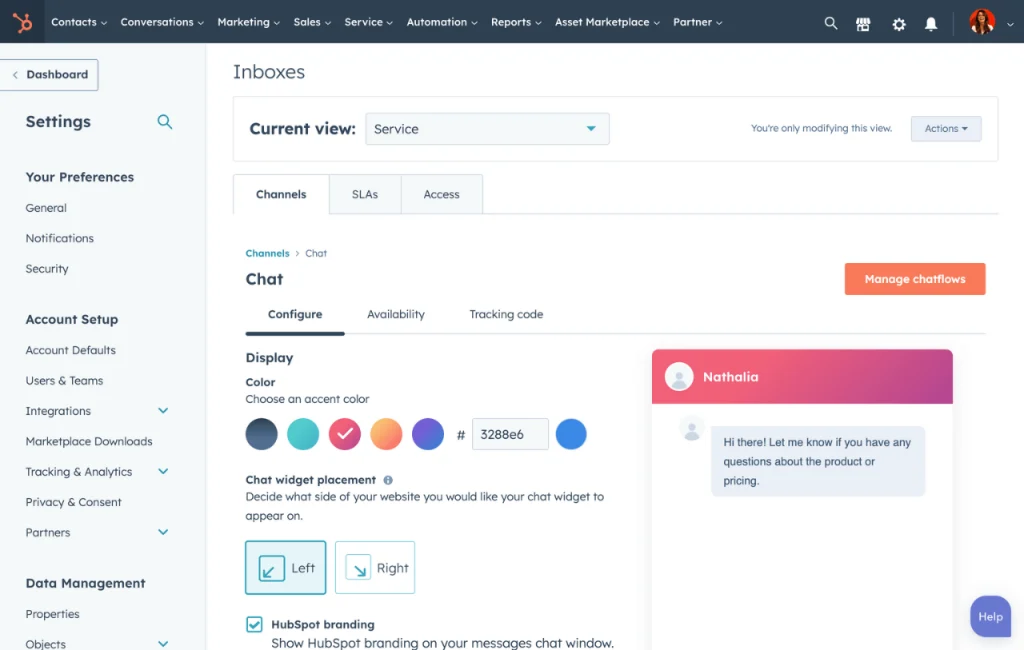
The live chat feature is user-friendly and highly customizable, making it easy to align with your brand’s voice. What I love most is how it boosts engagement – you can proactively reach out to visitors, guide them through their buying journey, and ultimately drive conversions.
For businesses looking to enhance their sales pipeline without breaking the bank, Hubspot is a stellar choice.
Pros:
- HubSpot offers free CRM integration, allowing you to track and manage customer interactions seamlessly within one platform.
- Extensive customization options for chat windows enable you to align the chat interface with your brand’s identity, providing a cohesive customer experience.
- Robust analytics features help you track performance and customer satisfaction, providing valuable insights for continuous improvement.
- Automated workflows streamline customer support processes, reducing manual effort and improving response times.
- HubSpot provides a mobile app for managing chats on the go, ensuring that you can offer support anytime, anywhere.
Cons:
- Some advanced features can be challenging to configure without technical expertise, potentially requiring additional training or support.
- Integration with third-party tools can sometimes be complex and require additional setup.
User Rating: 4.5/5 (G2)
Pricing: Starts at $15 per month per seat. Billed annually.
4. Acquire.io – Best for Flexible API Workflows
Acquire.io stands out with its flexible API workflows, making it an ideal solution for startups and SMBs needing tailored customer engagement.
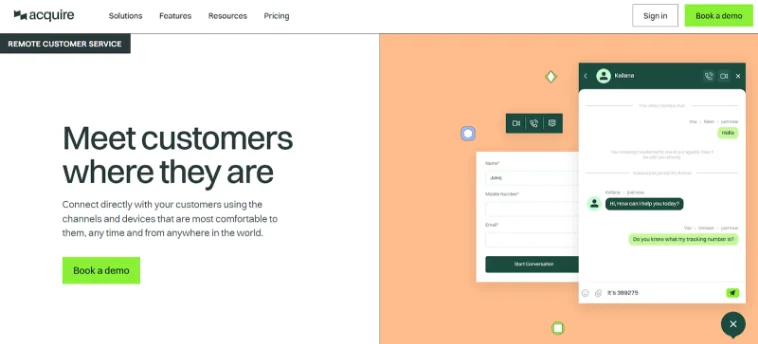
This tool is incredibly versatile, allowing you to integrate with various platforms and create customized workflows that fit your unique needs.
After using it for quite a while, I really like its intuitive visual workflow builder that supports even those with minimal technical expertise in designing sophisticated processes. It also supports AI chatbots that automate repetitive tasks and provide instant responses, improving efficiency and customer satisfaction.
Pros:
- Acquire.io provides co-browsing and video chat features, allowing for enhanced customer support and real-time problem-solving.
- The platform integrates with CRM systems to streamline customer data management and ensure smooth follow-up processes.
- Real-time visitor monitoring helps you understand and engage customers better, increasing the chances of successful interactions.
- Multichannel support, including SMS and social media, ensures that you can reach customers on their preferred communication platforms.
Cons:
- Some features are only available in higher-tier plans, which might be too expensive for small businesses.
- Limited integrations with some third-party tools that might restrict the platform’s ability to perform well.
User Rating: 4.6/5 (Capterra)
Pricing: Starts at $500 per month. Billed annually.
5. PureChat – Best for Real-Time Visitor Analytics and Contact History
PureChat excels in providing real-time visitor analytics and comprehensive contact history, making it a valuable tool for startups and SMBs. This feature-rich platform offers insights into visitor behavior, enabling you to engage them more effectively.
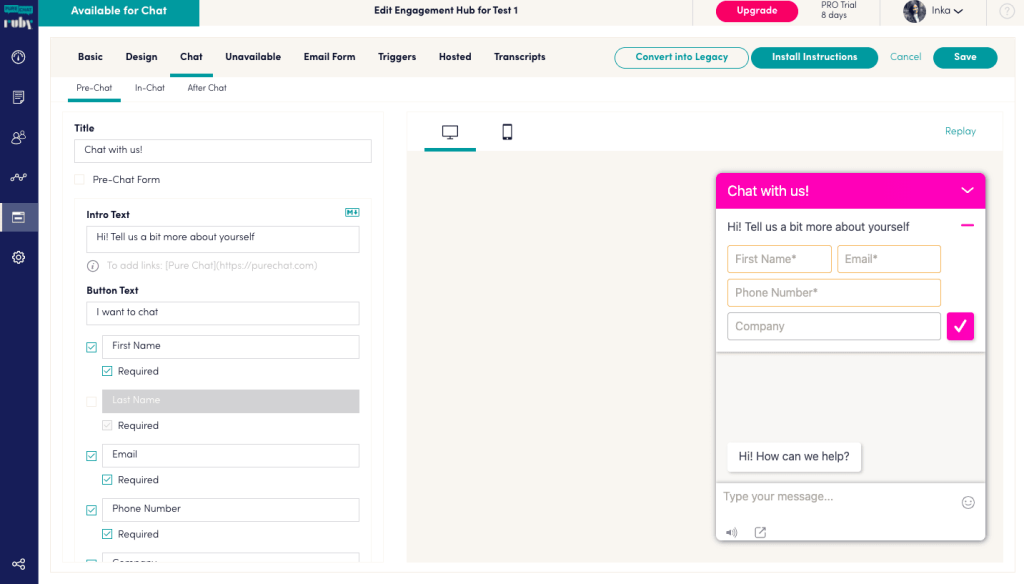
I also like its detailed contact history, which allows your support team to keep track of all past interactions and refer back to them when needed, enhancing customer satisfaction.
What’s great about PureChat is its simplicity and ease of use, ensuring that even small teams can maximize their customer engagement efforts. If you’re looking to boost your real-time analytics capabilities, PureChat is a fantastic option.
Pros:
- Customizable chat widgets enable you to match the chat interface with your website’s design, providing a seamless user experience.
- Mobile apps for managing chats on the go ensure that you can offer support anytime, anywhere, without being tied to a desktop.
- Canned responses speed up support by allowing you to reply to frequently asked questions quickly.
- Proactive chat triggers engage visitors automatically, helping you initiate conversations at the right moment.
Cons:
- The free version has limited features, which might not be sufficient for businesses with more complex needs.
- There is no built-in ticketing system for managing complex inquiries, which might require the use of additional tools.
User Rating: 4.5/5 (G2)
Pricing: Starts at $39 per month. Billed annually.
6. Crisp – Best for Creating Engaging Dialogues With Cutting-Edge Chatbot Technology
Crisp is a standout for creating engaging dialogues with its cutting-edge chatbot technology. I actually consider this tool especially good for startup owners because it can automate customer interactions while maintaining a personal touch.
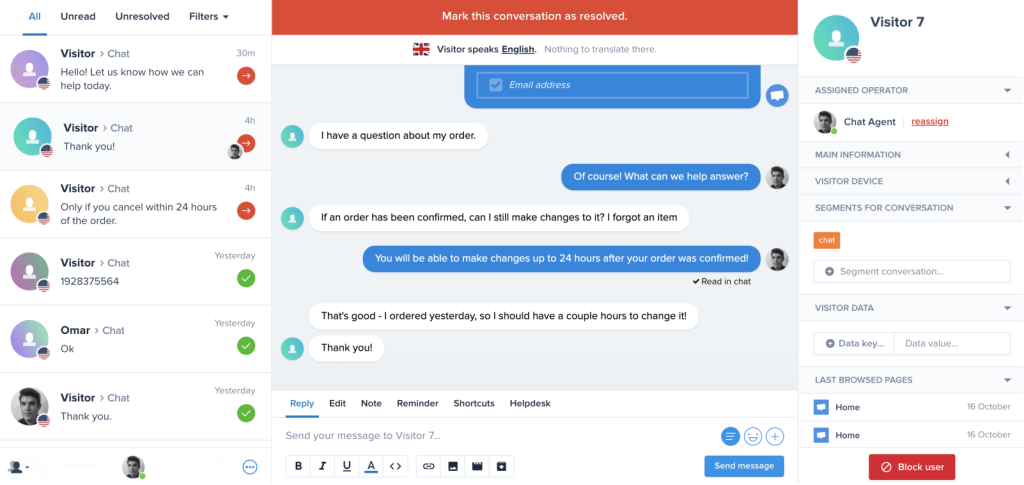
The tool supports highly customizable chatbots, allowing you to craft conversations that resonate with your audience. The platform also offers a unified inbox, making it easy to manage all your customer communications in one place.
With Crisp, you can enhance your customer engagement strategy, ensuring your customers feel heard and valued at every touchpoint.
Pros:
- Crisp offers a shared inbox for team collaboration on customer queries, ensuring that all team members are on the same page.
- Automated workflows and triggers streamline support processes, reducing manual effort and improving efficiency.
- The platform supports multi-channel communication, including email, SMS, and social media, ensuring that you can reach customers on their preferred platforms.
- Real-time notifications keep you updated on customer interactions, ensuring that you never miss a message.
Cons:
- Some users report occasional bugs and glitches, which can affect the overall user experience.
- The initial setup can be complex for non-technical users, potentially requiring additional time and effort to fully utilize the platform.
User Rating: 4.7/5 (G2)
Pricing: Starts at $25 per month per workspace.
7. Intercom – Best for Omnichannel Services With Messenger and App
Intercom is my top pick for omnichannel services, offering seamless integration with messenger and app platforms. This makes it an ideal choice for startups and SMBs aiming to provide a unified customer experience.
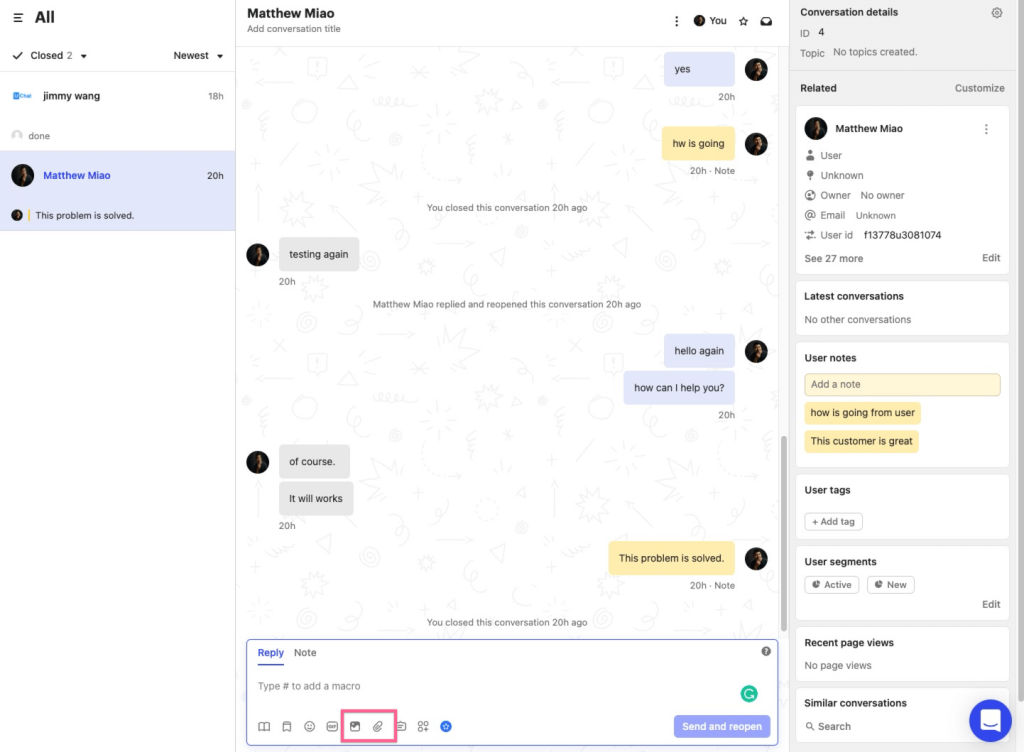
The tool allows you to engage with customers across multiple channels, ensuring consistent and personalized interactions. The automated workflows and rich messaging features help streamline your support processes, making your team more efficient.
Besides, it offers in-app messaging to engage users directly within your app, providing a seamless customer experience.
Pros:
- Supports AI chatbots that handle common queries and capture leads, improving efficiency and customer satisfaction.
- Detailed customer profiles help personalize interactions, ensuring that you can provide relevant and timely support.
- Advanced reporting and analytics features provide insights into performance and customer satisfaction, helping you optimize your support strategy.
- Integration with various CRM and marketing tools ensures smooth data management and follow-up processes.
Cons:
- Intercom can be costly for small businesses, especially with add-ons, making it difficult to justify the investment for all the advanced features.
- The interface can be complex for new users, potentially requiring additional time and effort to learn and navigate effectively.
User Rating: 4.5/5 (Capterra)
Pricing: Starts at $39 per seat per month.
8. Zoho Desk – Best for Zoho Suite Users
Zoho Desk is the perfect companion for businesses already utilizing the Zoho suite. Its live chat feature integrates seamlessly with other Zoho products, providing a unified customer service experience.
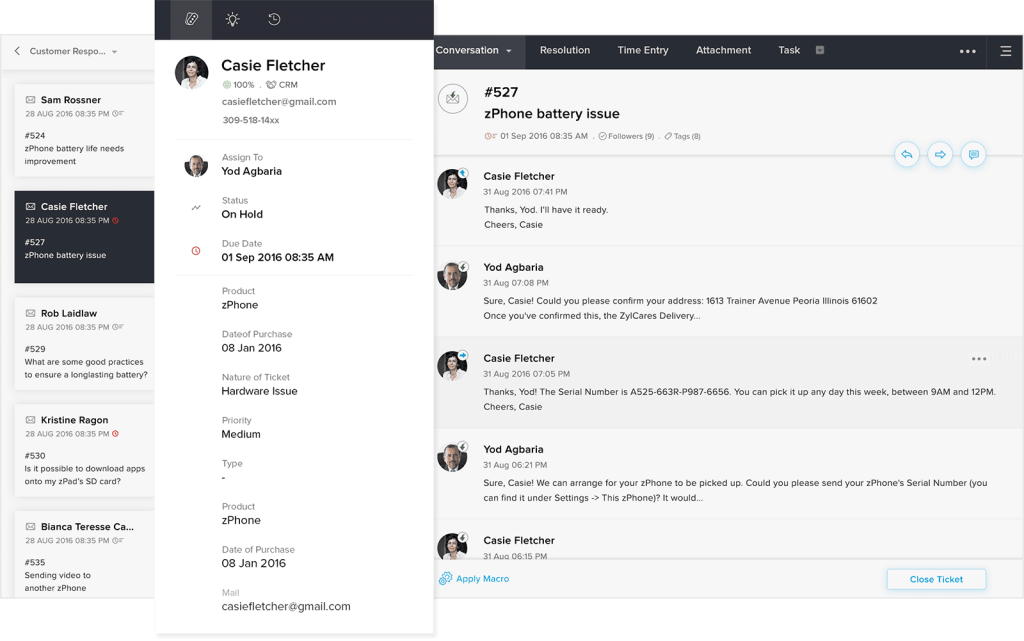
For startups and SMBs, this integration can leverage existing tools to enhance customer support without additional investments.
It also offers robust ticketing and automation features, making it easier to manage and resolve customer queries efficiently. Not only this, it supports AI chatbots too, that automate customer support tasks, reducing the workload on human agents and improving response times.
Pros:
- The platform supports multi-channel communication, including social media and email, ensuring that you can engage with customers wherever they are.
- Customizable chat widgets enable you to align the chat interface with your brand’s identity, providing a cohesive customer experience.
- Advanced analytics and reporting features allow you to track performance and customer satisfaction, providing insights for continuous improvement.
- Integration with popular CRM systems ensures smooth data management and follow-up processes.
- Zoho Desk provides a mobile app for managing support on the go, ensuring that you can offer assistance anytime, anywhere.
Cons:
- The interface can be overwhelming for new users, necessitating a learning curve to utilize its capabilities fully.
- Integration with tools outside the Zoho suite is slightly difficult.
User Rating: 4.4/5 (Capterra)
Pricing: Starts at $7 per month.
9. Tidio – Best for Live Chat With Ticketing Functionality
Tidio is a fantastic tool for startups and SMBs looking for a combination of live chat and ticketing functionality. This platform simplifies customer support by integrating live chat with a comprehensive ticketing system.
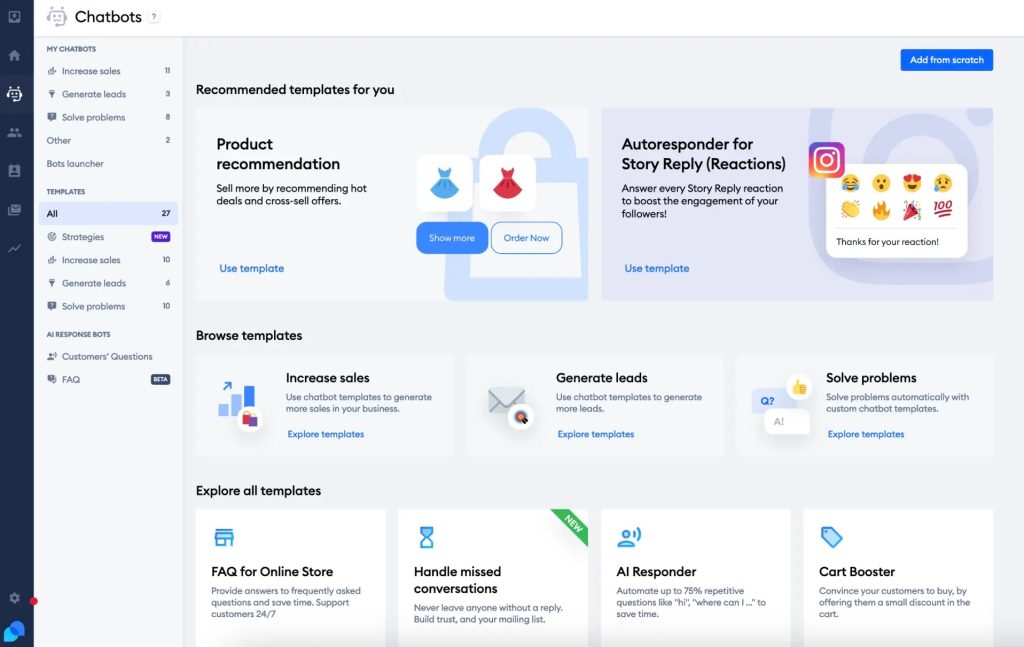
I really like its user-friendly interface and automation capabilities that make it easy to manage customer inquiries, ensuring no question goes unanswered.
The platform’s affordability and ease of use are significant advantages for smaller businesses looking to enhance their customer support without a hefty investment. Tidio’s blend of live chat and ticketing is a winning combination.
Pros:
- Customizable chat widgets allow you to match the chat interface with your website’s design, providing a seamless user experience.
- Real-time visitor monitoring helps you engage with customers effectively, increasing the chances of successful interactions.
- The mobile app for managing chats on the go ensures that you can offer support anytime, anywhere.
- Multi-language support caters to a global audience, enhancing customer satisfaction across different regions.
- Detailed analytics and reports provide insights into performance and customer satisfaction, helping you optimize your support strategy.
Cons:
- Limited personalization options for chatbots might restrict the ability to tailor responses to specific needs.
- Occasional performance issues have been reported by users, which can affect the overall user experience.
User Rating: 4.7/5 (Capterra)
Pricing: Starts at $24.17 per month. Billed annually.
10. Gorgias – Best for Setting Chat Campaigns
Gorgias is my go-to tool for setting up chat campaigns. It’s particularly well-suited for startups and SMBs aiming to drive customer engagement through targeted messaging.
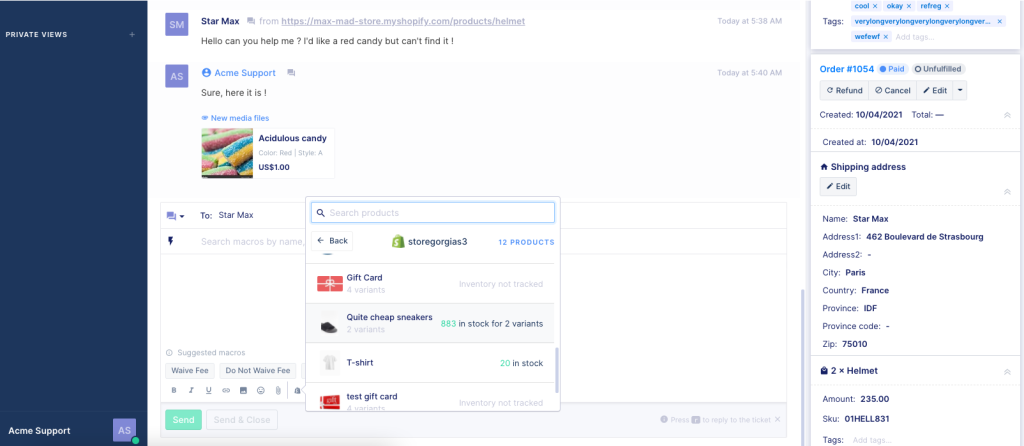
The tool allows you to automate and personalize chat campaigns, ensuring your messages resonate with your audience. The platform’s integration with e-commerce tools is a significant advantage, enabling you to provide tailored support based on customer behavior.
One of the best features of this tool is that it integrates seamlessly with eCommerce platforms like Shopify, providing a tailored solution for online retailers.
Pros:
- Supports AI-powered automation that helps streamline support tasks, reducing the workload on human agents and improving efficiency.
- Real-time visitor monitoring allows you to track customer behavior and engage with them effectively.
- Customizable chat widgets enable you to align the chat interface with your website’s design, providing a consistent user experience.
- Detailed analytics and reports provide insights into performance and customer satisfaction, helping you optimize your support strategy.
Cons:
- There have been reports of occasional issues with email handling, such as emails not being delivered correctly or delays in receiving emails from the tool.
- The setup and customization of Gorgias can be complex, requiring a steep learning curve for new users.
User Rating: 4.6/5 (Capterra)
Pricing: Starts at $10 per month.
How Did I Evaluate These Business Live Chat Software Options
Every live chat support tool for startups on this list went through the same evaluation process. No sponsored placements, no feature checklists pulled from product pages. Just a consistent framework applied across all 17 platforms before making any recommendations.
- User Reviews and Ratings
I analyzed verified feedback from G2, Capterra, and Reddit, focusing on recurring complaints and praise from users who had lived with each tool for months, not just star ratings.
- Essential Features and Functionality
I assessed AI chatbot accuracy, bot-to-human handoff, CRM integration depth, proactive triggers, and reporting. Tools that execute a few things exceptionally well ranked higher than those advertising many features poorly.
- Ease of Use
I measured how quickly a non-technical founder could go from signup to a live chat widget without documentation or developer help. Anything that couldn’t be set up on day one lost points.
- Customer Support
I tested each vendor’s own support quality, responsiveness, and availability, checking whether live chat or onboarding help was accessible on entry-level plans or locked behind enterprise tiers.
- Value for Money
I compared cost against real-world output, factoring in free plan limits, per-agent pricing, AI feature upgrade requirements, and whether key integrations were included or charged separately.
- Personal Experience and Expert Opinions
Hands-on testing was combined with insights from startup founders, customer success managers, and support leads who had recently evaluated or switched live chat platforms.
My Top 3 Picks for the Best Business Live Chat Software
After testing all 17 tools, these three stood out as the most practical choices across different startup situations.
1. ProProfs Chat
ProProfs Chat is a complete live chat and AI chatbot platform built for startups. It offers 24/7 support, bot-to-human handoff, proactive lead capture, and 100+ integrations, all from a single platform that even non-technical founders can set up quickly.
2. Intercom
Intercom is built for SaaS startups that need powerful in-app messaging. It combines behavioral triggers, detailed customer profiles, and AI-assisted workflows to improve onboarding and reduce churn. Pricing is higher, but the return on investment is strong for product-led teams.
3. HubSpot
HubSpot Live Chat is the natural choice for startups already using HubSpot CRM. It’s free, natively integrated, and automatically logs every conversation to a contact record, giving founders a frictionless path from website visitor to tracked sales lead.
FREE. All Features. FOREVER!
Try our Forever FREE account with all premium features!
How Can Live Chat Software Grow Your Startup
Think of your website as a physical store. Right now, if a visitor has a question, they have to leave the store, click away to email, wait for a reply, and hope they remember to come back. Live chat keeps them in the store. And that directly impacts revenue.
Here is what the data shows:
- According to a study by Invesp in 2025, businesses using live chat report a 20% average increase in website conversions.
- According to a report of the American Customer Satisfaction Index in 2025, Live chat has an 88% average customer satisfaction rating, higher than email or phone
- According to a study by Forrester in 2024, live chat can reduce customer service costs by up to 30% compared to phone support.
For a startup running lean, those numbers mean more leads captured, lower support overhead, and customers who are more likely to stay and buy again.
What Are the Main Use Cases of Live Chat for Startups?
Live chat for startups is not limited to customer support. Here is a breakdown of how startups are putting it to work across different parts of the business.
- Customer Support: Provide instant answers to common questions, handle returns, and resolve issues before they turn into complaints. AI chatbots handle the first layer while human agents take over for complex cases.
- Sales and Lead Generation: Proactively engage visitors who have spent time on pricing or product pages. Capture name, email, and intent data automatically. Route qualified leads to your sales team in real time.
- User Onboarding: Help new users get started with your product or service. Trigger welcome messages when users first log in. Answer setup questions before users get frustrated and churn.
- Market Research: Ask post-chat survey questions to understand what visitors couldn’t find or what objections blocked a purchase. Chat transcripts reveal customer pain points that never show up in analytics dashboards.
- Appointment Booking: Healthcare, legal, real estate, and education businesses use chatbot flows to collect availability details and book calls or consultations, fully automated, no human involvement needed.
- Event and Webinar Support: Provide real-time answers to attendees during virtual events or product demos without flooding your email inbox.
Live Chat vs. Email vs. Phone: Which Channel Wins for Startups?
Not all support channels are created equal, and for startups watching every dollar and every second, picking the right one could be the difference between a loyal customer and a lost one.
| Metric | Live Chat | Phone | |
|---|---|---|---|
| Customer satisfaction | Higher than other channels | Moderate | Lower than live chat |
| Response expectation | Seconds to minutes | Hours to days | Immediate |
| Agent capacity | 5–10 simultaneous chats | 1 thread at a time | 1 call at a time |
| Cost per contact | Low | Medium | High |
| Lead capture | Automated | Manual | Manual |
| 24/7 availability | Yes (with AI) | Yes (but slow) | Rarely |
| Best for | Real-time engagement | Detailed documentation | Complex issues |
The data is clear: for startups that want to engage, convert, and support customers efficiently, live chat outperforms both email and phone on every dimension that matters to a lean team.
Your Visitors Have Questions. Are You There to Answer?
Startups lose more leads to silence than they realize. Every unanswered visit is a missed conversation, and most of those visitors will never find their way back.
Start by adding live chat to your highest-traffic pages and set a proactive trigger on your pricing or product page. Train a chatbot on your website content so it handles queries even when your team is offline, then review transcripts weekly to understand what your customers actually need.
If you are looking for a tool that does all of this without the setup headache, ProProfs Chat is worth a look. It is free to start, requires no coding, and gets you live in minutes.
Frequently Asked Questions

What is the difference between live chat and a helpdesk?
Live chat software focuses on real-time conversations and instant messaging with visitors on your website. A helpdesk manages support tickets, email threads, and issue tracking over time. Many modern tools combine both: ProProfs Chat, paired with ProProfs Help Desk, covers live chat for real-time engagement and a ticketing system for cases that require multi-interaction follow-up.
Can one chatbot handle live chat without any human agents?
For simple, repetitive queries, FAQs, pricing questions, and order status, yes. But for complaints, complex technical issues, and high-value sales conversations, human involvement improves both satisfaction and conversion. The most effective setup is a hybrid: AI handles the first layer, and a human steps in when the conversation requires judgment or empathy..
Can live chat software integrate with my CRM?
Yes. Most major live chat tools like ProProfs Chat integrate with popular CRMs like HubSpot, Salesforce, Zoho CRM, ActiveCampaign, and others. The integration automatically creates or updates contact records during a chat. Confirm your specific CRM is supported before signing up, and verify whether it creates leads or just contacts in Salesforce.
Does live chat software work on Shopify and WordPress?
Yes. All major live chat platforms offer native Shopify apps and WordPress plugins. Installation takes minutes and requires no code editing. The chat widget appears automatically on your site once the plugin or app is activated and configured.
Is live chat software secure and GDPR compliant?
Most reputable platforms include GDPR compliance features: visitor consent collection, data deletion request handling, privacy policy links in the chat widget, and data residency options. For example, ProProfs Chat is GDPR- and CCPA-compliant, with SSL encryption and SSO. If you serve customers in the EU or California, always verify the specific compliance features with the vendor before going live.
Can live chat software handle multiple languages?
Yes. Most modern platforms support multiple languages, either automatically detecting the visitor's browser language or allowing manual selection. If you serve a global audience, confirm the specific languages supported and whether the AI chatbot can respond accurately in each.
FREE. All Features. FOREVER!
Try our Forever FREE account with all premium features!

 We'd love your feedback!
What did you like & how can we make it even better?

 Thanks for your feedback!
 Ask Your Question
Have a question? Get expert help to make your decision easier.